

Table of Content
- Why Your Bio Carries So Much Weight
- Anatomy of a Standout Bio
- Bio Ideas for Creators
- Bio Ideas for Bloggers
- Bio Ideas for Brands and Businesses
- Weaving In the Right Keywords
- Crafting a Call-to-Action That Converts
- Matching Your Bio to Your Aesthetic
- Bio Mistakes Worth Avoiding
- Tools and Prompts for a Faster Bio
- Final Thoughts
A good Pinterest bio sounds effortless and takes about four rewrites to get there. You have 160 characters to say who you are, what someone gets by sticking around, and why the link under your name is worth a tap. Not much room, and every word has to carry weight.
This piece is mostly a bank of bio ideas you can lift and tweak, sorted by whether you are a creator, a blogger, or a brand. The short bits of theory around them are only there so you know why one line lands and another falls flat.
Why Your Bio Carries So Much Weight
Most advice treats Pinterest like another social feed. It isn't. People rarely open it to catch up on friends. They open it hunting for something specific: a recipe, a room layout, an outfit, a tool. That makes it behave more like a visual search engine, and it quietly changes the job your bio has to do.
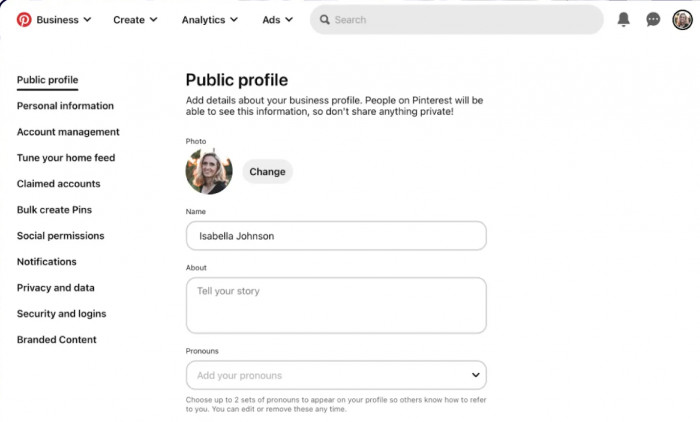
Because searches drive what gets shown, the words in your bio help Pinterest place you with the right people. The bio is also where trust gets decided. Someone arrives from one pin, knows nothing about you, and reads those two lines to work out whether you are worth following and whether that link is safe to click.
So the bio does two things at once. It tells the platform what you cover, and it tells a real person why you are worth their attention. The bios that work manage both without sounding stuffed or robotic.
Anatomy of a Standout Bio
Strong bios aren't magic. They tend to share the same handful of ingredients, just mixed to suit the person. Treat these as parts to pick from, not a fixed order:
• Who you are: your name or brand, plus the one word that names your lane (illustrator, finance blogger, skincare brand).
• What you give: the actual thing a follower walks away with, like weeknight dinners, budget travel routes, or small-space styling.
• Who it's for: naming your audience makes the right people feel spoken to and quietly waves off the wrong ones.
• Natural keywords: the terms people genuinely type when they want what you make, written into the sentence instead of dumped in a list.
• A nudge to act: one short line pointing at your link, like grab the guide, shop the edit, or read the latest.
A formula that holds up: [Who you are] helping [who it's for] with [what you give]. [Call to action]. Different bio character limits affect how much detail you can include, so you won't fit all five parts every time, and that is fine. Knowing the parts just means you cut on purpose instead of by accident.
Bio Ideas for Creators
Creators live on personality, so the bio should read like a person, not a CV. Signal your craft and your vibe in the same breath. If you're an illustrator, the words should feel illustrated. If you shoot moody film photography, it shouldn't read like a chirpy corporate account.
Lead with the medium, add a hint of your aesthetic, and close with where your work lives. A spread of examples across creator lanes:
- Illustrator: Freelance illustrator drawing soft, folky art for kids' books and prints. New pieces weekly. Shop and commissions below ↓
- Photographer: Film photographer chasing golden-hour portraits around the coast. Presets and print shop linked right here.
- Interior creator: Rental-friendly decor for people who can't drill holes. Small-space ideas, zero-damage tips, a free swap-list below.
- Video creator: Slow, satisfying pottery and glazing tutorials. Fresh one every Sunday. YouTube linked if you want the full version.
- Designer: Brand and logo designer for small shops that deserve to look bigger. Portfolio and booking link under the name.
Notice what none of them say: "content creator" or "lover of all things creative." They name the real thing and hand over a reason to click. That specificity is the whole difference between a profile people remember and one they scroll past.
Bio Ideas for Bloggers
For bloggers the bio has one extra job: it has to carry people off Pinterest and onto your site. So authority and a clear reason to click matter more here than anywhere else. You want the reader thinking "this person clearly knows the topic," then tapping the link to see for themselves.
Name the niche tightly. "Lifestyle blogger" tells me nothing. "Slow-living blogger for tired parents" tells me everything. Pair that niche with the payoff and point straight at the blog:
- Food blogger: 30-minute dinners for people who hate meal-planning. 500+ tested recipes on the blog, a new one every Tuesday.
- Travel blogger: Budget routes through Southeast Asia, minus the tourist traps. Grab the free 2-week Vietnam itinerary on the blog.
- Finance blogger: Plain-English money tips for freelancers and first-time earners. No jargon, no shame. Start-here guide is linked.
- Lifestyle blogger: Slow living for busy parents. Calmer routines, simpler homes, a shorter to-do list. Fresh posts weekly on the blog.
- Parenting blogger: Honest, no-guilt parenting for the newborn fog and beyond. Real routines that survive real toddlers. Blog linked.
Same pattern across all of them: a sharp niche, a promise of what sits on the other side of the click, and a soft push to go read. That is a blogger bio actually doing its job instead of just existing.
Bio Ideas for Brands and Businesses
Brand bios often trip over themselves trying to sound impressive. The ones that convert do the opposite. They say plainly what they sell, who it's for, and what to do next. Save the mission statement and the "passionate about excellence" line for your About page.
State the value, keep the voice on-brand, make the next step obvious. A few across different business types:
- Ecommerce: Handmade ceramic mugs, fired in small batches in Jaipur. Free shipping over ₹1500. Shop the new drop below ↓
- SaaS: Social scheduling for small teams who'd rather be doing anything else. Plan a whole week in 10 minutes. Try it free.
- Service brand: Boutique interior studio for first-time homeowners in Delhi NCR. Full makeovers and e-design. Book a consult below.
- Local business: Third-wave coffee and slow mornings in Gurugram. Single-origin beans, open till late, Wi-Fi that actually works.
A quick comparison of what tends to work against what quietly kills a brand bio:
| Works | Falls flat |
| Names the exact product or service | Vague "we help you thrive" mission-speak |
| Speaks to one specific customer | Tries to appeal to literally everyone |
| One clear call to action | No link prompt, or three competing ones |
| Voice matches the brand's pins | Corporate tone sitting over playful visuals |
Weaving In the Right Keywords
Since Pinterest leans on your words to figure out who to show you to, the terms in your bio genuinely matter. There's a right way and a wrong way to use them. The wrong way is easy to spot: a comma-stuffed pile of keywords no human would ever say out loud.
The better move is to find the two or three phrases people actually search in your space and slot them into real sentences. If you blog about meal prep, "meal prep" and "healthy dinners" should read naturally, not "meal prep | healthy dinners | easy recipes | food blogger | nutrition."
Easiest way to find yours: start typing your topic into Pinterest's own search bar and watch what it auto-suggests. Those are real queries real people run. Pick the ones that fit and write them into a sentence a human would actually say.
Crafting a Call-to-Action That Converts
A bio without a nudge leaves money on the table. People need telling what to do next, even with the link sitting right there. The trick is matching the ask to why someone's on Pinterest at all. They're in a browsing, planning, "I'll save this for later" frame of mind.
That's why soft, value-first prompts beat hard sells here. "Grab the free guide" or "Shop the look" fits the mood far better than "Buy now." And a call to action only works if the link delivers on it, so claim and verify your website to keep that link clean and trustworthy.
Matching Your Bio to Your Aesthetic
Pinterest is a visual-first place, and a bio that clashes with your visuals leaves a small, nagging sense of "off" that people feel even when they can't name it. If your pins are calm, earthy, and minimal, a bio crammed with exclamation marks and loud emoji breaks the spell.
Think of the bio as part of the same outfit as your board titles, your pin covers, and your profile photo. The tone of the words should echo the tone of the images. A cohesive profile reads as deliberate and professional. A mismatched one reads as thrown together, and people trust it a little less without quite knowing why.
Bio Mistakes Worth Avoiding
Most weak bios fail in the same few ways. Here are the ones that keep showing up, each with its fix:
| Common mistake | What to do instead |
| Stuffing in keywords until it reads like a tag list | Use two or three terms inside a real sentence |
| Copying your Instagram bio word for word | Rewrite for a search-and-save crowd, not a feed |
| No call to action at all | Add one short line pointing at your link |
| Emoji standing in for actual words | Use one or two to punctuate, never to carry meaning |
| Vague filler like “lover of pretty things” | Say the specific thing you actually make or cover |
The thread running through all of them is specificity. Almost every bio problem comes down to being too vague, and almost every fix comes down to getting more concrete about what you do and who it's for.
Tools and Prompts for a Faster Bio
You don't have to write this from a cold blank box. A few simple aids make it quicker and sharper:
• A character counter (any free one online) so you shape the line to fit 160 characters before pasting it in, instead of getting chopped off mid-word.
• A fill-in prompt to beat the blank page: “I help [audience] with [what you offer] so they can [result]. Follow for [content type].” Draft three, then keep the best bits of each.
• Your own analytics over the following weeks. Watch whether profile visits and link clicks shift after you change the bio. If a version lifts clicks, you've found your keeper.
Write two or three versions rather than chasing one perfect line. Seeing them side by side almost always makes the strongest choice obvious.
Final Thoughts
Your Pinterest bio isn't a set-it-and-forget-it field. It's a small, living asset that should move as your focus does, whether that's a new product, a seasonal push, or a shift in what you post most. Revisiting it every few months keeps it honest and current.
If you take one thing from all of this, make it specificity over polish. A plain, specific bio that names exactly what you do and who it's for will beat a clever, vague one every time. So open your profile, read your current bio the way a stranger would, and rewrite that first line today. It's usually the single change that earns you the next follow.