

Table of Content
- Why the script decides the video
- The anatomy of a reel script
- Instagram Reels script template
- TikTok script template
- YouTube Shorts script template
- Six plug-in templates by video type
- Hook formulas that stop the scroll
- One spine, three platforms
- Where AI script generators actually help
- The workflow that works
- The final verdict
Here is the pattern I see on almost every video that underperforms. The idea is fine. The lighting is fine. The person on camera is likeable. The script is where it falls apart, usually in the first line, and usually because the creator started explaining before the viewer had any reason to care.
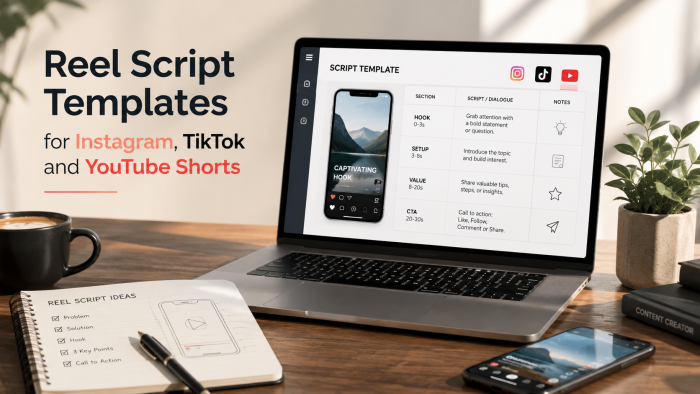
A template will not make a boring topic interesting. What it does is remove the blank page, give every second a job, and stop you from burying the good part twelve seconds in. Below are the structures I actually reach for, the 2026 numbers that justify them, and a straight read on where AI script tools earn their place and where they do not.
THE ONE-LINE ANSWER The strongest reel script follows a single spine, then bends tone and ending to fit the platform: Hook → Setup → Value → Payoff → CTA |
Why the script decides the video
Retention is not a vibe. It is measured, and the measurements point straight back to the words you say first.
| 3s | Facebook research found that 65% of people who watch the first three seconds stay for at least ten, and 45% stay for thirty or more. |
| +12% | Videos with on-screen captions earn about 12% more watch time and are far more likely to be watched to the end. |
| 71% | Roughly 71% of viewers decide whether to keep watching within the first few seconds, so the hook is not optional. |
| #1 | Completion rate is the metric that matters most across all three platforms. A short clip watched fully beats a long one abandoned early. |
Read those figures together and the job of a script becomes obvious. You have about three seconds to earn the next ten, so the opening line has to promise something concrete, and every beat after it has to keep the viewer moving toward the payoff before they drift and swipe away.
The anatomy of a reel script
Here is the universal skeleton mapped to a 30 second clip. Every platform template below is a variation on this.
| Time | Beat | What it does |
|---|---|---|
| 0 to 3s | Hook | Name the payoff or break a belief. One line, spoken and on screen. No greetings or slow wind-up. |
| 3 to 7s | Setup | Say why this matters right now. One sentence of stakes, not the backstory of how you got here. |
| 7 to 20s | Value | Deliver the idea, one point per line. Keep each line shorter than a breath and cut anything that does not push it forward. |
| 20 to 27s | Payoff | Close the loop you opened. The result or reveal that pays back the hook in full. |
| 27 to 30s | CTA | One light action: save, follow, or comment a single word. Keep it soft. |
Instagram Reels script template
Reels reward polish and, above everything, saves. In 2026 a save carries far more weight than a like, so the script should give people a reason to keep the video for later.
Sweet spot: 7 to 15s for reach, 25 to 45s for saves.
| Top signal | Saves and completion. A Reel with a 12% save rate will out-reach one with a 40% like rate almost every time. |
| Tone | Cleaner and more visual than TikTok. The platform loops clips aggressively, so tight, rewatchable openings do well. |
| On-screen text | Essential. Mirror the spoken hook in large, readable text, since Reels are usually watched on mute in the feed. |
| Best for | Educational and list content people want to keep, plus short relatable moments set to trending audio. |
Reel script, save-driven HOOK (0 to 3s): Save this if your Reels keep dying after three seconds. SETUP (3 to 7s): The problem is almost never the camera. It is the first line. VALUE (7 to 30s): Open with the result, not the backstory. Put one idea on screen at a time as text. Cut every second that does not move the idea forward. PAYOFF (30 to 40s): Do this and people watch to the end, which is the signal Instagram rewards most. CTA (40 to 45s): Save this so you have it before your next shoot. On-screen text: mirror the spoken hook, big and readable. Caption: one sentence that repeats the promise, then three to five specific hashtags. |

TikTok script template
TikTok leans on personality and trend energy, and it forgives a rougher edit if the script keeps you watching. Completion and rewatch are what push a clip out to new people.
Sweet spot: 7 to 15s for loops, 24 to 38s for talking.
| Top signal | Completion rate and rewatches. A clip watched to 90% will out-distribute a longer one abandoned at 40%. |
| Tone | Talk to one person, not an audience. Personality and pace matter more than production value. |
| Structure move | Start with the outcome, expose the common mistake, then give the fix. Never explain the background first. |
| Best for | Quick how-to, myths versus facts, hot takes, and creator talking-head clips that ride a current trend. |
TikTok script, talking-head HOOK (0 to 3s): I rewrote this script four times. Here is the version that actually held. CONTEXT (3 to 6s): Most people explain the background before anyone knows why to care. VALUE (6 to 26s): Start with the outcome. Show the mistake almost everyone makes. Give the fix in plain words. PAYOFF (26 to 34s): The video feels faster because the viewer always knows where it is going. CTA (34 to 38s): Comment the word SCRIPT and I will send the template. Delivery note: keep your energy highest on the very first sentence, then hold it steady. |
YouTube Shorts script template
Shorts behave differently because they are wired to your main channel. The algorithm watches whether people finish, whether they stay in the Shorts feed afterward, and your Shorts retention even feeds how your long-form videos get recommended.
Sweet spot: 30 to 45s, with 50 to 60s able to spike views.
| Top signal | Retention and viewer satisfaction. Leaving the Shorts feed right after your clip is read as a negative, so a clean finish matters. |
| Tone | Clear and useful. Shorts work best when the viewer feels they learned something or avoided a mistake by the end. |
| Ending | Needs to feel complete, more so than on the other two. End on a full thought, not a trailing hook. |
| Bonus | Shorts benefit from YouTube search, so a specific, searchable promise in the hook has a longer tail than on TikTok or Reels. |
Shorts script, payoff-driven HOOK (0 to 3s): You are losing viewers at second eight, and the reason is fixable. SETUP (3 to 8s): Shorts reward finishing, and finishing starts with a clean promise. VALUE (8 to 32s): Name the exact thing they will learn. Deliver it in three tight beats. Keep every line shorter than a breath. PAYOFF (32 to 42s): End on a complete thought so the viewer feels they learned something. CTA (42 to 45s): Subscribe if you want the next one. Kept this one short on purpose. Note: a clean ending lifts retention, and higher Shorts retention feeds your long-form recommendations. |
Six plug-in templates by video type
Pick the one that matches your idea, drop your topic into the skeleton, then trim. Each is built on the same spine, only the middle changes.
Problem, Agitate, Solve Best for pain-point content | Structure Name the problem → make the cost of it real → hand over the fix → one soft CTA Hook If your Reels get views but no follows, this is why. |
Hook, Value, Payoff The reliable default | Structure Promise a result → give three quick points → land the result → CTA Hook Three script fixes that doubled my average watch time. |
The Listicle Best for saves | Structure State the number → deliver each item fast → tell them to save it Hook Five hooks I steal for almost every video. |
The Tutorial Best for how-to | Structure Promise the skill → do this, then this, then this → show the result Hook Write a scroll-stopping hook in under a minute. |
Myth versus Fact Best for belief-breaking | Structure State the myth → knock it down → give the real answer → CTA Hook Posting daily is not why small accounts grow. |
The Story Loop Best for retention | Structure Open a loop → build tension in the middle → close the loop at the very end Hook This one comment changed how I write every script. |
Hook formulas that stop the scroll
The hook is the only line that is truly non-negotiable. These six shapes cover most of what works, with a real first line for each.
| Hook type | How it works | Example first line |
|---|---|---|
| Belief break | Challenge something the viewer assumes is true. | Posting daily is not why small accounts grow. |
| Specific result | Name a number or a concrete outcome. | This three-line script doubled my average watch time. |
| Direct callout | Name the exact person you are talking to. | If you edit your own Reels, stop doing this. |
| Open loop | Promise a reveal you pay off at the end. | The reason your Short dies at second eight is not the hook. |
| Contrarian how-to | Flip a piece of standard advice. | Write the last line of your script first. |
| Mistake warning | Warn of a cost the viewer is paying now. | This one caption habit is quietly capping your reach. |
One spine, three platforms
Same structure, different dials. This is the cheat sheet I keep pinned when I repurpose a single idea across all three.
| Platform | Sweet spot length | Tone | Signal to optimize | CTA style |
|---|---|---|---|---|
| Instagram Reels | 7 to 15s reach, 25 to 45s saves | Polished, relatable | Saves and completion | Soft, save this |
| TikTok | 7 to 15s loops, 24 to 38s talking | Personality, trend-aware | Completion and rewatch | Comment a word |
| YouTube Shorts | 30 to 45s, 50 to 60s can spike | Clear, useful | Retention and satisfaction | Subscribe for the next |
Where AI script generators actually help
I have run most of the popular ones through the same real briefs, from free in-app generators inside editing tools to standalone script writers and the long-to-short repurposers. Here is the honest split.
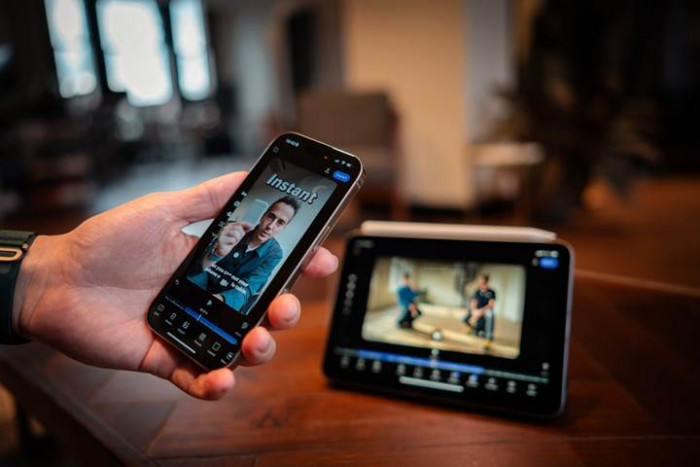
The tools are genuinely fast at two things: generating a batch of hook variations, and tightening a draft that is already yours. When I need ten opening lines to react to, a generator produces them in seconds and one of them is usually a keeper or a spark.
Where they fall down is specificity. Ask for the middle of the video and you get competent, slightly hollow copy that sounds like every other video in the niche. They also invent the occasional fact, and they over-explain, which is the opposite of what short-form needs.
The workflow that works
Brief the tool with the promise of the video, not the topic. There is a real gap between typing a plain phrase like morning routine and typing why a five minute morning routine beats a fifty minute one for consistency. Then generate five hooks and keep one. Write the value beats yourself, because that is where your specific experience lives and where AI is weakest. Finally, paste the draft back and ask the tool to cut it to under 40 seconds and add on-screen text. That last step matters, because captions are the feature that buys you the 12% lift in watch time.
One more practical note. The repurposing tools that slice a long video into Shorts are strong for volume, and their auto-captioning is worth keeping. Just check the clip boundaries yourself, because they tend to cut on silence rather than on meaning, so the hook often lands in the wrong place.
Seven mistakes that flatten a script
These are the recurring reasons a script underperforms, in rough order of how often I catch them.
| 1 | Context before the hook Explaining how you got here before the viewer knows why to care. Lead with the payoff instead. |
| 2 | Writing to a crowd Saying “you guys” pushes people away. Write to one specific person and it reads as direct. |
| 3 | Two ideas in one clip Short-form holds one idea well and two poorly. Split the second idea into its own video. |
| 4 | No on-screen text Skipping captions costs completion, because most viewers watch on mute in the feed. |
| 5 | A heavy sales CTA A big pitch at the end kills the goodwill. Keep the ask light and singular. |
| 6 | Copying a format, not a structure Miming a trend without the hook and payoff underneath rarely travels. Borrow the skeleton, not the surface. |
| 7 | Length set by the platform max Filling 60 seconds because you can. Match length to how much the idea genuinely needs. |
If you remember one thing Optimize for completion, not duration. A 30 second clip watched to the end will beat a 60 second clip abandoned halfway, every single time, on all three platforms. Write the hook and the last line first, then fill the space between them with only what the idea needs. |
The final verdict
AFTER HUNDREDS OF SCRIPTS Templates are scaffolding, not a spell. Once you have written enough of them, the structure stops being something you think about and becomes the thing you catch when a video is off. That is the whole point of learning them: not to sound formulaic, but to stop wasting the first three seconds and to stop burying the payoff. On the AI question, my position is settled and unglamorous. The tools are worth using, but as a fast drafting partner, not an author. They save real time on hooks and on the final trim, and their auto-captions alone justify keeping one in the workflow. They will not supply the specific, lived detail that makes a video yours, and the moment you let them write the whole thing, everything you post starts to sound like everyone else. Keep the hook and the last line in your own hands, let the tool fill and cut the middle, and judge every result against one number. Write yourself: Hook and closing line Hand to AI: Variations and the trim Judge on: Completion rate |