

Table of Content
- Why Bios Always Fall Behind
- The Bio Leads, the Content Follows
- The Parts of a Bio That Can Lead
- How to Rewrite It Before the Pivot
- Let the Bio Set the Brief
- The Risk of Changing Content First
- Shifting Without Losing People
- Knowing If the New Bio Worked
- A Bio-First Workflow You Can Reuse
- Point the Sign Before You Move the Shop
Most people treat the Instagram bio as something you set once and forget a line of text, a couple of emojis, a link. But the bio is really a promise. It tells anyone who lands on your profile what they'll get if they follow, and the rest of your account is judged against it.
That's why the usual order is backwards. When your direction shifts, the instinct is to change your posts first and update the bio later, once the new content has "proven" itself. This article argues the opposite: change the promise first, then grow into it. The bio should move before the content does, and the reason why says a lot about how Instagram actually works.
Why Bios Always Fall Behind
Accounts evolve quietly. A fitness creator starts slipping in meal prep, people respond, and six months later half the posts are about food but the bio still says "home workouts, no equipment." Nobody decided to drift; it just happened one post at a time. The content moved, and the bio stayed frozen on day one.
There are two reasons this keeps happening. The first is that a bio feels permanent, like a tattoo rather than a caption, so people are oddly reluctant to touch it. The second is simpler: nobody ever schedules a bio review. Posts get planned every week, but the bio has no owner and no calendar slot, so it sits untouched for years.
The cost of that gap is quiet but real. You end up promising one thing at the top of your profile and delivering another below it, and the people you're trying to attract can't tell what they're signing up for.
What Instagram Bio Actually Does
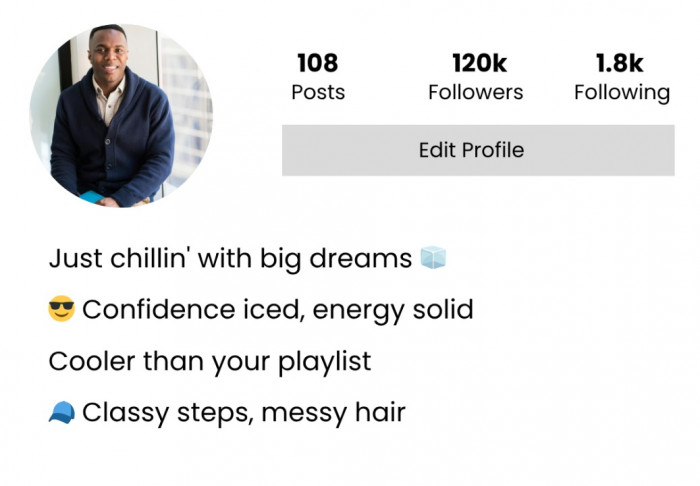
The bio works on two layers at once, and most people only think about one of them. The first is the human layer. When someone lands on your profile, they make a follow-or-leave decision in a few seconds, and the bio is the line they read to make it. It's the pitch, and a vague pitch loses the follow.
The second layer is discovery, and it's the one people miss. Instagram reads your name field and the words in your bio to decide who you are and who to surface you to in search, in suggested accounts, in the explore surfaces. The keywords you choose aren't just description; they're how the system files you.
Put those together and the bio stops being a label and becomes positioning plus indexing. It tells humans what to expect and tells the algorithm who to send. That dual job is exactly why it can't afford to lag behind where you're heading.
The Bio Leads, the Content Follows
Here's the idea the whole article turns on. Think of your bio as a leading indicator and your content as a lagging one. The bio sets the expectation of where you're going; the content is the proof that arrives afterward. One points forward, the other confirms.
When you change the bio first, you do something useful to yourself: you commit out loud. A bio that says "nutrition coaching for busy parents" quietly rewrites the brief for every post you make next. You can't keep posting the old thing without feeling the mismatch, so the promise starts pulling your content toward it. Direction set first, work follows.
Do it the other way and there's nothing to aim at. You post a few experiments, wait to see if they land, and only update the bio once you're sure, which means you spend weeks sending mixed signals to both people and the algorithm. The bio-first move isn't just tidier. It's what gives the pivot a target to grow into.
Signs You've Outgrown Your Bio
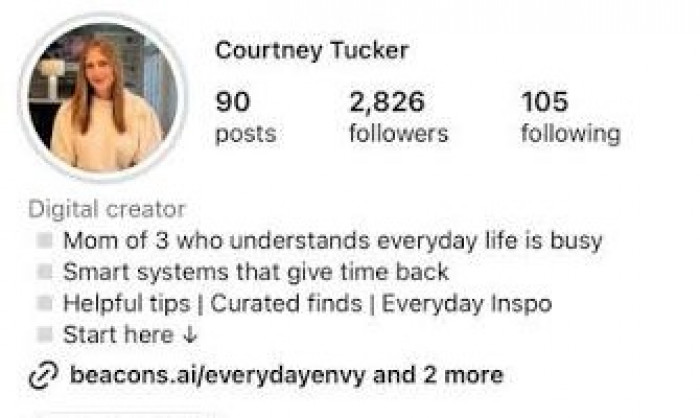
Most people can feel the drift before they can name it. The account is doing fine, but something is slightly off the posts you're proudest of don't quite fit the label at the top. These are the symptoms worth watching for, and what each one is usually telling you.
| What you're noticing | What it usually means |
| Your best posts are on a topic your bio doesn't mention | Your content has already pivoted; the bio just hasn't caught up |
| New followers unfollow within a few days | The bio promised one thing and the feed delivered another |
| You pause when someone asks what your account is about | Your own positioning has blurred and the bio no longer states it |
| Your pinned posts feel like they belong to an older account | The front of your profile is advertising a version of you that's gone |
If two or three of these feel familiar, the problem usually isn't your content, it's that your sign still points somewhere you've already left. These are common Instagram bio mistakes that can make an otherwise active profile feel outdated. That's the cue to rewrite the bio, not to keep tweaking posts.
The Parts of a Bio That Can Lead
A bio that's meant to point forward has a few working parts, and each one does a specific job. Get them pulling in the same direction and the bio reads as a clear promise rather than a list of facts about you.
● The name field (not your @handle) is prime search real estate, so it should carry who you serve or what you do, not just your name repeated "Sara | Nutrition for Parents" beats "Sara Lee."
● The first line is the hook and the part most people actually read; it should name the new direction plainly, because clever wording here costs you the clarity you need.
● The positioning line tells people who this is for and what they get, turning a topic into a promise about the difference between "food" and "simple dinners for people with no time."
● The keywords are the searchable terms a newcomer might type, worked in naturally so the algorithm files you under the direction you're moving toward.
● The link and the call to action should point at whatever proves the new promise, whether that's a guide, a booking page, or a specific pinned post.
When you're signalling a direction rather than describing a current state, every one of these shifts slightly ahead of your feed. That's intentional, the bio is meant to arrive first.
How to Rewrite It Before the Pivot
The method is to write the bio for where you're going, not where you are right now. Good bio writing starts with a clear sense of who the profile is meant to attract. Draft the version that describes the account you intend to have in three months.
The mistake to avoid is cutting all ties with what people already follow you for. A clean break confuses your existing audience, so keep one foot in the familiar while you lean into the new. Bridge the old and the new rather than replacing one with the other overnight.
| Bio | |
| Before | Home workouts 🏋️ No equipment, 20-min routines |
| After | Fitness + simple nutrition for busy parents 🏋️ Workouts & meal prep that fit real life |
Notice the "after" keeps the fitness thread the current audience signed up for, but adds the direction and a clearer sense of who it's for. You're not abandoning anyone; you're telling them where the account is headed and inviting the next audience in at the same time.
Let the Bio Set the Brief
Once the new bio is live, it stops being a description and starts being a filter. Every post now has to answer a simple question: does this earn its place against the promise at the top of the profile? If a post doesn't serve the bio, it either gets reshaped or it doesn't go up.
This flips the usual workflow in a way that's genuinely useful. Most people make content and then wonder how to describe it. With a bio-first approach, the description comes first and briefs the content, the way a headline briefs an article. The hard thinking who is this for, what am I promising is already done.
In practice, that turns a vague "post more" goal into a sharp test you can apply in seconds. The parent-nutrition account doesn't post a random gym selfie because it's handy; it posts the ten-minute lunch because that's what the sign over the door now promises.
The Risk of Changing Content First
It's worth taking the opposite approach seriously, because it's the one most people instinctively choose. The logic sounds reasonable: prove the new direction with a few posts, see if it works, then update the bio to match. Test before you commit.
The failure mode shows up in the gap. While your content has pivoted but your bio hasn't, every new visitor gets a mixed signal: the profile line says one thing, the grid says another, and they can't tell which is the real you. Confused visitors don't follow, and the ones who do are following the wrong promise.
The algorithm gets the same mixed message. If your bio keywords still describe the old topic while your posts cover the new one, Instagram isn't sure who to show you to, so it hedges and your reach stalls exactly when you need momentum. Changing content first doesn't de-risk the pivot; it just hides the new direction behind an old label until you finally fix the bio anyway.
Shifting Without Losing People
The honest fear behind all of this is alienating the audience you already have. It's a fair worry people followed you for a reason, and a sudden swerve can feel like a bait-and-switch. The fix isn't to avoid the change; it's to signal it clearly.
Tell your existing followers what's happening rather than letting them guess. A short post or a Story explaining where the account is heading and why does more to keep people than any clever bio line, because most unfollows during a pivot come from confusion, not disinterest. Given a reason, a lot of people will come along.
Then give the bio room to run ahead. Expect a stretch of a few weeks is normal where the bio describes the destination and the content is still catching up. That lead time is the whole strategy working as intended, not a problem to rush. The two realign naturally as your posts fill in the promise you've already made.
Knowing If the New Bio Worked
After the change, resist the urge to stare at your follower count, because it's the slowest and least useful number to judge a pivot by. What you want to know is whether the new positioning is landing, and a few sharper signals tell you that long before the follower total moves.
Watch the ratio of profile visits to new follows first. If plenty of people are visiting but few are following, the bio isn't convincing them yet and needs another pass. Then look at how much of your reach comes from non-followers. A rising share means the algorithm is starting to file you under the new direction and show you to fresh people.
Two more worth checking: whether you're turning up in search for the new keywords, and whether posts in the new direction get saved more than the old ones did. Saves are the quiet vote of confidence that the new promise is resonating. Read these together and you'll know within a few weeks whether the positioning took, not just whether a vanity number ticked up.
A Bio-First Workflow You Can Reuse
The real fix for a lagging bio isn't a one-time rewrite; it's making the bio something you check on purpose instead of something you forget. Turn the whole argument into a short loop you run a few times a year, and the drift never gets a chance to build up again.
1. Review the bio every quarter, the same way you'd review anything else that matters, so it gets an owner and a calendar slot.
2. Look for the drift, compare the topics of your last month of posts against what the bio actually says, and note the gap.
3. Rewrite the promise for where you're heading next, keeping one foot in what your current audience already values.
4. Let the content catch up, using the new bio as the brief that every post has to earn its place against.
5. Measure the signals that show positioning is landing visit-to-follow ratio, non-follower reach, search, saves and adjust the wording if they're flat.
Run this loop and the bio stops being a tattoo you're scared to touch. It becomes the steering wheel, the thing you turn first, with the content following the direction you've set.
Point the Sign Before You Move the Shop
Your bio is the sign over the door. If you quietly rearrange the shop inside and leave the old sign up, the right people walk past and the wrong people walk in confused. Change the sign first, and everyone who steps through the door already knows what they came for.
That's the case for moving the bio before the content. It sets the direction, commits you to it, tells the algorithm who to send, and turns every future post into something that has to live up to the promise. The gap between the new bio and the catching-up content isn't a mistake, it's the pivot working in the right order.
So the next time your account starts to drift, don't wait for the content to prove itself first. Rewrite the promise, say it out loud, and let your posts grow into it. Point the sign where you're going, and the right people will be waiting when you get there.