

Table of Content
I've been writing hooks for a living long enough to have been on both sides of this. Years ago I ran a content desk where we wrote headlines in batches of twenty, pushed them live, and watched a dashboard refresh every ninety seconds. Curiosity gaps worked. They worked embarrassingly well. One headline built entirely on a withheld noun beat its honest sibling by a wide margin on click-through, and I remember feeling smart about it for roughly four hours, which is how long it took for the session-duration numbers to come in.
People clicked. Then they left in under nine seconds. Not some of them. Most of them.
That gap between the click and the stay is the whole problem, and it took me a few painful quarters to learn that the fix isn't "be less interesting." The fix is structural. Curiosity and clickbait feel identical from the outside because both create tension, but they build it in opposite directions. One withholds the subject. The other reveals the subject and withholds the explanation.
What follows is the working method I use now, plus what the research supports and one thing it doesn't. I've included the platform rules where they matter, because as of February 2026 they are no longer vague, and plenty of publishers found that out the hard way.

THE SHORT ANSWER A curiosity hook names the subject and withholds the resolution. Clickbait hides the subject itself. If a reader can't tell what your piece is about until they click, you've written clickbait, regardless of how honest the article underneath is. |
Where the Line Actually Sits (And Who Drew It)
This isn't a matter of taste. Two of the largest distribution platforms on earth have published operational definitions, and they agree with each other.
Meta's News Feed team laid out its criteria in August 2016. They classified tens of thousands of headlines against two tests: whether the headline withholds information a reader needs to understand what the content is, and whether it exaggerates to create expectations the article won't meet. Their own illustration was a headline about someone tripping on a red carpet that never says who tripped.
Google's Discover documentation used to be softer. It was rewritten on 5 February 2026 alongside the first core update aimed specifically at Discover, and the word "clickbait" now appears in it for the first time. Google names withholding crucial information needed to understand what content is about, alongside misleading or exaggerated preview details across titles, snippets and images. A separate line warns against sensationalism built on morbid curiosity, titillation, or outrage. YouTube's spam policy covers the same ground, flagging titles or thumbnails that lead a viewer to expect something the video never contains.
Three companies, one shared definition. Applied, it looks like this:
| ELEMENT | CLICKBAIT DOES THIS | A CURIOSITY HOOK DOES THIS |
|---|---|---|
| The subject | Hides it behind a pronoun (this, it, what happened) | States it plainly in the first few words |
| The tension | Comes from not knowing what the topic is | Comes from not knowing why or how it's true |
| The claim | Exaggerated past what the piece supports | Sized exactly to what the piece proves |
| The payoff | Buried, delayed, or absent | Delivered early, then expanded |
| After reading | Reader feels tricked, or nothing at all | Reader feels the gap was worth closing |
| On repeat exposure | Trust erodes, returns drop | Trust compounds, returns climb |
What the Research Supports, and One Thing It Doesn't
Three findings changed how I write hooks. One of them is a correction to something you've probably read a dozen times.
FINDING 01
Curiosity is a deprivation, not an appetite.
George Loewenstein's 1994 paper in Psychological Bulletin framed curiosity as what happens when a gap in your knowledge becomes salient. The feeling is mildly aversive, and people act to make it stop. Critically, intensity rises with how much you already know. Someone holding eight of ten facts feels the missing two far more sharply than someone holding two of ten. That's why hooks aimed at people who already care beat hooks aimed at strangers, and why explaining the basics in a headline flattens interest instead of building it.
FINDING 02
Negative framing wins clicks, and the effect is measurable.
Robertson and colleagues published a registered report in Nature Human Behaviour in 2023 using the Upworthy Research Archive: roughly 105,000 headline variations, more than 370 million impressions. For an average-length headline, each additional negative word raised click-through by about 2.3%. Positive words lowered it. Sadness-coded language helped; fear and joy did not. The same dataset also showed click-through falling across Upworthy's lifespan as the format wore out.
FINDING 03 · THE CORRECTION
The open loop myth is partly wrong.
Every copywriting guide cites the Zeigarnik effect, the claim that people remember unfinished tasks better. A 2025 meta-analysis by Ghibellini and Meier in Humanities and Social Sciences Communications found no memory advantage for unfinished tasks at all. What did hold up was the related Ovsiankina effect: a tendency to resume interrupted tasks. So the translation is not "an open loop makes your hook memorable." It's "an open loop creates pull to come back and close it." Design for resumption, not recall.
Five Hook Patterns That Create Curiosity Without Withholding
These are the five I keep returning to. Every one names its subject. The gap sits in the explanation.
1. The Contradiction
HOW IT WORKS State something specific that clashes with a belief the reader already holds.
SHAPE [Known thing] doesn't [expected outcome]. Here's what does.
EXAMPLE "The Zeigarnik Effect Failed to Replicate. Your Open Loops Still Work Anyway."
FAILS WHEN The contradiction is manufactured and the article walks it back in paragraph two.
2. The Named Mechanism
HOW IT WORKS Reveal that a specific cause exists, and name its category, while holding back how it operates.
SHAPE The [specific named thing] behind [known outcome].
EXAMPLE "The Preview Image Setting That Quietly Keeps Publishers Out of Discover."
FAILS WHEN You swap the name for "this one thing," which is the exact move both Meta and Google penalise.
3. The Cost Reveal
HOW IT WORKS Attach a real, disclosed price to a decision. Money, time, headcount, traffic.
SHAPE [Specific decision] cost us [specific quantity]. The reason wasn't [obvious suspect].
EXAMPLE "We Rewrote 400 Titles for Discover and Lost Two Months of Traffic Doing It."
FAILS WHEN The number is invented or unverifiable. Readers audit numbers now.
4. The Insider Contrast
HOW IT WORKS Put stated practice next to actual practice.
SHAPE What [group] publishes vs what [group] actually does.
EXAMPLE "Editors at Upworthy Wrote 25 Headlines Per Story. Almost Nobody Copies the Part That Mattered."
FAILS WHEN You have no genuine insider access and are guessing at the contrast.
5. The Bounded Specific
HOW IT WORKS Narrow so hard that the specificity itself raises a question.
SHAPE [Precise number or timeframe] + [precise outcome].
EXAMPLE "Readers See About Two Words of Your Headline Before Deciding."
FAILS WHEN The precision is decorative. A fake decimal point is still a lie.
Examples above are structural illustrations, written to show the pattern rather than to assert data.
The Single Edit That Fixes Most Hooks: Put the Noun Back
If you only take one thing from this piece, take this. Find the pronoun standing in for the subject and replace it with the actual noun. Nine times out of ten the headline gets stronger, not weaker, because a specific noun carries information a pronoun can't.
| A · WITHHELD | B · RESTORED |
|---|---|
| "This One Setting Is Costing You Traffic" | "The Image Preview Setting That Costs You Discover Traffic" |
| "What Happened When We Changed Our Pricing Page" | "We Put Pricing Behind the Demo Form. Here's What Broke." |
| "The Truth About Cold Email Nobody Tells You" | "Cold Email Reply Rates Drop Sharply After the Third Follow-Up" |
| "You're Making This Headline Mistake" | "Most Headlines Bury the Subject Past the First Two Words" |
| "She Said Something Shocking to My Daughter" | "A Teacher Told My Daughter Her Reading Level Was Fine. It Wasn't." |
Test it out loud. If the sentence still works when a stranger overhears half of it, you've written a hook. If it only works as a complete sentence with a hidden payoff, you've written bait.
The Payoff Contract
Every hook creates a debt. Here's what each type owes and when.
| HOOK PROMISES | READER IS OWED | DELIVER BY |
|---|---|---|
| A specific number | The number, its source, its date | First 100 words |
| A contradiction | The evidence against the common belief | First 200 words |
| A named mechanism | A plain explanation of how it works | First screen, no scrolling |
| A cost or outcome | The actual figure, unrounded | First 100 words |
| An insider claim | How you know, not just what you know | First 300 words |
The rule I use: whatever tension the hook created, resolve it before the reader has to scroll twice, then spend the rest of the piece earning that resolution. It's the opposite of how most SEO content is built, and it's why honest hooks hold attention while dishonest ones leak it.
Channel Rules Worth Knowing Before You Write
| CHANNEL | THE DOCUMENTED RULE | WHAT IT MEANS FOR YOUR HOOK |
|---|---|---|
| Google Discover | Avoid clickbait, exaggerated preview details, and withholding crucial information; avoid sensationalism built on morbid curiosity, titillation or outrage | The curiosity-gap format is now named directly in policy. Front-load the subject. |
| Google Search titles | Write descriptive, concise title text; avoid vague or boilerplate titles and keyword stuffing | Google may rewrite a title it finds unhelpful. Vagueness costs you control. |
| YouTube | Titles and thumbnails must not lead viewers to expect content the video doesn't contain | Thumbnail and title are judged as one promise, not two. |
| Meta feeds | Headlines that withhold necessary information or exaggerate get reduced distribution | Applied at post level, not just domain level. |
One more constraint from usability research: Nielsen Norman Group's work on microcontent found that people scanning a list typically absorb only the first couple of words of each item, and their guidance is to lead with the information-carrying words. Whatever your hook is doing, it needs to survive being cut off at character eleven.
The Process I Actually Use
1. Write the boring true sentence.
One line, no craft, just what the piece says. "Google rewrote its Discover guidance in February 2026 and clickbait is now named in policy." Everything else is a transformation of this sentence, and if it's dull, no hook will save the article.
2. Write down what the reader already knows.
Three or four bullets. Loewenstein's finding means your gap has to sit right at the edge of their existing knowledge. Too far outside it and there's no felt deprivation, just indifference.
3. Find the smallest surprising true detail.
Not the biggest claim. The smallest one a knowledgeable reader would not have predicted.
4. Draft fifteen to twenty-five variants.
This is the Upworthy discipline and the only part of their playbook I kept. Variants one through six are always the obvious ones. The usable hook usually shows up past twelve, after you've exhausted the clichés and have to actually think.
5. Strip every placeholder pronoun.
Run the noun test on every survivor. Anything that dies without its hidden payoff gets deleted.
6. Read only the first two words of each, out loud.
If those two words don't signal the subject, rewrite the front of the line.
The full pass takes me about twenty minutes now. It took much longer at the start, mostly because step four feels like a waste of time until you've watched variant eighteen beat variant three.

Pre-Publish Audit
Run every hook through this. Any single unchecked box sends it back.
☐ Can a reader name the topic from the hook alone, without clicking?
☐ Is every number in the hook one I can source on request?
☐ Does the piece deliver the promised payoff within the first two screens?
☐ Would the hook still be accurate if a critic quoted it back at me?
☐ Have I removed "this," "it," and "what happened next" as subject stand-ins?
☐ Do the first two words carry the subject?
☐ If the reader only reads the first paragraph, did they get something real?
☐ Is the emotional charge proportionate to what actually happened?
The Metrics That Expose a Dishonest Hook
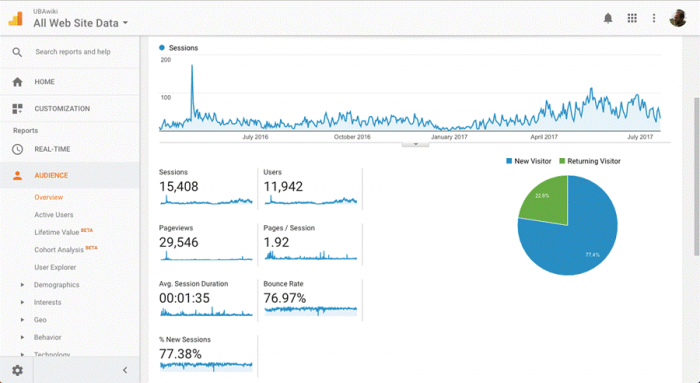
Click-through rate alone will lie to you. It went up in every one of my worst decisions. Watch these as a set:
| SIGNAL | HEALTHY PATTERN | WARNING PATTERN |
|---|---|---|
| CTR vs read completion | Both rise or hold | CTR up, completion down |
| Time on page | Stable or climbing | Cliff at under ten seconds |
| Return visitors | Growing share | Flat while traffic grows |
| Shares per click | Steady ratio | Clicks climbing, shares flat |
| Discover impressions vs clicks | Move together | Impressions collapse after a core update |
| Email opens vs unsubscribes | Opens up, unsubs flat | Opens up, unsubs up |
That second column is what a curiosity gap looks like from the inside once it has quietly turned into bait. The tell is divergence: one number improving while everything downstream of it gets worse.
Final VerdictName the subject. Withhold the explanation. Pay the debt fast. I've written hooks under both philosophies for long enough to compare them honestly, so here's the trade-off rather than a pretence that there isn't one. Honest curiosity hooks cost you something on day one. When I stopped withholding subjects, click-through on individual pieces dropped noticeably. If you're measured on clicks this week, you'll feel it. What came back took about a quarter to show up: readers who finished pieces, returned without a prompt, and forwarded things to colleagues. Smaller traffic, far more useful. Nothing I've published since has made me want to go back. The February 2026 Discover update sharpened the argument. Publishers who built their model on withheld nouns are reporting traffic losses severe enough to end businesses. That's not a moral judgement, it's a risk assessment: the curiosity-gap format now has a named target on it in Google's own documentation, and there's no sign that reverses. The method holds up because it isn't a trick. Name the subject, withhold the explanation, pay the debt fast, draft more variants than feels reasonable, put the noun back. An afternoon to learn, and it survives algorithm changes because it never depended on one. If you write only one hook this week, start with the boring true sentence, then find the detail in it that would surprise someone who already knows the topic. That's the craft, compressed. |