

Table of Content
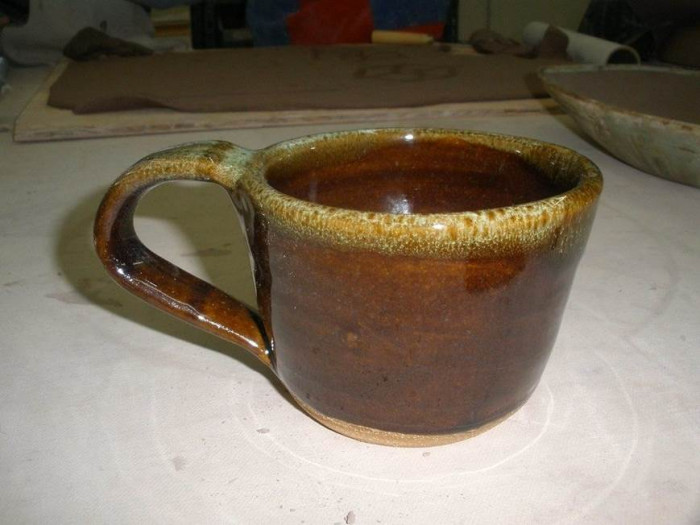
Last month I dropped a photo of a hand-thrown ceramic mug into a popular AI caption tool and asked for something for Instagram. Three seconds later it handed me this: “Elevate your mornings with our handcrafted mug. Perfect for cozy moments and everyday magic. Shop now!” It was grammatical. It was cheerful. And it was completely interchangeable with a caption for a candle, a cardigan, or a crypto app.
I pasted it into a private note next to fourteen other AI captions I had saved that week, and the effect was almost funny. They all sounded like the same slightly over-eager stranger. That stranger is not your brand. Below is the process I run to turn that flat first draft into a caption that reads like a specific business run by specific people. It takes me about ten minutes the first time and closer to three once the reference is built.
THE SHORT VERSION AI writes safe, averaged language because that is what it was trained to do. To make a caption yours: strip the predictable AI words, anchor the line to one real detail only you would know, vary your sentence rhythm, swap in your brand's actual vocabulary, and rewrite the call to action into a request a human would make. Keep a one-page voice reference so you are editing against a standard, not a mood. |
Why every AI caption sounds the same
A language model picks each word by probability. Trained on billions of sentences, it reaches for the most statistically comfortable option, which is why the output feels smooth and hollow at the same time. Researchers have tracked the fingerprints closely. In a 2025 analysis of scientific writing, the word “delve” showed up roughly twenty-eight times more often than its pre-2023 baseline, with “underscore” and “showcasing” spiking right behind it. The exact words shift by model generation, but the pattern holds: averaged word choice, tidy structure, no risk.
Worth knowing too: people are bad at catching this on a conscious level. A 2025 study found readers guessing at chance level when asked to label writing as human or machine. They cannot name why a caption feels off, but they feel the sameness, and sameness is what buries a brand in a crowded feed.

| THE TELL | WHAT IT SOUNDS LIKE | WHY THE MODEL DOES IT |
|---|---|---|
| Averaged superlatives | “Elevate your routine,” “unlock the magic” | Safe words score well statistically and offend no one, so they become the default. |
| The mirror frame | “It's not just coffee, it's a ritual.” | A high-frequency template that sounds deep while saying almost nothing. |
| Emoji confetti | Stacked icons that carry no meaning | Padding for enthusiasm the copy never earned. |
| Hashtag dumping | Twenty tags, half of them generic | Volume standing in for a targeted reach plan. |
| The stock opener | “Ever wondered how to start your day right?” | A borrowed hook that delays the actual point. |
| Missing specifics | No names, places, numbers, or dates | Real detail is exactly where the model has nothing to pull from. |
| The reflex close | “Shop now!” | A generic sign-off that asks for nothing a person would say aloud. |
What brand voice actually is
Brand voice is the consistent personality in how you say things. Tone is how that personality flexes by moment: warmer in a thank-you, firmer in a refund notice. Voice stays put. Tone moves. The Nielsen Norman Group gave this a usable shape back in 2016, mapping any piece of writing across four sliders, each running between two poles with a neutral middle.
| DIMENSION | ONE POLE | OTHER POLE | QUICK GUT CHECK |
|---|---|---|---|
| Formality | Formal | Casual | Email to a lawyer, or a text to a friend? |
| Humor | Serious | Funny | Trying to earn a smile, or earn trust? |
| Respect | Respectful | Irreverent | Play it straight, or poke fun at the category? |
| Enthusiasm | Matter-of-fact | Enthusiastic | State it plainly, or show you are excited? |
This is not a decorative exercise. NN/g's own research found that tone measurably changed how people rated a brand's friendliness, trustworthiness, and desirability, and that a reader's sense of trust was a strong predictor of whether they would recommend the brand. Pick two points on those sliders and hold them steady, and the same mug can read two completely different ways.
CASUAL · FUNNY · IRREVERENT · ENTHUSIASTIC “Your desk mug is a crime scene. This one holds a full pour and survives being dropped by us on purpose. You deserve it.” | CASUAL · SERIOUS · RESPECTFUL · MATTER-OF-FACT “A heavier mug that holds twelve ounces and keeps coffee warm longer. Thrown by hand in small runs. Made to last years, not seasons.” |
Build your voice reference first
Before you touch a single caption, spend five minutes writing the reference you will edit against. Skip this and “sounds like us” stays a feeling, and feelings drift between Monday and Friday. It is one page, and you reuse it forever. Fill it once with your own examples, the way I did below for the ceramics shop.

| ELEMENT | WE DO THIS | WE NEVER DO THIS |
|---|---|---|
| Point of view | First names, “we,” “the studio” | Faceless “our valued customers” |
| Sentence length | Short lines. One idea each. | Long, stacked, comma-heavy clauses |
| Signature words | “small-batch,” “the wheel,” “the shelf” | “curated,” “luxury,” “elevate” |
| Emoji | One, and only if it means something | Clusters used as decoration |
| Humor | Dry asides, gentle self-deprecation | Pun stacks and exclamation walls |
| Call to action | “Link's in the bio, we ship Tuesdays” | “Shop now!” |
The rewrite, in six moves
This is the loop. Run it top to bottom. Each move has a small before-and-after so you can see the shift, not just read about it.
Cut the AI tells
Run the draft against a kill list and delete on sight. If a phrase would fit under any competitor's post, it is not yours. This first pass usually removes a third of the words.
BEFORE Elevate your mornings with everyday magic
AFTER Made for people who take the first cup seriously
Anchor it to one true detail
Add a single fact only your brand could write: a material, a person, a place, a number, a day of the week. Specifics are where AI runs dry, which is precisely why they read as human.
BEFORE Handcrafted with care
AFTER Thrown by Mara out back, about nine a day
Set your rhythm
AI writes even, medium-length lines. Break the pattern on purpose. A three-word sentence next to a longer one is what detectors call burstiness and what readers hear as a voice.
BEFORE Our mug is durable and beautiful and perfect for your home
AFTER It is heavy in the hand. Dishwasher-proof, and yours for years.
Swap in your vocabulary
Replace the model's beige words with the ones your people actually use. Pull them straight from the voice reference you built. The goal is words your regulars would recognize as yours.
BEFORE A curated addition to your collection
AFTER One more for the open shelf
Rewrite the call to action
Ask for one thing, the way a person would say it out loud, and drop the exclamation reflex. A real instruction beats a shout every time.
BEFORE Shop now!
AFTER Link's in the bio. We ship Tuesdays, so order by Monday night.
Read it out loud
If you stumble on a word, cut it. If it sounds like a press release, it is not ready. Your ear catches what your eye forgives, so this last pass is the one you never skip.
Say it to the room. Fix whatever makes you wince.
One caption, six passes
Here is the mug caption from the top of this article, run through the full loop. Watch the same photo and the same product turn into something that could only be this shop.

AI DRAFT Elevate your mornings with our handcrafted mug. Perfect for cozy moments and everyday magic. Shop now! | IN YOUR VOICE Mara threw this one on the wheel out back, about nine a day. Heavy in the hand, and it survives our clumsiest packer, so it will outlast the mood board you bought it for. One more for the open shelf. Link's in the bio, and we ship Tuesdays, so order by Monday night. |
Passes: 1 tells cut · 2 Mara + “nine a day” · 3 long, then short · 4 “the open shelf” · 5 real CTA + ship day · 6 read aloud, trimmed
Nothing in that rewrite is clever for its own sake. It names a person, gives a real number, sets a shipping day, and keeps one line of dry humor. A competitor cannot paste it under their own photo, and that is the entire test.
The swap table
Pin this near your drafts. When you spot the phrase on the left, reach for the move on the right.
| DROP THE AI DEFAULT | REACH FOR THIS INSTEAD |
|---|---|
| Elevate / unlock / level up | Name the one real benefit in plain words |
| Perfect for cozy moments | Describe one actual moment, with a detail |
| Curated / handcrafted with love | Say who made it, and how |
| Game-changing / must-have | Let one specific fact make the case |
| Emoji cluster | One emoji that adds meaning, or none |
| Twenty generic hashtags | Three to five your buyer actually searches |
| Shop now! | Where to tap, and when you ship |
| “In today's world” opener | Start on the subject, or on a person |
Mistakes that quietly undo the work
Most botched rewrites do not fail loudly. They fail by drifting back toward the average. These are the six I catch most often, in my own drafts and in the teams I help.
01 Sanding off every edge
Over-editing turns a voice into oatmeal. Keep at least one line that only you would dare to write. Safe and forgettable are the same thing in a feed.
02 Borrowing a personality that is not yours
If the founder is dry and reserved, forced jokes read as costume. Write from the room you actually run, not the brand you wish you were.
03 Letting voice drift post to post
Witty Monday, corporate Wednesday, salesy Friday reads as three different companies. The voice reference is the fix, so keep it open while you write.
04 Stuffing keywords into the caption
Reach comes from captions people finish reading, not ones packed with search terms. Write for the person first, and let the fit follow.
05 Ignoring the platform
A LinkedIn line and a TikTok line share a voice but not a rhythm. Move the tone slider for the room. Keep the personality fixed.
06 Editing the ask out of existence
Chasing “natural,” people delete the call to action entirely. Keep one clear thing for the reader to do, even a quiet one.
The rewrite checklist
Run every caption through these nine questions.
☐ Would this caption fit under a competitor's post? If yes, rewrite it.
☐ Is there one detail only my brand could have written?
☐ Do my sentence lengths vary, or are they all the same medium size?
☐ Did I use my words, not the model's default words?
☐ Is every emoji earning its place?
☐ Are my hashtags ones a real buyer would search?
☐ Does the call to action ask for one clear thing, out loud?
☐ Did I read it aloud without stumbling?
☐ Does it match my voice reference?
The VerdictI have run this loop on a few hundred captions now, across a ceramics studio, a B2B software account, and my own newsletter, and the honest takeaway is smaller than the noise around AI would suggest. The tools are very good at one job: getting words onto the page so you are editing instead of staring. They are bad at the job that matters, which is sounding like you. Left alone, they average everyone into the same pleasant stranger. The rewrite is where the brand actually happens, and it does not get shorter by wishing it would. What gets shorter is the setup cost. Build the voice reference once, keep a kill list in a tab, and the ten-minute edit becomes a three-minute habit. If a caption could belong to anyone, it belongs to no one. The whole point of a brand is that people can tell it is you before they see the logo. |