


Table of Content

Your handle is the first thing people meet, on every profile, link, and search result. Photo: SumUp / Unsplash
That first meeting happens fast. Princeton psychologists Janine Willis and Alexander Todorov found that people form judgments about traits like trustworthiness and competence in roughly 100 milliseconds, about a tenth of a second. Letting people look longer did not change the verdict; it only made them more confident in it. Studies on web pages tell a similar story: users rate visual appeal in as little as 50 milliseconds, and that snap impression tends to stick. Your username is part of that split-second read.
This guide walks through what the evidence actually says about names that work, how to choose a strategy that fits you, and how to pressure-test a handle before you commit. The goal is not a clever name. The goal is a name that quietly earns trust every time it shows up.
Why a username punches above its weight
A personal brand has quietly shifted from a nice-to-have into a screening tool, and the people deciding on you are looking closely. Recruiters, clients, and collaborators routinely search for you before a first conversation, and what they find shapes the meeting before it starts.
The data below comes from several 2024 and 2025 industry reports on hiring and personal branding. Treat the exact figures as directional rather than gospel, since methodologies vary, but the direction is consistent across sources.
| What the research suggests | Figure | Source context |
|---|---|---|
| Employers who have hired someone partly on the strength of their personal brand content | ~44% | Capital One Shopping research summary |
| Employers who have rejected a candidate over a weak or negative online presence | ~54% | Aggregated 2025 branding reports |
| Recruiters who say online reputation influences hiring at least somewhat | ~85% | Aggregated recruiter surveys |
| Recruiters who consider personal branding important when evaluating candidates | ~80% | The Manifest |
| US adults who have searched for themselves online | ~75% | Aggregated survey data |
The takeaway is not that one handle will make or break a career. It is that your name travels ahead of you, and a username is the label riding on every one of those impressions. A handle that is clear and easy to trust removes a small point of friction. A handle that is confusing, hard to spell, or slightly off-brand adds one. Over hundreds of tiny moments, those small differences compound.

Recruiters, clients, and collaborators form an impression before the first conversation. Photo: Vitaly Gariev / Unsplash
What the evidence says about names that work
Here is where the research gets specific and genuinely useful, because scientists have studied how names shape trust, and the findings map cleanly onto usernames.
The core idea is processing fluency: the brain quietly prefers things that are easy to process, and it tends to read that ease as a signal of safety, familiarity, and truth. When a name is smooth to say and quick to absorb, we like it more, often without noticing why.
100ms To judge a face on trust and competence. Longer looks only raised confidence, not the verdict. Willis & Todorov, Princeton | 31% More trustworthy: eBay sellers with short, easy-to-say usernames versus long, difficult ones. Seller-trust study | 50ms To form a first impression of a web page, an impression that then tends to stick. Lindgaard et al. |
| Finding | What researchers observed | Why it matters for usernames |
|---|---|---|
| The name-pronunciation effect | Easy-to-pronounce names were liked more, and people with easier surnames tended to hold higher-status positions in law firms. It held even after controlling for length, unusualness, and foreignness. | How a handle sounds in the head shapes how its owner is judged. |
| Truthiness and names | In a study published in PLOS One, claims attributed to people with easy-to-pronounce names were rated more believable than identical claims from hard-to-pronounce names. | An easy handle can make your message land as more credible. |
| eBay seller trust | Sellers with short, easy-to-pronounce usernames were rated roughly 31% more trustworthy than those with long, difficult ones. | A direct test on actual usernames, not just personal names. |
| Username complexity | Research titled Make It Short and Easy found that username complexity shaped perceived trust on top of a seller's real reputation score. | Even with good reviews, a clunky handle can drag trust down. |
Two lessons fall out of this cleanly. First, short and pronounceable beats clever and complicated almost every time. Second, these effects are subtle and superficial, which is exactly why they are worth respecting: people apply them without realizing it, so you rarely get feedback telling you a handle is quietly costing you.
A NOTE ON BALANCE
Fluency is a small effect, not destiny. Strong work, a real photo, and consistent content do far more than any handle. A good username does not build your reputation. It just stops working against it.
The core traits of a strong username
Pulling the research together with practical experience, a strong personal-brand username tends to share the same handful of qualities. Use this as a scorecard: rate each candidate from 1 to 5 on every row, and let the totals guide you rather than gut feeling alone.
| Trait | The question to ask | Why it earns its place |
|---|---|---|
| Pronounceable | Can a stranger say it out loud after seeing it once? | The single most research-backed driver of trust. |
| Short | Is it roughly 15 characters or fewer? | Shorter names are easier to recall, type, and fit across platforms. |
| Spellable | If someone hears it, can they type it without asking how? | A handle people cannot spell is a handle they cannot find. |
| Consistent | Can you get the same or near-same name everywhere? | One identity across platforms is easier to search and remember. |
| Timeless | Will it still fit you in five years? | Trend references and job titles age; you do not want to rebrand later. |
| Searchable | Is it distinct enough to surface you, not a thousand others? | You want to own the search results for your own name. |
| Professional-safe | Would you put it on a resume without wincing? | Your handle may outlive the mood you picked it in. |
Very few names will score a perfect five on every line, and that is fine. The aim is a high total with no glaring weakness. A handle that is delightful but unspellable, or memorable but embarrassing, will cost you more than a plain name that checks every box.
Choosing your naming strategy
Before generating candidates, decide what kind of name you actually want. Most personal brands fall into one of three approaches, and each involves a real trade-off. There is no universally correct answer; there is only the right fit for your goals.
| Strategy | Example | Strengths | Trade-offs | Best for |
|---|---|---|---|---|
| Real name | @jordanellis | Authentic, professional, easy to verify, strong for networking and hiring. | Common names get taken; less privacy; work and personal blur. | Consultants, job seekers, anyone building on credentials. |
| Brand or persona | @plainlydesign | Distinctive, memorable, flexible, protects privacy, can grow into a business. | Less personal; needs effort to link the name to a real human. | Creators, niche experts, projects that may become a team. |
| Hybrid | @ellis.writes | Blends identity with a hint of what you do, and is often more available. | Can get long; needs care to stay pronounceable. | Most people; a strong default when a plain name is taken. |
A practical middle path works for a large share of people: start with your real name, and if it is taken, add a short, meaningful word rather than a random number. The hybrid keeps you findable and human while widening your options. What you generally want to avoid is a persona so disconnected from you that no one can tell a real person is behind it, unless anonymity is a deliberate goal.
One honest tension is worth naming for balance: authenticity versus availability. Your real name is the most trustworthy option, but it may be gone on the platforms you care about. Rather than defaulting to birth-year digits or extra underscores, treat a taken name as a prompt to find a cleaner hybrid.
A framework for choosing
With a strategy in mind, here is a repeatable process for going from a blank page to a name you can commit to.

Brainstorm widely on paper first, then run each candidate name through the scorecard. Photo: Priscilla Du Preez / Unsplash
1. Brainstorm widely
Write your name in a few forms, the core thing you do, and two or three words that capture your niche or tone. Combine them freely. Aim for fifteen to twenty raw candidates without judging them yet.
2. Run the scorecard
Rate each candidate against the seven traits above. Cut anything that scores low on pronounceable, spellable, or professional-safe, since those weaknesses are the hardest to live with.
3. Check availability everywhere at once
Before you fall in love with a name, confirm you can hold it across the platforms that matter, plus a matching domain. Better to own a slightly less perfect name everywhere than a perfect one in only one place.
4. Say it out loud
Read your top three to a friend, then ask them to spell each one back and repeat it an hour later. If a name survives being spoken and remembered, it is doing its job.
5. Sleep on it, then commit
Sit with your finalist for a day. If it still feels right and clears every check, claim it everywhere in one sitting so the handle is locked in before someone else takes it.
Platform rules you cannot ignore
Here is a trap that catches many people: you design the perfect handle, secure the domain, and then discover it is a character too long or uses a symbol one network forbids. Each platform sets its own rules, and they do not agree with one another.
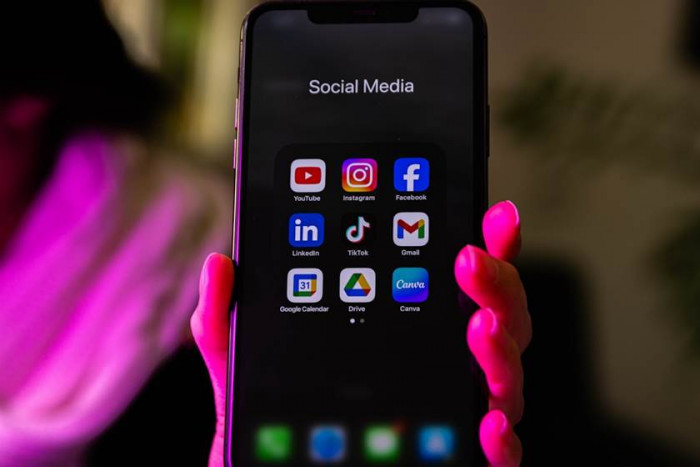
Every platform sets its own username rules, so design for the strictest one first. Photo: dlxmedia.hu / Unsplash
The reference below reflects the major platforms as of early 2026. Rules change occasionally, so verify against each platform's own help pages before you finalize.
| Platform | Length | Allowed characters | Notable quirks |
|---|---|---|---|
| up to 30 | Letters, numbers, periods, underscores | Cannot start or end with a period; no double periods. | |
| X (Twitter) | 4 to 15 | Letters, numbers, underscores | The tightest common limit, so it usually sets your ceiling. |
| TikTok | 2 to 24 | Letters, numbers, periods, underscores | Auto-lowercased; use the display name for capitalized branding. |
| YouTube | 3 to 30 | Letters, numbers, underscores | No periods or hyphens in handles at all. |
| Twitch | 4 and up | Letters, numbers, underscores | No periods; may reclaim long-inactive names. |
| up to 50 | Letters, numbers, periods | Generous, but personal profiles change usernames rarely. |
The single most useful rule that falls out of this table: design for the strictest platform first. Since X caps handles at 15 characters and bars periods and hyphens, a name that fits X will usually fit everywhere else. If cross-platform consistency matters to you, build within that 15-character, letters-numbers-underscores box from the start, and you will avoid the frustration of a name that works in some places and breaks in others.
Common mistakes, and smarter alternatives
Most username regret traces back to a small set of avoidable choices. None of these is a catastrophe, and plenty of successful people carry a handle that breaks a rule here. But if you are choosing fresh, the smarter option costs you nothing.
| Common mistake | Why it tends to backfire | A better move |
|---|---|---|
| @jordan48291 | Random numbers read as an afterthought and are hard to say or recall. | Add a real word: @jordanwrites |
| @jordan1994 | A birth year dates you and can invite age bias in professional settings. | Use a niche word instead of a year. |
| @__jordan__ | Extra underscores are easy to mistype and hard to describe out loud. | Simplify to the cleanest form you can secure. |
| Trend or meme references | They age quickly and can undercut credibility later. | Choose something timeless you will still like. |
| Trying to be too clever | Wordplay that needs explaining slows people down. | Favor clarity; a name should not need a footnote. |
| Inconsistent handles | Different names per platform split your identity and hide you. | Lock the same name everywhere from day one. |
| @jordanthenurse | A job title in the name boxes you in if your work evolves. | Keep it broad enough to grow with you. |
The thread running through all of these is friction. Every mistake above makes a handle a little harder to say, spell, remember, or take seriously. Given the fluency research, small amounts of friction are exactly what you want to strip out.
How to test a handle before you commit
A username feels obvious once you have chosen it, which is precisely why a few quick tests are worth running while you still have options. Try these before locking anything in.
• The radio test. Say the handle out loud as if reading it on a podcast. If listeners could not spell it from hearing it, tighten it.
• The one-hour recall test. Tell a friend your top pick, then ask them to repeat it an hour later. Memorable names survive; forgettable ones do not.
• The search test. Look up the name. If the results are crowded with other people or brands, it will be harder to own your own presence.
• The screenshot test. Picture the handle at the top of a profile, in a link, and in an email signature. Does it look like something you would hand a client or an employer?
If a candidate clears all four, you have something worth claiming.
When to keep it, and when to rebrand
Suppose you already have a username that is less than ideal. Should you change it? This is a real trade-off, not a simple yes.
Changing a handle carries a cost. You lose the recognition built into the old name, you may break links and mentions across the web, and consistency resets while people relearn where to find you. Since first impressions form quickly but fade slowly, an established handle carries accumulated recognition that a new one has to rebuild from scratch.
So it is usually worth keeping a merely imperfect name that already has traction. A change earns its cost in more specific cases: the current handle is genuinely embarrassing, it no longer reflects who you are or what you do, it is so hard to spell that people cannot find you, or you are consolidating scattered handles into one identity. If one of those is true, change it deliberately, secure the new name everywhere at once, and point the old accounts toward the new one. If none apply, your energy is better spent on what you publish than on the name itself.
The bottom line
A username is a tiny asset that does outsized work. The research is refreshingly consistent: names that are short, easy to say, and easy to spell are trusted more, remembered better, and even make the claims attached to them feel more believable. That effect is small, quiet, and applied without anyone noticing, which is exactly why it rewards a little care up front.
Before you claim your next handle, run it through this checklist.
☐ Can a stranger say it and spell it after one look?
☐ Is it about 15 characters or fewer, with no risky symbols?
☐ Can you secure it across every platform that matters, plus a domain?
☐ Will it still fit you in five years, on a resume as much as a bio?
☐ Does it sound like a real person you would want to meet?
Pick the name that clears those bars, claim it everywhere in one sitting, and then forget about it. The best username is the one that gets out of the way and lets your actual work make the impression.