


Table of Content
You already know the feeling. You spend twenty minutes on a post, land on a caption, tack on a stack of hashtags you copied from some list two years ago, hit publish, and get eleven likes, nine of them from people who already follow you. No new customers. No new anything.
So let me be straight with you before we go further: hashtags are not going to fix that on their own. Not in 2026. But they haven't stopped mattering either. They've just changed jobs. I spent a good while going through what the platforms actually announced over the past year (Instagram's December 2025 hashtag cap, TikTok moving the same direction, LinkedIn quietly killing hashtag-following), and the short version is that almost every “30 hashtags for maximum reach” guide still floating around is describing a world that no longer exists.
This is a playbook for a small business owner who doesn't have a marketing department, built around what these tools genuinely do now, and where your size is actually an advantage.

The everyday reality this playbook is written for: another post, another scroll, from behind the counter. Photo: Shixart1985 / Wikimedia Commons (CC BY 2.0).
The one shift that changes everything
The biggest change this year wasn't a feature. It was philosophical, and once it clicks, the rest follows.
THE ONE IDEA TO HOLD ONTO In 2026, hashtags are labels, not megaphones. They tell the algorithm what your post is about and who it's for. They don't push your post to more people on their own; content quality does that. |
Here's what happened over the last year and a half, in plain terms:
| When | What changed | Why it matters to you |
|---|---|---|
| Dec 2024 | Instagram removed the ability to follow hashtags | Tags no longer feed a subscriber feed. They only work through the algorithm now. |
| 2025 | Guidance shifted from “up to 30” to “3–5 relevant” | Instagram told you volume stopped working long before it enforced it. |
| Dec 18 2025 | Announced a hard cap of 5 hashtags per post & Reel | The 30-tag dump isn't just weak now; you literally can't do it. |
| Same period | TikTok leaned harder on content signals; 3–5 became the norm | Both major discovery platforms now reward a defined niche, not a wide net. |
Instagram's own reasoning was that a handful of targeted tags improves both your content's performance and the experience of the people scrolling. And Adam Mosseri, Instagram's head, has said publicly and repeatedly that hashtags don't meaningfully move reach; they help connect a post to a topic. That's the whole story: the spray-and-pray era is over, and precision replaced volume.
The platform cheat sheet
Every platform treats hashtags differently, and copying your Instagram habits onto LinkedIn is one of the fastest ways to look like a bot. Here's where things actually stand:
| Platform | How many | What tags do here now | Small-business tip |
|---|---|---|---|
| 3–5 (5 = cap) | Classify content for the algorithm & search | Put them in the caption; it indexes better than the first comment | |
| TikTok | 3–5 | Help categorize; completion rate drives reach | Drop #FYP / #ForYou; no measurable effect |
| 3–5 | Topic signal for niche B2B discovery | Click a tag first to check it has real followers | |
| X (Twitter) | 1–2 | Anchor to conversations and trends | 1–2 beats zero; 3+ tends to hurt |
| 1–2 | Minor: grouping into public conversations | More than 2 starts to look spammy | |
| YouTube | 3–5 | Discovery, but title/description keywords matter more | Never exceed 15; past that, YouTube ignores all of them |
| 10–15 | Still function as genuine search keywords | The one place where volume still helps | |
| Threads | 1 tag | A single topic per post | One well-chosen tag; that's the design, not a limit to fight |
If you only post to one or two of these, ignore the rest. Depth on the platform where your customers actually are beats a thin presence everywhere.
The five types of hashtag
A strong set is a deliberate mix, not five tags that all do the same job. These are the building blocks:
| Type | What it is | Example |
|---|---|---|
| Branded | Only you and your customers use it. Collects real customer posts you can reshare as social proof. | #YourBakeryName |
| Niche / product | Describes exactly what you sell. Lower competition, higher intent. | #customweddingcakes |
| Community | Connects you to a scene: genuine, active groups that engage with tagged content. | #booktok |
| Location | Geo-specific, and quietly your best weapon. A national brand will never target your city. | #nycfoodie |
| Campaign / trend | Tied to a launch, event, or a genuinely relevant moment. Use sparingly. | #smallbizsaturday |
The small-business formula (this is where you win)
The instinct is to reach for the biggest tags: #smallbusiness #shoplocal #food. Don't. #smallbusiness has hundreds of millions of posts; you'll disappear in seconds. Those tags describe you, but nobody browsing them is looking to buy from you specifically.
The winning move is local + niche. #austinflorist beats #florist every single time, not because it's clever, but because the handful of people browsing it are in Austin, looking for a florist, right now. That's buyer intent a huge brand simply can't compete with, because they're never going to target #nashvillejeweler.
A simple, repeatable formula for your five Instagram slots:
| 1 Location + 1 Niche + 1 Community + 2 that fit the post |
That covers three slots with your fixed identity and leaves two to match whatever you're actually posting; a product launch gets different tags than a behind-the-scenes clip.

A local florist is exactly where #austinflorist beats #florist; the people browsing that tag are nearby and ready to buy. Photo: WayneRay / Wikimedia Commons (CC BY-SA 4.0).
Here's what the formula looks like in practice:
| Your business | A working 5-tag set |
|---|---|
| Austin bakery | #austinbakery #sourdoughbread #atxeats #customcakes #eastaustin |
| Denver plumber | #denverplumber #plumbinglife #milehighhomes #emergencyplumber #coloradohomeowner |
| Candle shop | #handmadecandles #soywaxcandles #smallbatchhome #shopindie #cozyhomedecor |
Notice there isn't a single #smallbusiness in there. Every tag either pins you to a place, names what you make, or points at a community that would actually care.
One more filter: how crowded is the tag?
RULE OF THUMB Aim for tags in the 10K–500K post range. Big enough to have an active audience, small enough that your post isn't buried three seconds after you publish. |
| Tier | Rough post volume | Verdict |
|---|---|---|
| Mega | 10M+ #love #food | Skip: instant burial |
| Macro | 1M–10M #coffee | Rarely worth a slot |
| Mid | 100K–1M | Solid: competitive but reachable |
| Micro | 10K–100K | Often the sweet spot for smaller accounts |
| Nano | Under 10K | Great for hyper-local, confirm it's still active |
Finding these takes thirty seconds: tap any hashtag before you use it and the platform shows you its post count and recent activity. That quick check beats a saved list you never audit.
What to stop doing
Some old habits now work against you. A quick side-by-side:
| Stop doing this | Do this instead |
|---|---|
| Pasting the same 30-tag block on every post | Use 3–5, and rotate through 3–4 different sets |
| Leaning on #FYP / #ForYou on TikTok | Use niche tags that describe the actual video |
| Grabbing trending tags just for reach | Only ride a trend when your post genuinely fits it |
| Generic aspirational tags on LinkedIn #Success | Specific industry tags #B2BMarketing |
| Stuffing 20 tags on a YouTube video | 3–5, and never past 15 (it voids every one) |
| Hiding tags in the first comment for a “clean” look | Put them in the caption; it indexes better for search |
▲ WATCH OUT Reusing an identical hashtag block on every post can trip Instagram's spam detection and quietly suppress your reach. Build a few sets tied to your content themes and cycle through them so you never look like a copy-paste bot. |
The honest part: what actually moves the needle
I'd be doing you a disservice if I let you leave thinking better hashtags are the whole game. They're the label on the box. What's inside is what gets shared. The signals that genuinely drive reach in 2026:
• Watch time, saves, and shares. A Reel people finish and send to a friend will travel regardless of its tags. One they scroll past won't be rescued by any hashtag.
• Keyword-rich captions. Instagram now reads your caption like a search engine. Hootsuite's 2026 numbers pointed to keyword-focused captions pulling meaningfully more reach and engagement than hashtag-heavy ones. Write the way a customer would actually search: “low-waste morning skincare routine,” not #skincare #glow.
• Reels and Collabs. Short-form video and co-authored posts remain the strongest organic levers on Meta. They put you in front of non-followers far more reliably than tags do.
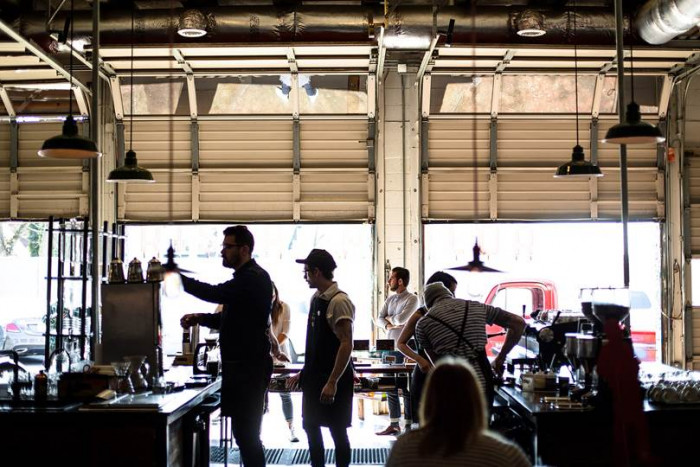
Real people, real work: the kind of behind-the-scenes content that out-performs any tag list. Photo: Tim Wright / Wikimedia Commons (CC0).
THE HONEST FRAMING Hashtags help the right people find content that's already good. They can't make mediocre content travel. Fix the content first; the tags are the finishing touch. |
A weekly workflow you'll actually keep up
No paid tool. No spreadsheet with 400 tags. Here's a lightweight system:
1. Build 3–4 tag sets, one per theme you post about, say, “behind the scenes,” “product,” and “tips.”
2. Fill each set with the formula: a location tag, a niche tag, a community tag, plus room for two that fit the post.
3. Check each tag once: click it, confirm it's in that 10K–500K range and still active.
4. Rotate the sets so you're never pasting the same block twice in a row.
5. Read your analytics monthly. On Instagram, tap a post → View Insights → check reach from hashtags. It won't name the single winning tag, but it tells you whether your tags are pulling their weight or just taking up space.
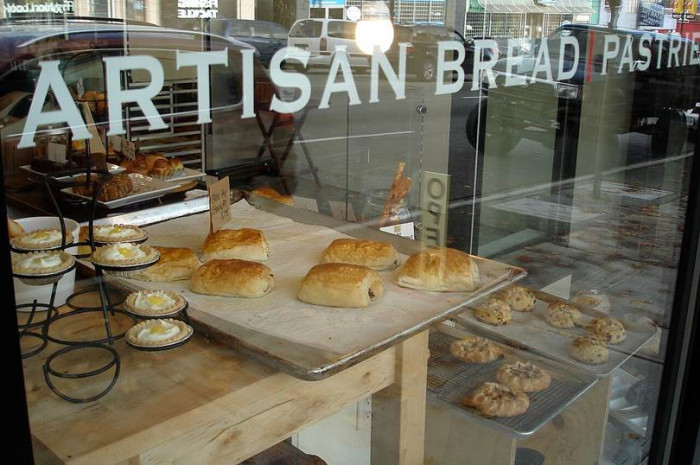
A window display is a post waiting to happen: pair it with a location + niche tag and a caption a customer would actually search. Photo: Vancouver Bites! / Wikimedia Commons (CC BY-SA 2.0).
Twenty minutes to set up. Five minutes a week after that.
The Final Verdict
Precision beats volume, and local beats everyone
If you take one thing from all of this, let it be this: in 2026, hashtags are a supporting act, not the headliner. I went into the research half-expecting to find that hashtags were basically finished, and that's not quite it. They still do real, useful work as labels that help the right people find you, and that's most true in the niche and local corners where you can genuinely out-compete the big brands. What's gone for good is the idea that stacking more of them buys you reach.
So if I were running your account starting Monday, here's exactly what I'd do. I'd pick five tags per Instagram post using the location + niche + community formula, build three rotating sets, and never think about “30 hashtags” again. I'd write captions in plain language my customer would actually type into a search bar. I'd put my real energy into one genuinely good Reel a week rather than a perfect tag list on a forgettable photo. And I'd check my numbers once a month, not once an hour.
Be patient with it, too. This is a compounding game, not a lottery ticket: you're building a clear signal to the algorithm and a searchable trail for the people looking for you, and that pays off over weeks, not overnight. Nothing here will make you go viral, and anyone promising otherwise is selling something. But a tight, local, well-chosen handful of tags sitting on content that's actually worth watching? That's a real, quiet edge, and it's one the business down the street almost certainly isn't using yet.