


Table of Content
- Know Which Field You're Actually Filling
- The Anatomy of a Bio That Pulls Its Weight
- The Psychology Behind a Scroll-Stopping First Line
- Facebook Bio Ideas for Entrepreneurs
- Facebook Bio Ideas for Freelancers
- Facebook Bio Ideas for Working Professionals
- Bios by Tone: Match the Voice to You
- Adding Personality Without Losing Credibility
- Common Mistakes That Quietly Cost You
- How to Write Yours in 15 Minutes
- Testing, Updating and Measuring Over Time
- Your Bio Is a Promise, Not a Label
Most people treat the Facebook bio as a formality. You fill it in once during setup, maybe drop a job title and a hometown, and never look at it again. That is a mistake, because it is often the very first full sentence a stranger reads about you before deciding whether you are worth a message, a follow, or a referral.
The bio is not a label that says who you are. It is a signal that tells a specific person whether you are for them. A potential client, a recruiter, an old colleague with a lead, or a journalist checking you out all land on the same few lines and make a snap judgment. This article shows you how to make those lines earn their place in the strategy, the small amount of psychology that matters, and plenty of examples you can adapt for entrepreneurs, freelancers, and working professionals.
Know Which Field You're Actually Filling
Here is the thing almost every "bio ideas" article skips: Facebook does not have one bio. It has several text fields that look similar but behave very differently, and writing the same line into all of them is why so many profiles feel flat. Before you write a word, you need to know which box you are in.
On a personal profile, the short Bio sits under your name and photo and is capped at around 101 characters, roughly one punchy sentence. The Intro / Details block beneath it holds structured facts like your workplace, city, and a link. The About section, one tab deeper, is where longer context lives and where almost nobody scrolls, so it is for depth, not headlines. A Page bio (for a business or creator Page) is a different animal entirely: it is built for discovery and conversion, not personality.
| Field | Where it shows | Rough length | Best used for |
| Bio (personal) | Under name and photo | ~101 characters | Your sharpest one-liner who you help and how |
| Intro / Details | Below the bio | Short structured fields | Workplace, role, city, one external link |
| About section | Separate tab | Long-form | Backstory and context for people who dig deeper |
| Page bio | Top of a Page | Short paragraph | Discovery, search keywords, and a clear next step |
The practical takeaway: spend most of your effort on the short Bio field, because it is the one seen most and read first. Treat the About section as a place for substance rather than cleverness, and if you run a Page, write its bio for a cold visitor who has never heard of you.
The Anatomy of a Bio That Pulls Its Weight
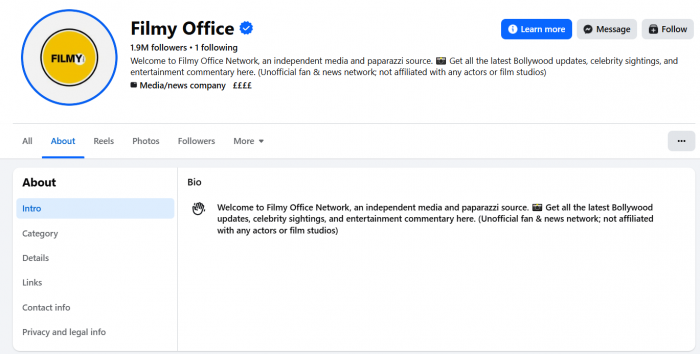
A strong bio is not a single clever phrase; it is a small stack of parts doing specific jobs. When one part is missing, the whole line feels off even if you cannot say why. Most bios that work contain some mix of the following:
● The who : the kind of person you serve or the room you belong in. "For early-stage SaaS founders" tells a reader instantly whether to keep reading.
● The what : the concrete outcome you create, in plain words. Not "marketing services" but "I help stores double their email revenue."
● The proof : a quiet credibility marker: a number, a notable client, a past role, a result. One is enough; three is bragging.
● The human touch : a single detail that makes you a person, not a LinkedIn headline that wandered onto Facebook.
You do not need all four every time, and the short Bio field rarely has room for more than two. But knowing the parts lets you choose deliberately instead of defaulting to a job title.
A formula worth keeping in your head: [who you help] + [the outcome you create] + [a small proof or a human detail]. Watch it work on a real example. Take a weak bio "Digital marketing professional. Passionate about growth." It names a category and an adjective, and says nothing a reader can act on.
Now rebuild it: "I help DTC brands turn one-time buyers into repeat customers. Ex-Shopify. Dog person." The second version names the who (DTC brands), the what (repeat customers), the proof (ex-Shopify), and a human beat (dog person) and it is still short enough to read in a glance.
The Psychology Behind a Scroll-Stopping First Line
People do not read bios the way you write them. You agonize over every word; they skim the first few and decide in about a second whether you are relevant. That gap is the whole game, and a handful of principles close it.
The first is clarity over cleverness. A reader who has to decode a pun or a vague slogan will simply move on, because the cost of figuring you out is higher than the cost of scrolling. "I turn messy spreadsheets into dashboards. Executives actually use" beats "Data whisperer ✨" every time, because one of them answers a question the reader is silently asking and the other asks them to do the work.
The second is specificity. Concrete nouns and real numbers carry far more weight than adjectives. "Passionate, dedicated, results-driven" are words everyone claims and no one can verify, so the brain discounts them automatically. "Helped 40+ clinics cut no-shows" cannot be faked as easily, so it lands. The rule of thumb: if a competitor could copy your bio word for word and it would still be true for them, it is too generic.
The third is reader self-interest. The strongest bios are quietly about the reader, not the writer. Before you publish, run one test on your first line. Would a stranger in your target audience read it and think "that is about my problem"? If the answer is no, you have written a description. If the answer is yes, you have written a hook.
Facebook Bio Ideas for Entrepreneurs
Entrepreneurs have a particular challenge: you are often the brand, so your bio has to sell the business and the person at once. What you lead with depends on your stage and what you need from the reader right now. The examples below are grouped by situation, with a note on why each one works.
For a founder building in public, where attention and trust matter more than a hard pitch:
● "Building [Product] in public : a calmer inbox for busy teams. Sharing the messy parts too." Names the product and the mission, and honesty invites people to follow the journey.
● "Second-time founder. First one failed loudly, this one's growing quietly." The contrast is human and signals hard-won experience without listing credentials.
● "Day 212 of building a tool I wish existed. Follow along for the wins and the faceplants." The day count creates a sense of momentum and a reason to check back.
For a local or service business owner, where the reader is often a nearby customer, a well-written Facebook bio for local customers can make the business easier to identify and contact.
● "Wood-fired pizza in Austin. If there's a line, it's worth it." Specific about place and product, with a little confidence that reads as personality.
● "I help homeowners stop dreading their renovation. 200+ projects, zero disappearing acts." Names a real fear and answers it with proof.
● "Family-run flower shop since 1998. We know what your anniversary needs before you do." Longevity plus a warm, knowing promise beats a plain shop description.
● "Mobile dog grooming across Leeds. Your dog comes back happy, your carpet stays clean." Two concrete benefits a pet owner instantly cares about.
For a personal-brand-led founder, where you are the main draw:
● "I teach solopreneurs to run a business that doesn't run them. Newsletter below." Promises a clear outcome and points to a next step.
● "Bootstrapped to $1M, no investors, no burnout cult. Here's how." The numbers and the stance set you apart from generic hustle content.
● "Quit my corporate job to help other people quit theirs. 3 years in, no regrets." A clear origin story that signals exactly who this is for.
For an e-commerce or product founder, where the product has to feel distinct fast:
● "I make the socks you'll actually reorder. Merino, no logos, no nonsense." A tight product promise with a point of view baked in.
● "Founder of [Brand]. Skincare for people tired of 11-step routines." Names the enemy the product is reacting against, which makes it memorable.
Notice what the strong ones share: a clear who, a believable proof point, and almost never the word "entrepreneur" itself. You show it by what you say, not by claiming the label.
Facebook Bio Ideas for Freelancers
A freelancer's bio has one job above all others: make the right client think "I need to message this person." That means niche beats breadth. "I do design" invites nobody; "I design Shopify stores for skincare brands" makes a specific founder stop. It also helps to quietly signal that you are available and that working with you is low-risk.
For a writer or content specialist:
● "I write the emails your customers actually open. B2B SaaS, mostly. Booking Q4 now." Names the niche, hints at results, and signals availability in a few words.
● "Ghostwriter for founders who are too busy to post but too smart to go quiet." Frames the exact tension the ideal client is living with.
For a designer:
● "Brand and packaging design for food startups. If it goes on a shelf, I can make it sell." Ties the craft to a commercial outcome instead of stopping at "designer."
● "I design slide decks that don't put investors to sleep. Used in $40M+ of raises." A specific format plus a proof number that matters to the buyer.
For a developer:
● "I rescue half-finished web apps and ship them. Rails + React. Ex-agency, now freelance." "Rescue" names a real client pain and the stack filters for the right projects.
● "Shopify developer. I fix the checkout bugs quietly costing you sales." Points straight at lost revenue, which is what gets a store owner to act.
For a consultant or coach:
● "I help first-time managers stop firefighting and start leading. 10 yrs in ops." Describes the transformation, not the service, and backs it with tenure.
● "Fitness coach for people who hate gyms. Home workouts, zero judgment." Names who it is for by naming who it is not for.
For a photographer, video, or other creative freelancer:
● "Wedding photographer who stays out of your way and still gets the shot." Addresses the unspoken fear of an intrusive photographer.
● "Product video for small brands. Scroll-stopping clips without the agency price tag." Pairs the outcome with a cost objection answered up front.
One freelancer-specific move worth stealing: a soft availability cue like "booking spring projects" or "two client slots open." It does two things at once: it tells people you are open for work, and it implies you are in demand enough to have a waitlist.
Facebook Bio Ideas for Working Professionals
Professionals who are not selling anything have a subtler balance to strike. Facebook, for most employees, is a semi-personal space for old friends, family, former coworkers so a bio that reads like a corporate headline feels stiff and out of place. The aim is to look competent and current without turning your profile into a résumé. Your situation changes what you should lead with.
If you are actively job-hunting and want it known without shouting:
● "Supply chain analyst, open to new roles in the DMV area. Good with messy data and tight deadlines." States the goal plainly and adds a human line that hints at how you work.
● "Recent marketing grad looking for my first role. I learn fast and ask good questions." Honest about the stage while naming two traits an employer actually wants.
If you are quietly building a professional reputation while employed:
● "Nurse by trade, writing about burnout in healthcare on the side." Pairs the day job with a point of view, which is what makes a professional memorable.
● "Software engineer who explains hard things simply. Occasional threads on system design." Signals expertise and a willingness to share it, which builds a quiet following.
If you want to stay approachable but credible among a mixed audience:
● "Civil engineer. I build bridges for a living and over-explain them at parties." The self-aware humor keeps it warm while the role stays clear.
● "Teacher, coffee optimist, keeper of 28 small humans every weekday." Warm and specific, right for a profile where friends and colleagues mix.
If you are a senior professional or leader where authority should come through:
● "20 years in finance. Now helping younger colleagues avoid the mistakes I made." Tenure plus a generous angle that reads as leadership, not bragging.
● "Operations director. I turn chaotic teams into calm, shipping ones." A plain, confident outcome that senior peers immediately understand.
A note on the job-seeker case specifically: if you are employed and discreetly looking, keep the signal subtle and let your Intro link carry the detail rather than broadcasting it in the headline. The bio sets the tone; the quieter fields do the logistics.
Bios by Tone: Match the Voice to You
Two people in the same job can need very different bios, because voice is part of the message. A tax advisor and a tattoo artist should not sound alike even if both are freelancers. Picking a tone on purpose keeps your bio from drifting into the beige middle where everyone sounds the same. Here are four reliable registers and the kind of person each suits.
| Tone | Feels like | Good fit for | Example |
| Professional | Calm, competent | Consultants, finance, law | "Fractional CFO for agencies scaling past $5M." |
| Witty | Warm, memorable | Creators, writers, hospitality | "I make spreadsheets that don't make you cry." |
| Minimalist | Confident, spare | Designers, developers, senior roles | "Product designer. Berlin. Currently at [Company]." |
| Story-driven | Human, relatable | Coaches, founders, career-changers | "Left law to build furniture. Best decision I ever made." |
The mistake is reaching for wit because it seems friendly when your audience actually wants reassurance, or going minimalist when you have not yet earned the authority that makes short lines land. Match the tone to who is reading and what they need to feel before they trust you. When in doubt, the professional-but-human register has a clear role, one warm detail is the safest default and rarely reads wrong.
Adding Personality Without Losing Credibility
Personality is what stops your bio from reading like everyone else's, but it is also where good bios go to die. One too many emojis, one in-joke only you understand, and a credible profile starts to look unserious. The goal is a single human detail that earns its place, not a pile of them.
The useful filter is to ask whether a detail adds signal or just noise. Signal makes you more memorable or more relatable to the exact person you want to reach; noise is decoration that could belong to anyone. "Dog person" after a line about enterprise sales is signal it humanizes a buttoned-up field. A string of unrelated emojis is noise. A hobby that quietly reinforces your work ("ultramarathoner" on a resilience coach) is signal; a random one that distracts from it usually is not.
A few practical limits keep this on the right side. Use at most one emoji, and only if it genuinely replaces a word or adds warmth. Pick one personal detail, not three. And make sure the joke, if you use one, still makes sense to a stranger, humor that needs context is just confusion with extra steps. Personality should make you easier to trust, not harder to read.
Common Mistakes That Quietly Cost You
Most weak bios are not disasters. They are small, fixable misses that add up to a profile people skim past without a second thought. The ones below are the most common, each paired with what to do instead.
| The mistake | Why it hurts | The fix |
| Leading with a vague title | "Marketing professional" tells no one anything | Lead with who you help and the result you get them |
| Stuffing in keywords | Reads like a robot, repels humans | Write for one real person, not a search index |
| Adjective soup | "Passionate, driven, dedicated" is unverifiable | Replace each adjective with a concrete fact or number |
| No next step | A reader who is interested has nowhere to go | Add a soft CTA or a link in the Intro field |
| Copying a competitor | You inherit their blandness and lose your edge | Say the thing only you could honestly say |
| Set and forget | An outdated bio makes you look inactive | Revisit it every quarter or after any role change |
If you only fix one of these, make it the first. A vague title is the single most common reason a bio does nothing, because it fails at the one moment that matters the second a stranger decides whether you are worth their attention.
How to Write Yours in 15 Minutes
Reading about bios is easy; writing one is where people stall. Looking at a few short Facebook bio ideas can help you find a starting point before refining your own. This process gets you from a blank field to a finished line without the usual overthinking.
1. Draft three versions fast, without judging them. One straightforward, one with personality, one almost too blunt. Speed here beats polish; you are generating raw material, not finishing.
2. Cut every adjective you can. For each one you delete, ask what concrete fact could replace it. "Experienced" becomes "12 years"; "trusted" becomes a client name or a number.
3. Read only the first line aloud, by itself. If it does not make your target reader think "that is for me," rework it before touching anything else. The first line carries most of the weight.
4. Get one outside read. Send your favorite version to someone in your audience, not your mum, and ask a single question: "Would this make you message me?"
5. Publish, then set a reminder to revisit in three months. A bio is never truly finished; it just needs to be current.
The whole thing takes about fifteen minutes and beats staring at the field for a week. The outside read in step four is the part people skip and the part that helps most you are too close to your own work to see where it is unclear.
Testing, Updating and Measuring Over Time
The people who get the most from their bio treat it as a living asset, not a one-time chore. That mindset is rare, and it is exactly why most profiles stagnate. You do not need analytics software to tell whether yours is working; the signals are already in front of you.
Watch the soft indicators that follow a bio change. Are you getting more friend or follow requests from the kind of people you actually want? Are inbound messages starting with "I saw you help with X" instead of "hey"? Are the right people finding you without an introduction? When your bio is doing its job, the conversations that reach you are better qualified, not just more numerous.
Then update it on purpose rather than by accident. Refresh the line whenever your role changes, when you launch something, or at the start of a new quarter when your priorities shift. A bio that still describes a job you left two years ago does quiet damage every day it stays up. Treating the update as routine maintenance the same as tidying a workspace keeps your first impression matched to who you are now, not who you used to be.
Your Bio Is a Promise, Not a Label
If there is one idea to carry away from all of this, it is that a bio is not a description of who you are. It is a signal of who you are for. The label-writers tell the world their job title. The people who actually get messaged tell the right stranger that they understand a problem and can solve it in one clear line, with a little humanity attached.
That shift in framing is what separates a bio that sits there from one that works for you while you sleep. Whether you are a founder, a freelancer, or a professional quietly building a reputation, the move is the same: pick the one person you most want to reach, say the thing that makes them stop, and keep it current.
So here is the nudge. Open your profile right now, read your current bio out loud, and ask whether a stranger would know who it is for. If the answer is no, you already know your next fifteen minutes.