


Table of Content
- 8 AI Detection Tools at a Glance
- 1. Copyleaks : Best for Enterprise Content Verification
- 2. Originality.ai : Best for Content Publishers
- 3. GPTZero : Best for Document-Level Investigation
- 4. Winston AI : Best for Mixed-Media Content Reviews
- 5. Smodin : Best for Writing and Content Teams
- 6. Pangram : Best for AI-Assisted Writing Analysis
- 7. Scribbr : Best for Free Document Screening
- 8. Undetectable AI : Best for Multi-Detector Screening
- Choosing the Right AI Detection Tool
- Bottom Line
AI-generated text has become a regular part of business content production, but determining how a document was written remains difficult. A polished article, proposal, or marketing report may contain AI-generated passages that are hard to distinguish from human writing. For publishers, agencies, and enterprise teams, AI detection tools provide an additional layer of content review, although their findings cannot prove authorship.
The following eight tools offer different approaches to AI detection, from multilingual enterprise screening to affordable document checks and specialized content analysis.
8 AI Detection Tools at a Glance
| Tool | Best Suited For | Free Access |
| Copyleaks | Enterprise content verification | Limited |
| Originality.ai | Publishers and SEO agencies | Yes |
| GPTZero | Document and editorial reviews | Yes |
| Winston AI | Mixed-media content auditing | 14-day trial |
| Smodin | Writing and content teams | Limited |
| Pangram | AI-assisted writing analysis | Yes |
| Scribbr | Occasional document screening | Yes |
| Undetectable AI | Multi-detector checking | Yes, limited |
These tools are selected for their different business applications, not ranked by independently verified detection accuracy. A tool suited to checking freelance articles may be unsuitable for an enterprise processing documents through an API.
1. Copyleaks : Best for Enterprise Content Verification
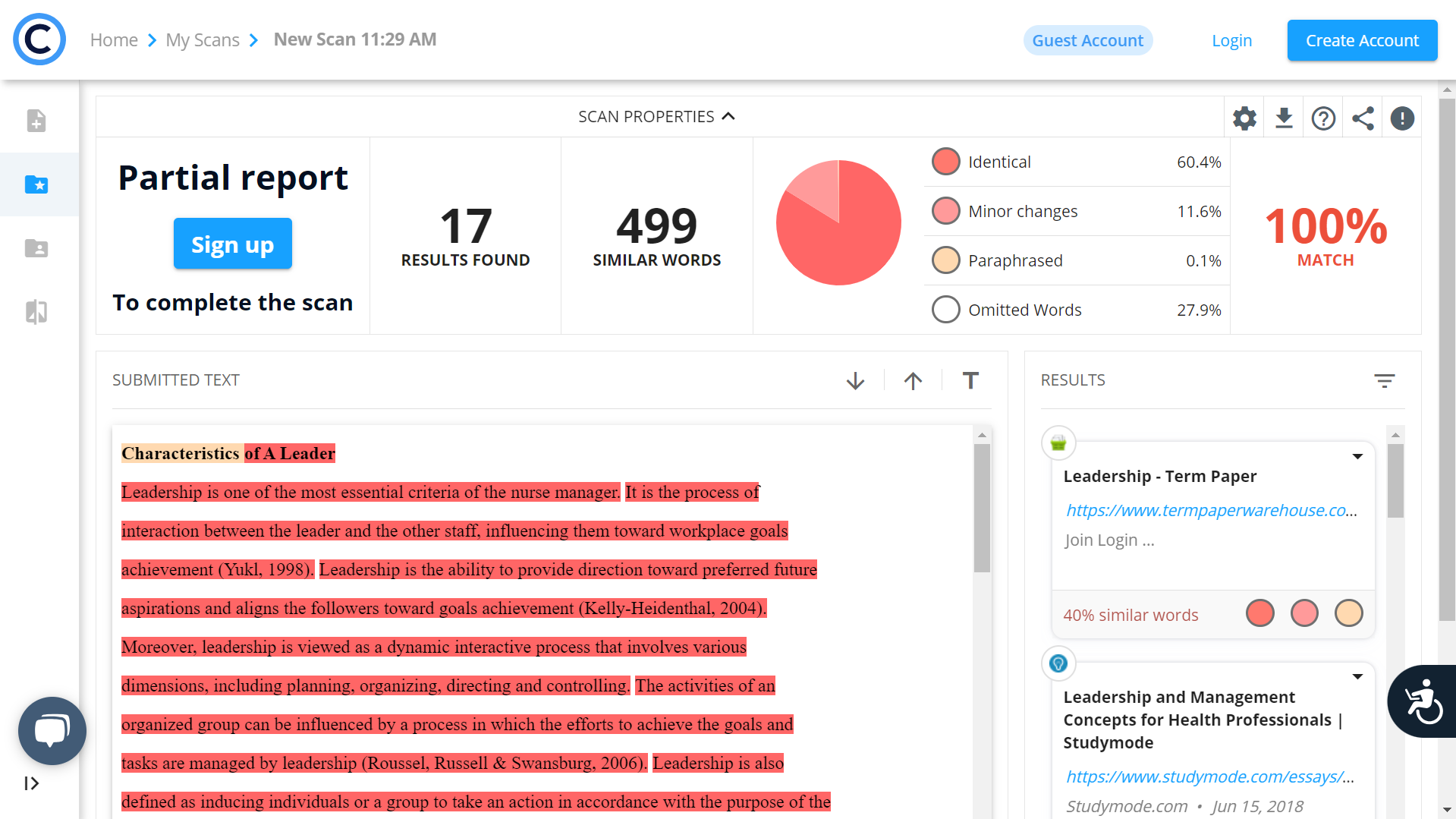
Copyleaks helps businesses identify AI-generated content and potential plagiarism across multiple languages. It is particularly useful for enterprises, publishers, and agencies managing large volumes of written material.
A marketing agency handling multilingual articles can use Copyleaks to screen submissions, while its integrations and centralized reporting help teams organize reviews and maintain consistent content standards.
What It Offers
| Feature | Business Value |
| Multilingual AI Detection | Screens AI-generated writing across more than 30 languages. |
| AI and Plagiarism Reports | Checks potential AI generation and copied content within one workflow. |
| Batch and Website Scanning | Reviews multiple documents or entire websites on eligible plans. |
| Team Management | Supports shared access, administrative controls, and centralized reporting. |
Where It Works Well
Copyleaks is particularly useful when content passes through several departments or language teams before approval. The Pro plan includes 25 user seats and website scanning, allowing organizations to move beyond individual document checks and examine entire content libraries.
Where It Falls Short
Its Personal plan has a relatively small monthly allowance of 100 unified credits, equivalent to up to 25,000 words of text scanning. Upgrading to Pro substantially increases the cost, and changing subscriptions can override remaining credits.
Pricing: A limited free checker is available. Paid plans start at $16.99/month, or $13.99/month with annual billing.
Best for: Multinational businesses, marketing agencies, and enterprise content teams.
2. Originality.ai : Best for Content Publishers
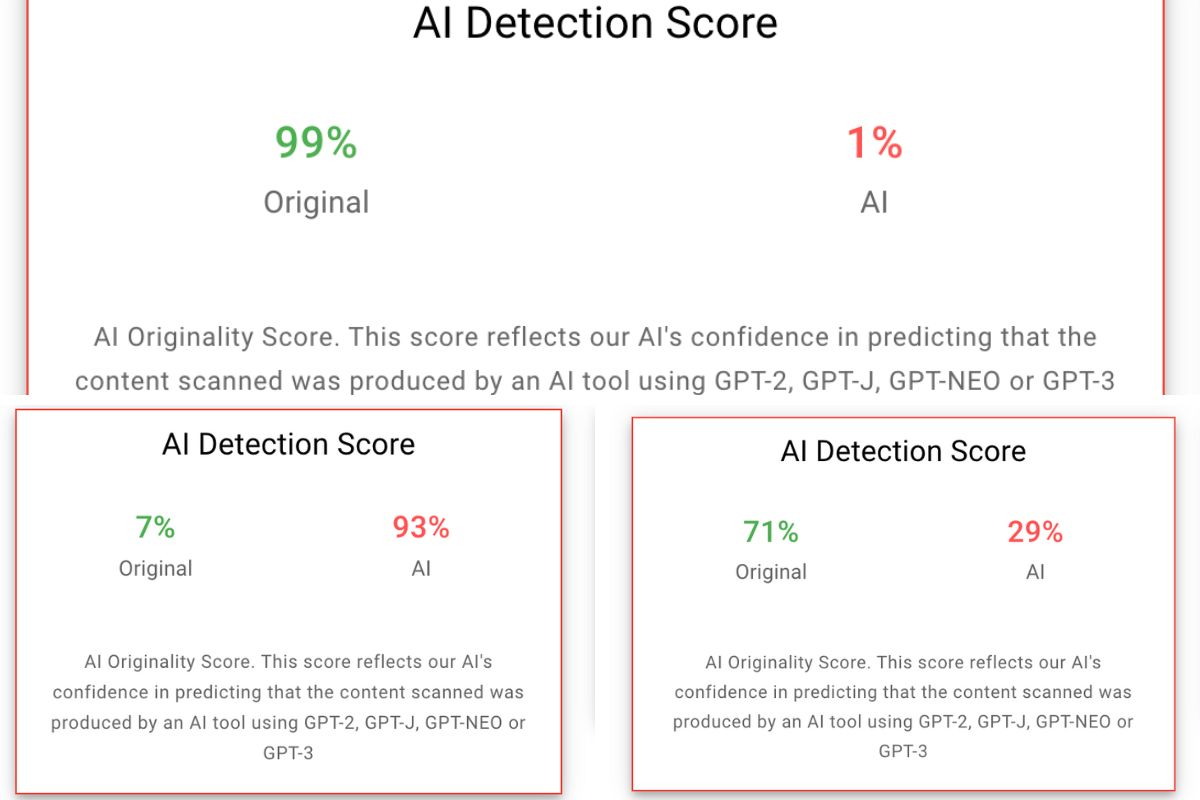
Originality.ai focuses on content authenticity within publishing and SEO workflows. It brings AI detection, plagiarism checking, website scanning, and editorial quality assessments into one platform, making it relevant to businesses purchasing articles from external writers.
An agency reviewing freelance submissions can check individual articles before publication and later examine existing website pages. This is useful for maintaining a consistent review process across a growing content library.
What It Offers
| Feature | Business Value |
| AI Content Detection | Identifies passages that may contain AI-generated writing. |
| Website Auditing | Scans individual URLs or complete websites for content reviews. |
| Plagiarism Checking | Identifies potential overlap with previously published sources. |
| Writing Process Replay | Provides additional writing-history context through its Google Docs extension. |
| Team Workflow Tools | Supports roles, scan tags, and shared editorial organization. |
Where It Works Well
Originality.ai makes sense for publishers managing repeated editorial checks rather than isolated submissions. Site-level scanning, tagging, and collaboration help an editor oversee articles from multiple contributors. Enterprise adds API access and a longer scan-history retention period.
Where It Falls Short
The credit system needs careful planning. One credit covers 100 words of AI detection, but running plagiarism checks alongside detection consumes additional credits. Monthly subscription credits also expire, which can make inconsistent publishing schedules less economical.
Pricing: A free plan provides three scans daily. Paid plans start at $14.95/month, or $12.95/month with annual billing.
Best for: Digital publishers, SEO agencies, and businesses regularly commissioning written content.
3. GPTZero : Best for Document-Level Investigation
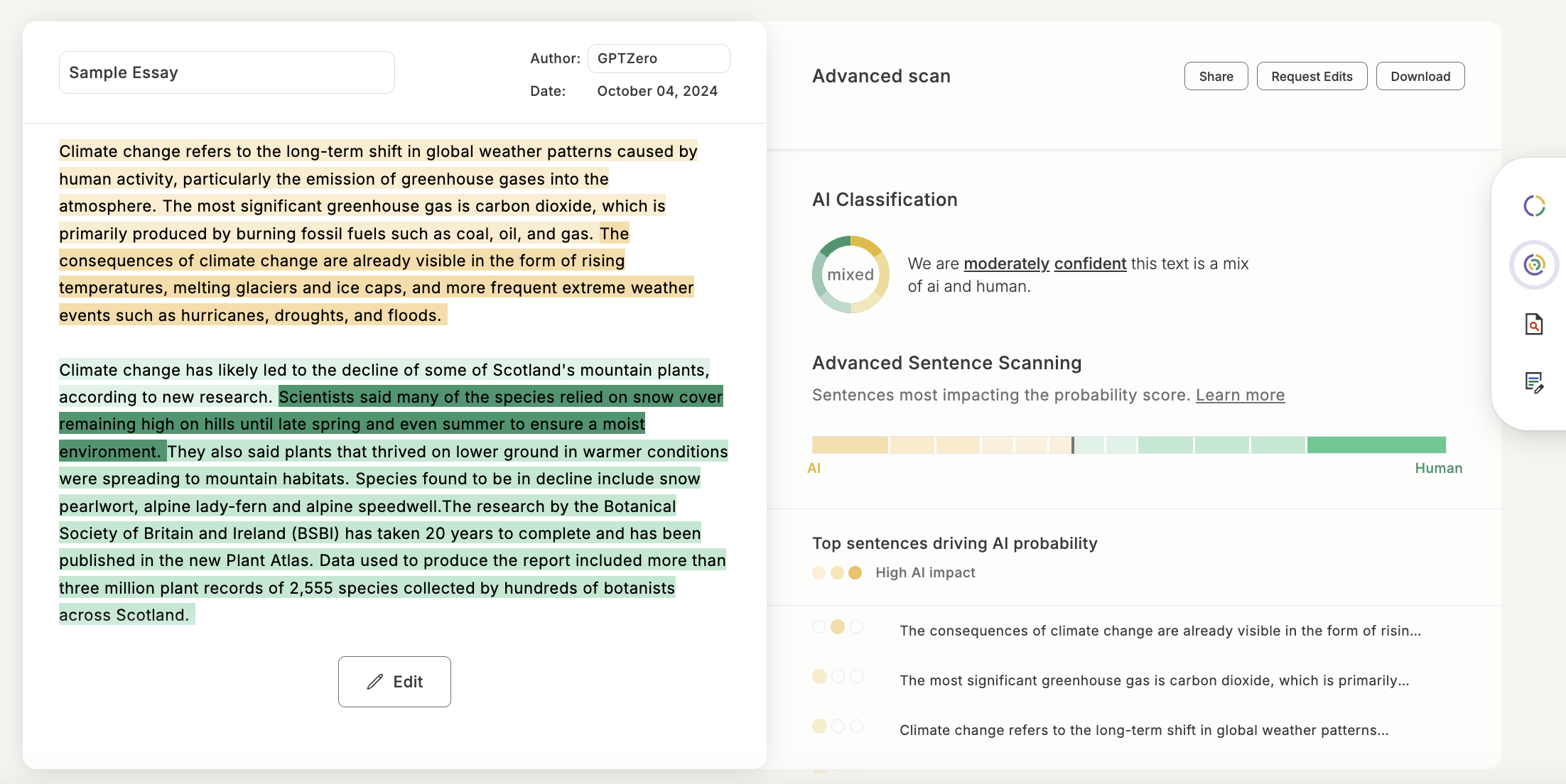
GPTZero concentrates on identifying potentially AI-generated passages within written documents. Its highlighting and writing-process features provide additional context for editors who need to investigate a submission instead of relying on a single detection percentage.
For businesses, this approach is relevant when reviewing reports, research contributions, or articles whose authorship has been questioned. An editor can examine flagged sections alongside the document's revision evidence before requesting clarification.
What It Offers
| Feature | Business Value |
| Passage-Level Detection | Highlights specific sections that may require editorial examination. |
| Document Uploads | Supports reviewing longer submissions and batches on eligible plans. |
| Writing Process Tracking | Records writing activity in supported Google Docs workflows. |
| Plagiarism Screening | Adds source-comparison checks to document evaluation. |
Where It Works Well
GPTZero is useful when reviewers need more than a document-wide classification. Passage highlighting allows an editor to examine a suspicious section without questioning an entire article. Its writing-process extension may also provide useful context when a writer has recorded their drafting activity.
Where It Falls Short
The presence of highlighted passages does not establish that a writer used AI. Writing-process tracking also depends on the document being created in a supported environment. GPTZero states that paid subscriptions mainly expand document and batch limits for general users, rather than introducing a fundamentally different detector.
Pricing: A free plan is available. Paid plans start at $14.99/month, or $8.33/month with annual billing.
Best for: Editorial teams, research organizations, and businesses reviewing long-form submissions.
4. Winston AI : Best for Mixed-Media Content Reviews

Winston AI combines written-content detection with image screening, plagiarism analysis, and document recognition. It is relevant to organizations receiving content in different formats, particularly agencies reviewing PDFs, scanned material, and digital media.
Its optical character recognition capabilities allow text to be extracted from documents that cannot easily be copied. For a content agency receiving scanned reports or externally supplied marketing assets, this reduces the need to prepare everything manually before checking.
What It Offers
| Feature | Business Value |
| AI Text Detection | Examines written material for patterns associated with AI-generated text. |
| Image and Deepfake Detection | Screens supported visual assets for potential synthetic origins. |
| OCR Technology | Extracts text from images, handwritten material, and scanned documents. |
| Website Scanning | Reviews content from web pages without manual copying. |
| Shareable Reports | Provides results that editors and clients can examine outside the original scan. |
Where It Works Well
Winston AI is useful for organizations handling more than ordinary text documents. Its image analysis, OCR, and reporting features support a wider content review process, while Advanced and Elite plans accommodate collaborative work.
Where It Falls Short
The free version is a 14-day trial rather than a permanent allowance. The Essential plan focuses on AI detection and does not include the advanced plagiarism checker, which requires a higher subscription. Unused monthly credits expire instead of carrying over.
Pricing: A 14-day free trial includes 2,000 credits. Paid plans start at $18/month, or $10/month with annual billing, before promotions.
Best for: Content agencies, digital publishers, and businesses reviewing text and visual material.
5. Smodin : Best for Writing and Content Teams
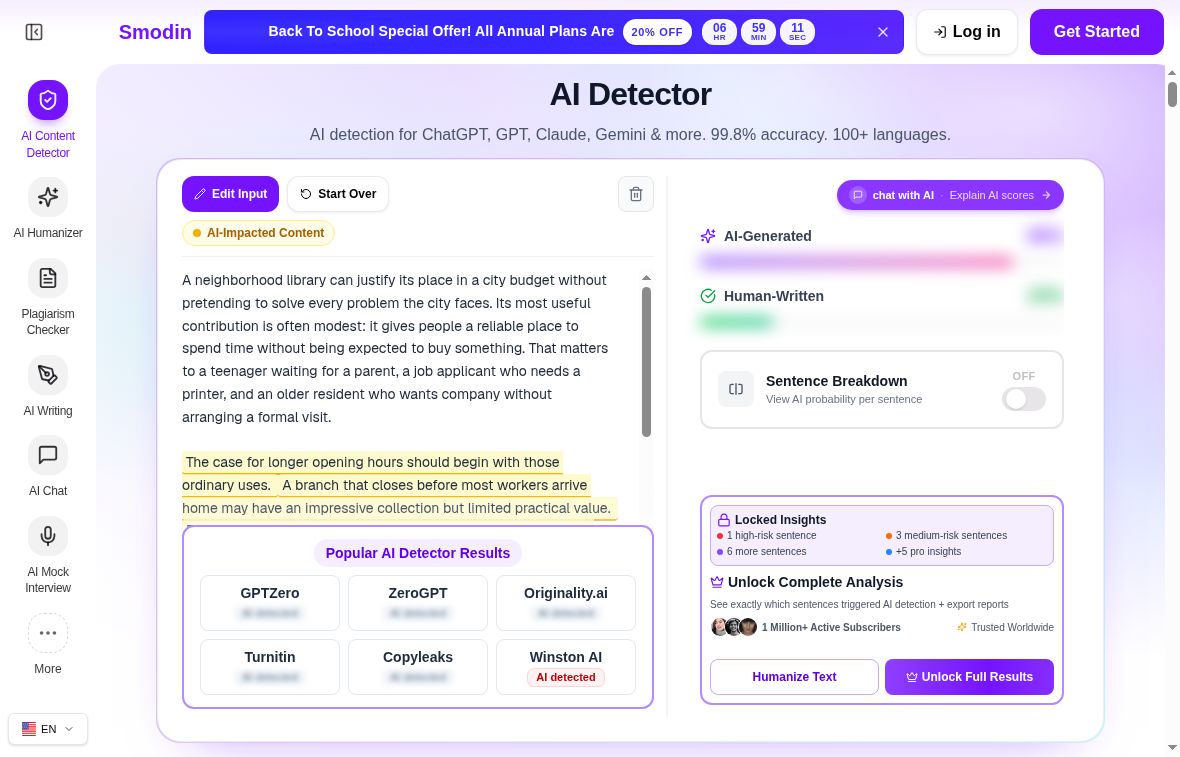
Smodin combines AI detection, plagiarism screening, and writing assistance in one platform. Its detector supports more than 100 languages, making it relevant to businesses reviewing international marketing copy, documents, and research material.
A small content team can use Smodin to examine submissions, identify potential source duplication, and improve drafts without maintaining separate subscriptions for every writing-related task.
What It Offers
| Feature | Business Value |
| Multilingual AI Detection | Screens writing in more than 100 languages, according to Smodin. |
| Sentence-Level Reports | Highlights potentially AI-generated passages for closer review. |
| Plagiarism Checking | Identifies possible duplication against web and academic sources. |
| Document Uploads | Accepts TXT, DOC, DOCX, and PDF files for analysis. |
| Writing Utilities | Includes rewriting, summarization, translation, and AI writing tools. |
Where It Works Well
Smodin is useful for smaller teams that need content screening and writing utilities under one subscription. Its broad advertised language coverage is appealing to businesses working with international contributors, while document uploads simplify checks on externally supplied material.
Where It Falls Short
Smodin's product is divided between standard and advanced detection features, so businesses need to confirm which capabilities their subscription includes. Its advertised 99.8% detection accuracy is a vendor claim rather than a guarantee across every language or writing style.
Pricing: Limited free detection is available. Paid plans start at $10/month with annual billing.
Best for: Small content agencies, multilingual writing teams, and businesses wanting detection alongside editing tools.
6. Pangram : Best for AI-Assisted Writing Analysis
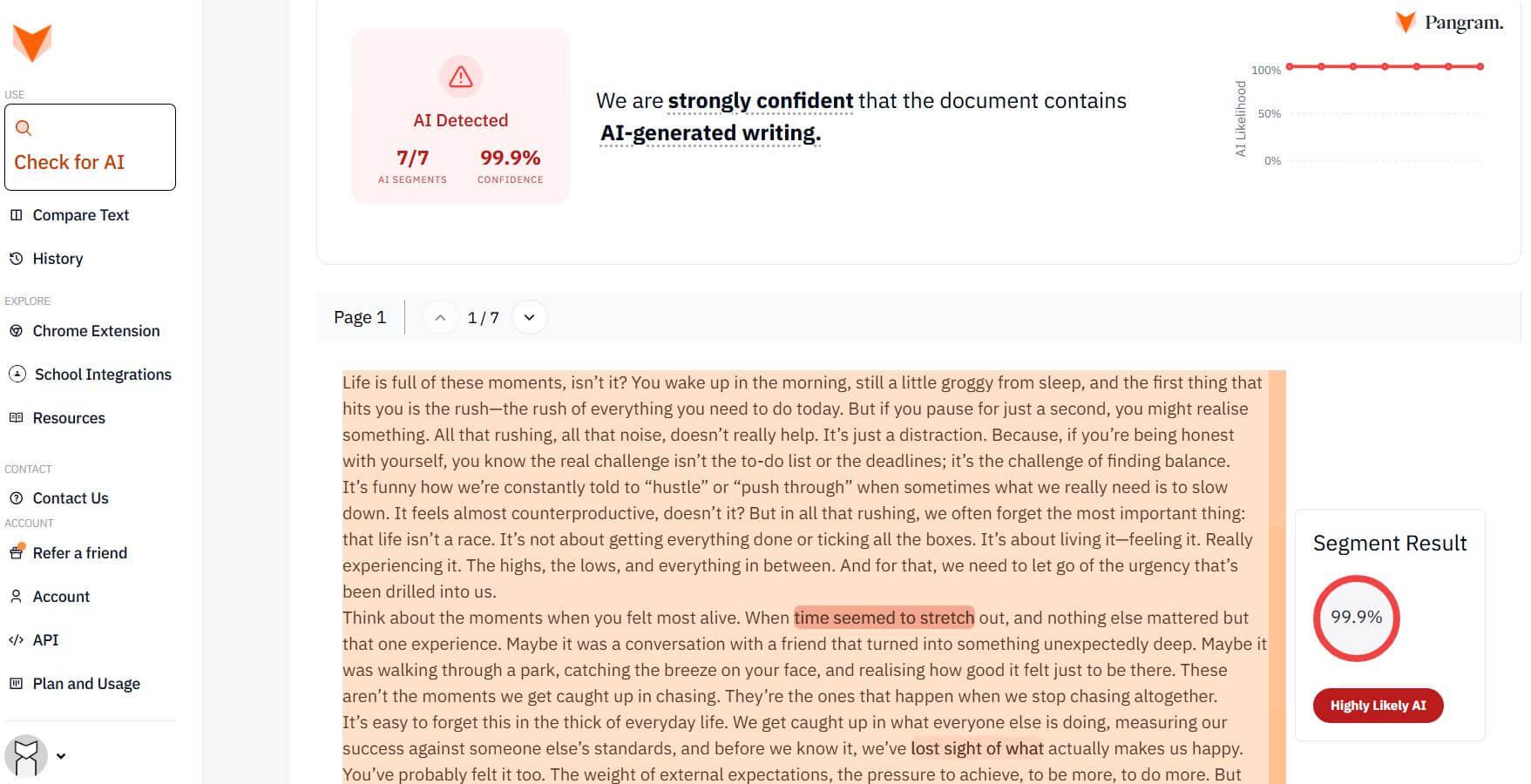
Pangram focuses on distinguishing human-written material from AI-generated and AI-assisted content. Its reports are designed to give reviewers more context about suspicious passages, which can be useful when a business permits limited AI assistance but requires original contributions.
For example, an editorial team reviewing research-based articles can examine flagged sections alongside submitted sources and earlier drafts. Pangram also provides document, browser, and website-related checking features.
What It Offers
| Feature | Business Value |
| AI-Assistance Detection | Identifies content potentially combining human and AI writing. |
| Interpretability Features | Explains which parts of a document influenced the detection result. |
| Multilingual Analysis | Checks material in more than 20 supported languages. |
| Document and OCR Checks | Analyzes uploaded files and text extracted from scanned material. |
| Google Docs Integration | Supports checks within an existing document-editing workflow. |
Where It Works Well
Pangram is especially useful when businesses need to distinguish suspected AI assistance from completely machine-generated documents. Its free plan includes interpretability features, document uploads, and OCR, so teams can evaluate its workflow before committing to a subscription.
Where It Falls Short
The free tier is limited to 2,000 words daily, which may be enough for individual documents but restrictive for agencies reviewing many submissions. Larger monthly allowances, plagiarism checking, and advanced business capabilities require paid plans. Detection explanations also remain statistical assessments rather than verified writing histories.
Pricing: A free plan includes 2,000 words daily. Paid plans start at $20/month.
Best for: Editorial teams, researchers, and businesses examining AI-assisted writing in detail.
7. Scribbr : Best for Free Document Screening
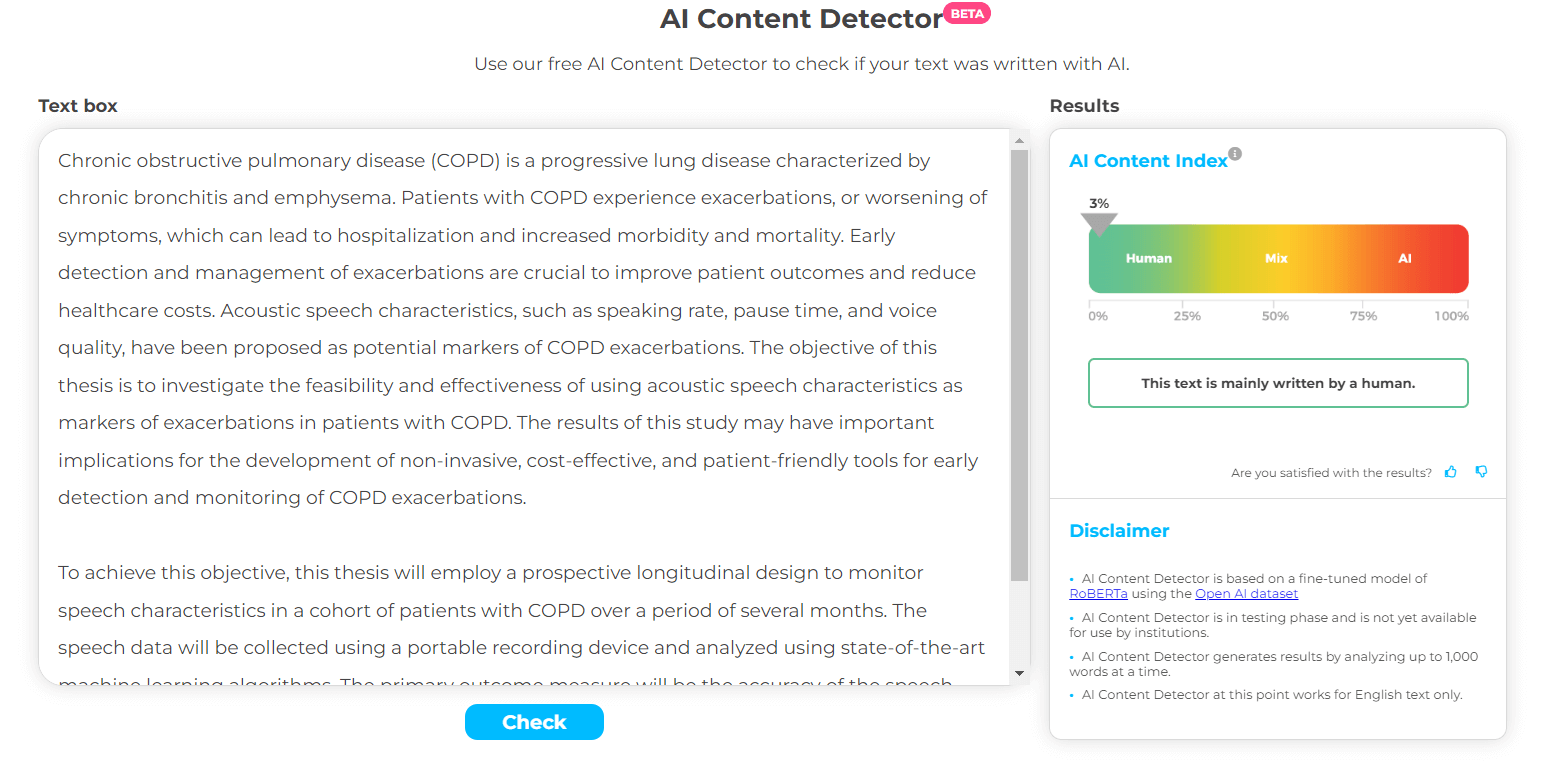
Scribbr provides a free AI detector primarily associated with academic and document-review workflows. Its straightforward interface is also useful for freelancers, consultants, and small businesses that occasionally need to examine text without creating an account.
Unlike enterprise-focused platforms, Scribbr concentrates on accessibility. A business owner checking a short proposal or article can paste the text into the detector and receive an assessment without purchasing monthly credits.
What It Offers
| Feature | Business Value |
| Free AI Detection | Allows repeated checks without a subscription. |
| AI-Refined Text Analysis | Attempts to distinguish human writing from AI-generated and AI-edited text. |
| No Registration Required | Enables immediate checks without account setup. |
| 1,200-Word Scan Limit | Provides a defined allowance for each free submission. |
Where It Works Well
Scribbr is particularly practical when the main requirement is checking occasional short documents. Its unlimited number of free checks eliminates subscription costs, and users can split longer documents into smaller sections when necessary.
Where It Falls Short
The 1,200-word limit per submission makes longer reports inconvenient to review. Scribbr also lacks the team administration, website scanning, and large-scale automation associated with business-focused detection platforms. Dividing documents into sections can additionally remove context that may affect the overall assessment.
Pricing: The AI detector is free, with unlimited checks of up to 1,200 words each. No paid plan is required for this detector.
Best for: Freelancers, consultants, and small businesses checking occasional short documents.
8. Undetectable AI : Best for Multi-Detector Screening

Undetectable AI combines AI text detection with rewriting and humanization tools. Its free checker is intended to help users examine whether content resembles AI-generated writing, while its paid services focus more heavily on transforming text and supporting automated workflows.
For businesses, the detector can serve as an additional preliminary checking option. However, the platform's dual emphasis on detection and making AI writing harder to identify deserves consideration when selecting software for independent editorial audits.
What It Offers
| Feature | Business Value |
| AI Text Detection | Evaluates content for patterns associated with major AI writing models. |
| Multi-Detector Screening | Provides an assessment intended to reflect detection across different checking systems. |
| Multilingual Support | Advertises support for more than 50 languages. |
| File and Text Input | Allows users to paste text or submit supported files. |
| API Access | Offers integration options for organizations building custom workflows. |
Where It Works Well
Undetectable AI offers a convenient starting point for checking individual passages without committing to a subscription. Its interface is accessible to marketers and content reviewers who want to compare how a draft might be classified before conducting a more detailed editorial examination.
Where It Falls Short
Its paid subscriptions primarily emphasize rewriting and humanization, so businesses purchasing software exclusively for content verification may pay for capabilities they do not need. Its multi-detector presentation should not be mistaken for multiple independent audits or proof of authorship. Vendor-reported accuracy claims also require evaluation against relevant business documents.
Pricing: Free AI detection is available. Paid plans start at $19/month, with annual options advertised from $5/month for a smaller word allowance.
Best for: Marketers, independent content reviewers, and businesses seeking an additional preliminary AI detection check.
Choosing the Right AI Detection Tool
The eight tools approach content verification differently. Before choosing one, businesses should look beyond detection scores and consider how the software fits their actual review process.
● For agencies handling frequent submissions: Originality.ai and Copyleaks offer broader editorial workflows, including plagiarism checking, shared access, and content scanning. Their credit allowances and additional features make more sense when several employees regularly review material.
● For teams investigating individual documents: GPTZero and Pangram provide passage-level information and supporting analysis. They are more useful when editors need to examine suspicious sections and discuss findings with writers instead of automatically rejecting submissions.
● For businesses handling multiple content formats: Winston AI offers OCR, image screening, and shareable reports. Smodin provides a broader collection of writing-related tools, although businesses should confirm the specific capabilities included in their subscriptions.
● For occasional or budget-conscious checks: Scribbr offers free document screening, while Undetectable AI provides another accessible checking option. Neither should automatically replace a dedicated enterprise workflow when confidentiality, reporting, or review volume becomes important.
One practical consideration is the cost of investigating false positives. A tool that flags too many legitimate submissions may require more staff time than a slightly more expensive product with better reporting. Businesses should test a representative collection of human-written, AI-generated, and edited documents before choosing a detector for regular use.
Bottom Line
Copyleaks and Originality.ai are the stronger candidates for businesses managing frequent content reviews, particularly where plagiarism screening and organized editorial workflows matter. GPTZero and Pangram offer a more document-focused approach, while Winston AI is worth considering when visual and scanned material are part of the review process.
Smodin is appealing to businesses that want detection alongside writing assistance, and Scribbr is a useful free choice for occasional checks. Undetectable AI provides another checking option, although its rewriting-focused paid features make it a less direct substitute for dedicated editorial software.
No AI detection tool can reliably establish authorship in every situation. The most useful platform is one that fits the organization's content volume, review requirements, and budget while leaving final decisions to informed human reviewers.