

Table of Content
Janitor AI didn’t really grow slowly. It kind of exploded into relevance.
You would see it mentioned in forums, Reddit threads, Discord servers, usually in the same way. Someone trying it out, someone else saying it was better than expected, and a third person warning that it wasn’t as stable as it looked.
That mix of curiosity and caution is what pulled most people in.
At first glance, the appeal is easy to understand. It gives you more control than most chatbot platforms. You can shape characters, define how they behave, and push conversations in directions that more restricted systems simply do not allow.
But the longer you use it, the more the experience starts to shift.
It stops feeling like a polished tool and starts feeling like something still figuring itself out. Not unusable, not broken, but inconsistent in ways that are hard to ignore once you notice them.
Why People Started Using It in the First Place
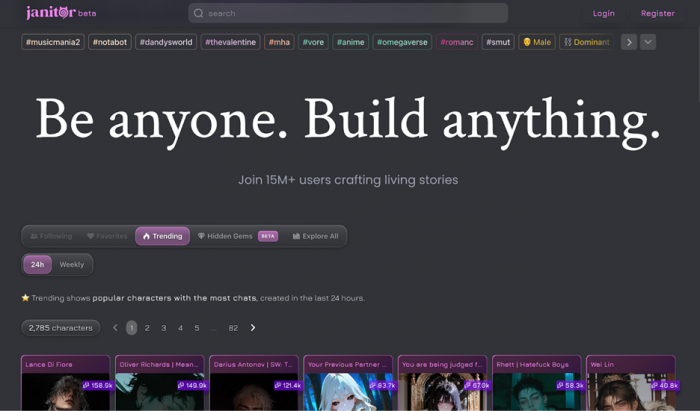
At its core, Janitor AI is not just another chatbot. It is better understood as a character-driven conversation system where users interact with personalities rather than generic assistants.
What made it stand out early on was the level of customization. Users could create characters with detailed backstories, define how they speak, and shape entire roleplay scenarios. The more detailed the setup, the more consistent the responses tended to be.
This flexibility placed it closer to interactive storytelling than traditional chat tools. For communities interested in roleplay, fanfiction, or long-form dialogue, that difference mattered.
The Trade-Off Behind That Flexibility
The same openness that made the platform popular also introduced complications.
Janitor AI operates as a user-generated ecosystem, which means most of the content comes from other users. This creates variety, but also inconsistency.
Some characters feel well-designed and engaging. Others behave unpredictably or ignore their defined traits entirely. The experience depends heavily on who created the character and how it was configured.
There is also a technical layer behind the scenes. Advanced users often connect external AI models to improve response quality. While this can produce better results, it adds complexity and cost.
What Changed After Its Early Growth
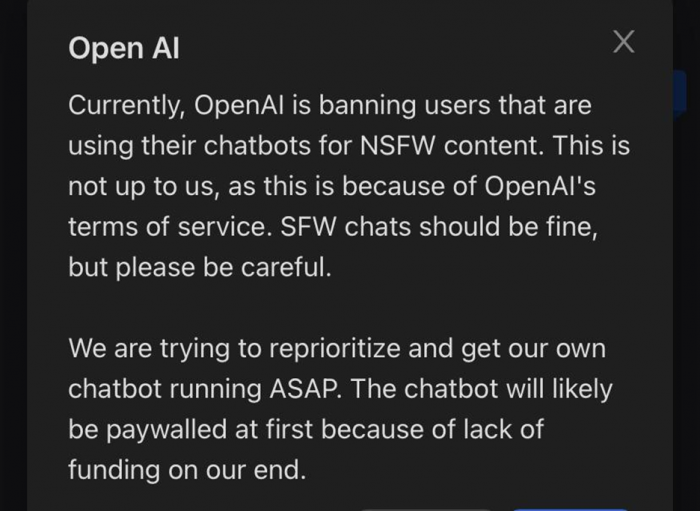
One of the most important turning points came when Janitor AI lost access to OpenAI’s models and had to rely on its own internal system.
That shift affected conversation quality. Many users noticed that responses became less consistent, more generic, or occasionally nonsensical. In a platform built around immersive dialogue, even small drops in quality can break the experience.
This is where expectations started to clash with reality. The platform still offered flexibility, but the underlying performance no longer matched the initial hype.
Performance Issues That Keep Coming Up
User feedback across platforms and forums shows recurring problems that are difficult to ignore.
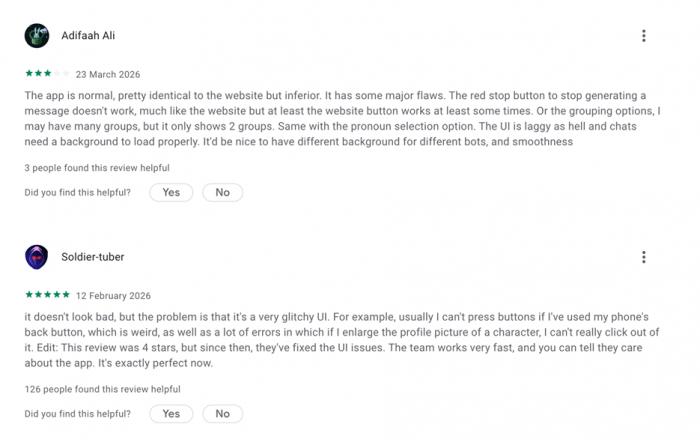
The most common issue is stability. Conversations sometimes fail to load, messages lag, or the site becomes unresponsive during peak usage.
Another issue is character inconsistency. Bots may forget their personality, repeat themselves, or respond in ways that do not match their defined behavior. For roleplay users, this disrupts immersion quickly.
There are also complaints about response quality drifting over time, especially after updates. Some users describe earlier versions of the platform as more reliable than recent ones.
Pricing and Access Reality
Janitor AI offers a free tier, but its limitations are noticeable in regular use.
| Plan | Price | What You Get |
| Free | $0 | Basic access with internal model |
| Pro | $9.99/month | Better performance and priority access |
Even with the paid plan, many users still rely on external models to achieve better results. This means the actual cost can increase depending on how the platform is used.
The pricing itself is not unusual. What matters more is that paying does not fully resolve the core issues, especially around stability and consistency.
Moderation, Privacy, and Structural Risks
Janitor AI’s approach to moderation is another area where opinions differ.
Because the platform allows user-generated characters and flexible scenarios, moderation becomes harder to standardize. Some users report inconsistent enforcement of rules, where certain content is allowed in one case but restricted in another.
From a structural standpoint, this is expected. Open ecosystems tend to have higher variability and risk compared to centralized systems.
Privacy is also a consideration. Conversations may pass through external AI providers if integrations are used, which raises questions about how data is stored and processed.
The platform provides basic safeguards like encrypted data in transit and account deletion, but it does not present itself as a high-security environment.
How It Compares to More Structured Alternatives
When compared to platforms like Joyland AI, the differences become clearer.
| Aspect | Janitor AI | Joyland AI |
| Structure | Open, user-generated | Centralized system |
| Customization | High | Moderate |
| Moderation | Less defined | More structured |
| Consistency | Variable | More stable |
| Learning Curve | Higher | Simpler |
Janitor AI gives users more control, but that control comes with unpredictability. More structured platforms trade flexibility for consistency and stability, which some users prefer.
The Community Factor

Despite its flaws, Janitor AI still maintains a strong user base.
A large part of that comes from its community-driven ecosystem. Users create characters, share them, and build entire roleplay environments around them.
This creates a feedback loop. Even if the platform has issues, the content generated by the community keeps people engaged.
However, community strength cannot fully compensate for technical limitations. Over time, reliability becomes more important than novelty.
Where It Stands Right Now
At this point, Janitor AI sits in an in-between space that is hard to categorize cleanly.
It clearly works. People are still using it daily, creating characters, running long conversations, and building entire scenarios around it. That alone tells you the platform is not failing in any obvious way. There is enough there to keep people engaged.
At the same time, it does not feel settled.
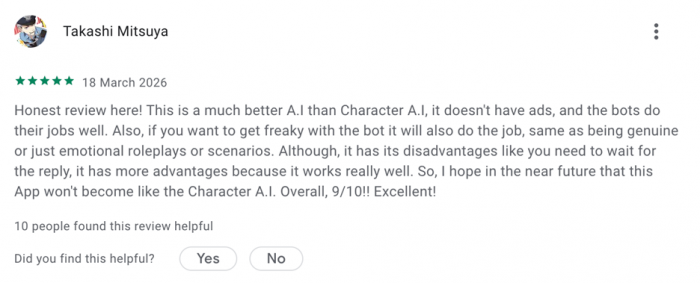
The strengths show up immediately when you start using it properly. The level of customization is still one of the biggest reasons people stay. When a character is well-designed, the conversations can feel surprisingly immersive, especially compared to more restricted platforms. That creative freedom is real, and it is not easy to replace.
But the problems are just as consistent.
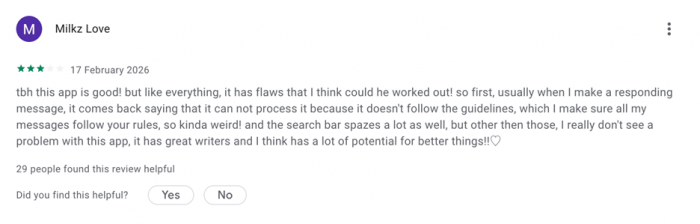
You start noticing small breaks first. A reply that does not quite match the character. A delay that interrupts the flow. Then over time, those small issues start to stack up. Characters drift off personality, responses become repetitive, or the system behaves differently from one session to the next.
None of these issues completely break the platform on their own. But together, they make it harder to fully trust the experience, especially if you are trying to use it regularly.
That is where Janitor AI currently sits. Usable, engaging in moments, but not stable enough to feel dependable over time.
Final Take
Janitor AI becomes easier to understand once you spend real time using it, not just testing it for a few minutes.
In short sessions, it can feel impressive. The flexibility stands out immediately, and the ability to shape conversations in a very specific way is something a lot of platforms still do not offer. That first impression is strong, and it is what pulls people in.
The difference shows up when you try to rely on it consistently.
Over time, the inconsistencies become harder to ignore. Not in a dramatic way, but through small interruptions that slowly break immersion. A character forgetting its tone, responses drifting slightly off, or performance dipping without warning. Individually, these are minor. But together, they create friction in something that is supposed to feel smooth.
That is really what defines the platform right now.
It offers more freedom than most alternatives, but that freedom comes with less structure and less reliability. You can get genuinely good experiences out of it, especially if you understand how it behaves and put effort into setup. But those experiences are not always repeatable.
So it is not a tool you fully depend on. It is a tool you learn to work around.
If you value control over consistency, it can still be worth using. If you expect it to behave predictably every time, it will likely frustrate you over time.
It is not broken, but it still feels like something that has not fully settled into itself yet.