

Table of Content
- Why hooks eat so much writing time
- What an AI hook generator actually does
- Six ways AI hook generators speed up your writing
- Review table: the six tools I tested, compared
- A closer look at the four worth your time
- The five step workflow that stuck
- Where AI hook generators fall short
- How to get better hooks out of any generator
- Should you use one?
- My verdict after three weeks
The first hook an AI ever wrote for me was awful. It read like a motivational poster had swallowed a marketing textbook. I nearly closed the tab and went back to my usual method, which was staring at a blinking cursor for fifteen minutes until something clicked.
Instead, I gave the idea three weeks. Every piece of content I published in that window, forty-one posts spread across a blog, a LinkedIn profile, and a small YouTube channel, went through at least one of six hook generators. I timed each writing session and logged the results in a spreadsheet nobody asked for.
The short version: these tools did not make my writing better on their own. Maybe two out of every ten lines were usable exactly as generated. What changed was the starting point. Editing a mediocre hook into a strong one takes me about ninety seconds. Inventing one from a blank page used to take ten minutes on a good day. Multiply that gap across a month of publishing and you understand why this review exists.
The short answer An AI hook generator takes your topic and returns a batch of opening lines built on proven attention patterns such as curiosity gaps, bold claims, contrast, and specific numbers. Creators write faster with one because editing a generated option takes a fraction of the time that drafting from nothing does. Ahrefs and Copy.ai offer solid free versions, while Taplio, VidIQ, and Hypefury cover LinkedIn, YouTube, and X. |
Why hooks eat so much writing time
Before testing anything, I tracked a normal week of writing the old way. The pattern was embarrassing and consistent. Around a third of my total writing time went into first lines, and it disappeared into three specific holes.

The blank-page stall: the opening line carries the most pressure, so it is where the brain locks up.
The blank page stall The opening line carries more pressure than any other sentence, so it is where the brain locks up. My log showed multiple twelve minute stretches with nothing typed at all. |
The rewrite spiral Draft a hook, hate it, draft four more, then crawl back to the first one. Nothing about the post improves during this loop. Only the clock moves. |
The reformat tax A line that works as a blog intro dies on X, and a LinkedIn opener sounds strange spoken aloud on YouTube. Every platform meant starting over from scratch. |
What an AI hook generator actually does
The mechanics are simple. You give the tool a topic, and the better ones also ask for a target audience, a tone, and a platform. It returns anywhere from five to thirty opening lines in seconds. These tools lean on language models trained on huge amounts of high performing content, so the output follows structures that already earn attention: an unresolved question, a surprising number, a contrarian claim. Here is a real batch from my testing, lightly trimmed.

Twenty options in ten seconds beats one line dragged out of a blank page.
Topic: budget meal prep for busy parents · Tone: direct · Platform: short video Kept I fed a family of four for 67 dollars this week. Here is the exact list. Kept Meal prep advice is written by people with free Sundays. This is for the rest of us. You do not need two hours and twelve containers. You need three shortcuts. The healthiest thing in my kitchen is a grocery list I did not write. Stop prepping meals. Start prepping ingredients. There is a difference. |
Two keepers, one near miss, two duds. That ratio held steady across all six tools.
Six ways AI hook generators speed up your writing
The time savings never came from one big feature. They came from six small shifts that stack.
You edit instead of invent Judging and improving an existing line is a lighter task than producing one from silence. Revision energy is easier to find than drafting energy, and generators let you spend the cheap kind. | Volume changes the odds Twenty options in ten seconds means hunting for one good angle instead of praying your first idea works. Even the misses usually point you toward where to aim. |
Frameworks on autopilot Curiosity gaps, negativity flips, number-led promises, open questions. Recalling these at 7 a.m. is hard. The tool applies them so nothing depends on memory. | Platform versions in one pass Ask for the same idea as a blog intro, a LinkedIn opener, and a YouTube cold open, and you get three correctly shaped drafts. The reformat tax nearly disappears. |
Faster testing loops Because variants cost nothing, I published different hooks on similar posts and compared retention. Within two weeks I had real data on what my audience clicks. | Consistency on flat days Some mornings the ideas are not there. A generator keeps the queue moving at a quality I can live with, which matters more for growth than occasional brilliance. |
Review table: the six tools I tested, compared
I picked tools covering the platforms most creators actually publish on, plus two free options anyone can try today. Ratings reflect hook quality, speed, and value for a working creator, not the length of the feature list.
| TOOL | BEST FOR | FREE OPTION | PAID ENTRY | MY RATING |
|---|---|---|---|---|
| Ahrefs | Blog intros and written content | Yes, no account needed | Free | 4.5 / 5 |
| VidIQ | YouTube titles and video openers | Free plan with AI credits | Boost, about $17/mo annual | 4.2 / 5 |
| Copy.ai | Free batches for social captions | Yes, basic use no signup | Hook tool free; plans extra | 4.0 / 5 |
| Taplio | LinkedIn hooks and post ideas | 7 day trial | AI from ~$65/mo; $39 tier no AI | 3.9 / 5 |
| Jasper | On-brand hooks for teams | 7 day trial | Pro, $59/mo annual ($69 monthly) | 3.8 / 5 |
| Hypefury | X creators who batch posts | 7 day trial | From $29/mo; Creator $65/mo | 3.6 / 5 |
Prices checked in July 2026 against vendor pages and independent pricing breakdowns. Figures marked annual are the per month cost on a yearly plan.
A closer look at the four worth your time
Ahrefs Hook Generator 4.5 / 5
Free · No account required
My default for blog intros. You describe the content, pick a tone, and regenerate as many times as you want with no signup and no cap I ever hit. Support for roughly 48 languages quietly makes it the best pick for creators writing outside English.
STRENGTHS + Completely free with no signup wall + Unlimited regenerations for refining a batch + Tone control plus wide language support | LIMITATIONS x No platform specific formats for social or video x No history, so unsaved lines are gone x Output leans wordy and bookish until edited |
Copy.ai Hook Generator 4.0 / 5
Free tool · Paid platform optional
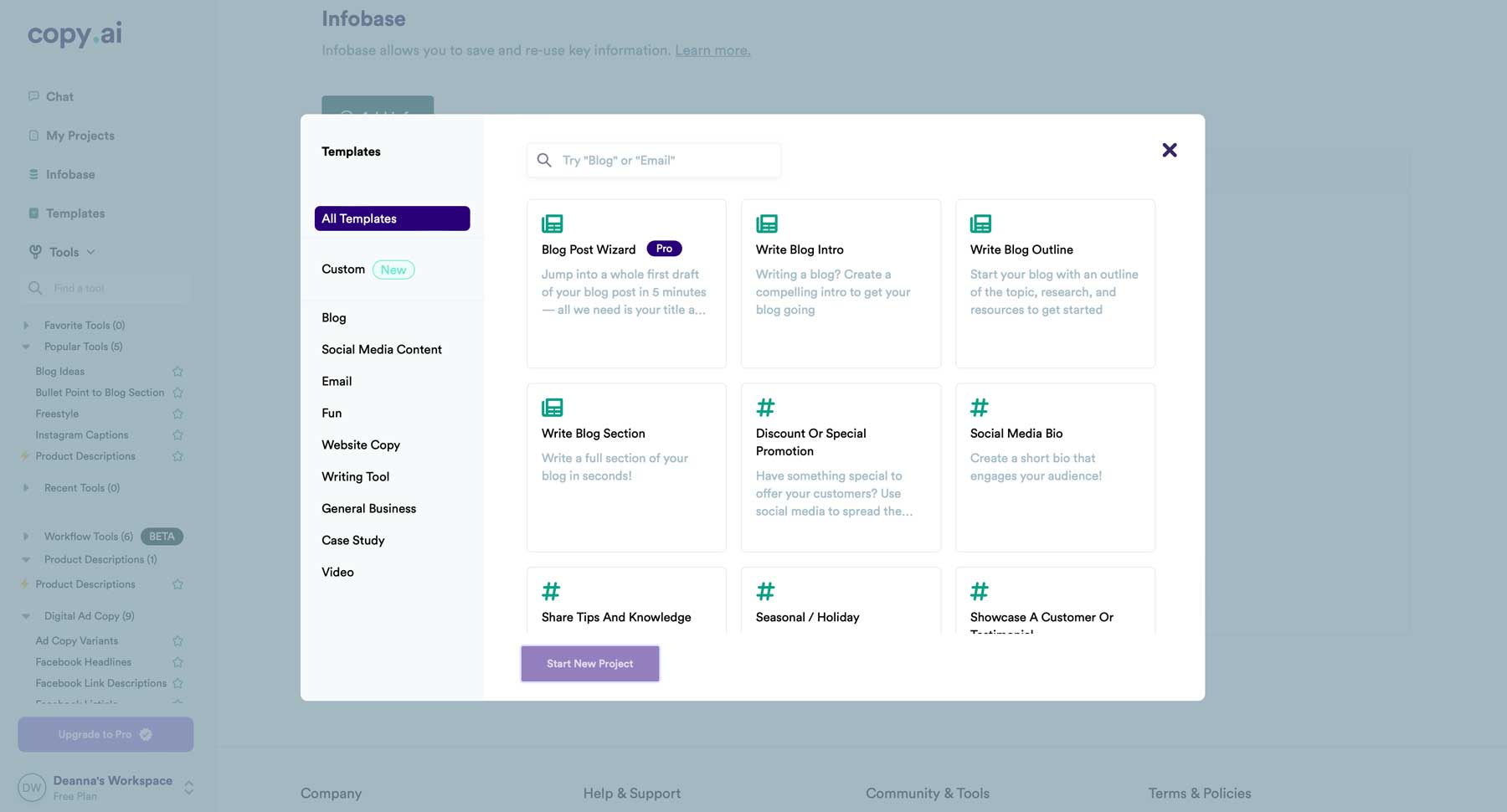
The fastest zero friction option I tested. Enter a topic, tone, and audience and it returns a stack of lines in seconds, with basic use available before you ever create an account. The free hook tool alone covers most casual needs.
STRENGTHS + Quickest path from idea to a full batch + Free for basic everyday use + Good spread of question, claim, and number styles | LIMITATIONS x No platform selector, so social lines need reshaping x Generic results when fed only a bare topic x Saving and brand voice sit behind the paid platform |
VidIQ 4.2 / 5
Free plan · Boost about $17/mo billed annually
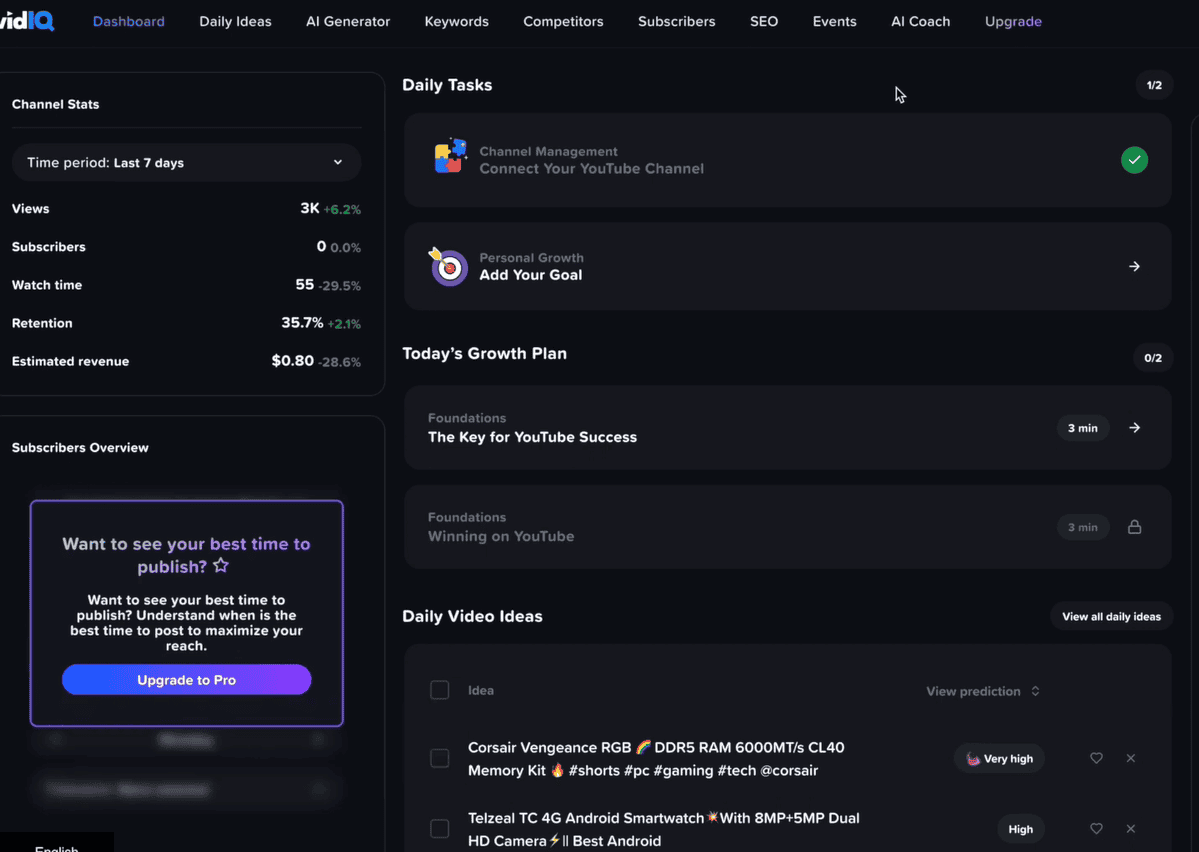
On YouTube the hook is the title plus the first fifteen seconds, and VidIQ treats them that way. Its suggestions draw on real keyword and trend data from the platform, so the lines are grounded in what people already search for rather than pure invention.
STRENGTHS + Suggestions backed by actual YouTube search data + Free plan is genuinely usable for light work + Titles, descriptions, and video ideas in one place | LIMITATIONS x Credit system drains fast with heavy daily use x Month to month price is roughly double the annual rate x Generated titles need a fact and voice pass |
Taplio 3.9 / 5
7 day trial · AI features from about $65/mo

The strongest LinkedIn specific option. Its generator works against a huge library of high performing LinkedIn posts, and pairing hooks with a scheduler in one place is genuinely convenient. Know the pricing first: the $39 Starter plan includes zero AI credits, so the real entry price for hook features is the Growth tier.
STRENGTHS + Hooks modeled on proven LinkedIn post structures + Viral post library doubles as a study resource + Full featured 7 day trial with nothing locked | LIMITATIONS x Advertised starting price excludes every AI feature x Monthly credit caps punish heavy posting schedules x Unedited output sounds like every other feed post |
What about the other two? Jasper is capable, but at $59 a month on annual billing it is priced for marketing teams that need brand voice controls, not a solo creator hunting for opening lines. Hypefury is a solid X scheduler with a strong inspiration library, yet hooks are a side effect there rather than the point.
The five step workflow that stuck
By week three I had stopped experimenting and settled into a routine that survives to this day.

Write the piece first, hook last. The generator gets sharper lines when it sees the real argument.
1. Write the piece first, hook last
Generators produce sharper lines when you paste in your actual argument or outline instead of a vague topic. The hook should promise what the content really delivers.
2. Generate twenty, shortlist three
I pick the three that attack from different angles, usually one curiosity line, one contrarian claim, and one specific number.
3. Rewrite the shortlist by hand
I rebuild each line in words I would actually say, then add one concrete detail no tool could know, like a real price or a real mistake.
4. Shape it for the platform
The X version gets cut to one punchy sentence. The LinkedIn version front loads the tension. The YouTube version becomes a spoken promise.
5. Log the winner
I keep a running note of hooks that outperformed and reuse their structure on future posts. The structure, never the line itself.
Where AI hook generators fall short
Three weeks of daily use also made the weaknesses impossible to ignore. Anyone selling these tools as a complete answer is selling something.
| WEAK SPOT | WHAT IT MEANS FOR YOU |
|---|---|
| Sameness at scale | Thousands of creators pull from similar tools, and unedited defaults converge on one rhythm. Reviewers and users also report LinkedIn reducing the reach of generic, obviously automated posts. |
| Promises the content cannot keep | Generators optimize for the click, not the truth. Several lines in my batches oversold the post behind them, and publishing those trades long term trust for one spike. |
| Generic in, generic out | Feed a tool nothing but a broad topic and you get lines that could belong to anyone. The quality of your input sets a hard ceiling on the output. |
| Costs stack quietly | Platform specific tools each carry a subscription. Running the LinkedIn and X pairing that reviewers commonly compare passes $100 a month before you write a word. |
How to get better hooks out of any generator
• Paste your draft, not your topic. This was the single biggest quality jump in my testing.
• Name the audience precisely. New freelancers scared of pricing beats freelancers every time.
• Request a framework by name. Ask directly for a curiosity gap or a stat led line.
• Ban your tired words. Most tools respect a short list of phrases to avoid.
• Overgenerate on purpose. Twenty lines to keep two is the normal, healthy ratio.
• Read the finalist aloud. If it sounds like nothing you would say, it is not done.
Should you use one?
| WORTH IT IF YOU | SKIP IT IF YOU |
|---|---|
| Publish on a schedule and openers are your slowest step | Publish rarely and enjoy crafting openers slowly |
| Write for several platforms and reshape every hook by hand | Refuse to edit generated text before it ships |
| Want cheap variants to learn what your audience clicks | Work in a niche that punishes anything templated |
| Hit blank page freeze more often than you admit | Expect usable lines without giving the tool real context |
My verdict after three weeks
4 / 5 Kept: Ahrefs + VidIQ · 41 posts tested Of the six tools, I kept two. Ahrefs stayed because it is free, unlimited, and fast for written intros. VidIQ stayed because on YouTube the title is the hook, and suggestions built on real search data beat anything I brainstorm in a vacuum. I let the Taplio trial lapse, not because the hooks were weak but because the Growth tier costs more than the time it saves me on one platform. Jasper felt built for brand teams. Copy.ai remains my answer for anyone who wants a free taste in the next five minutes. The honest math from my spreadsheet: roughly ten to fourteen minutes saved per piece across forty-one pieces, which comes out to about eight hours over three weeks. Nothing about my writing got smarter. It got faster, and the freed up time went into research, structure, and replying to the people who actually comment. One thing held true from the first day to the last. The hooks that performed best were never the ones I copied. They were the ones I rewrote until they sounded like me, carrying one detail no tool could know. Fast first drafts are now practically free. Judgment is still the paid skill. If opening lines are where your writing time disappears, run this week's posts through a free generator with a timer going, and let your own numbers make the call. |