


Table of Content
Instagram is testing a new account-level label for creators who regularly use generative AI, adding another layer to the platform’s effort to make synthetic and AI-assisted content easier to identify.
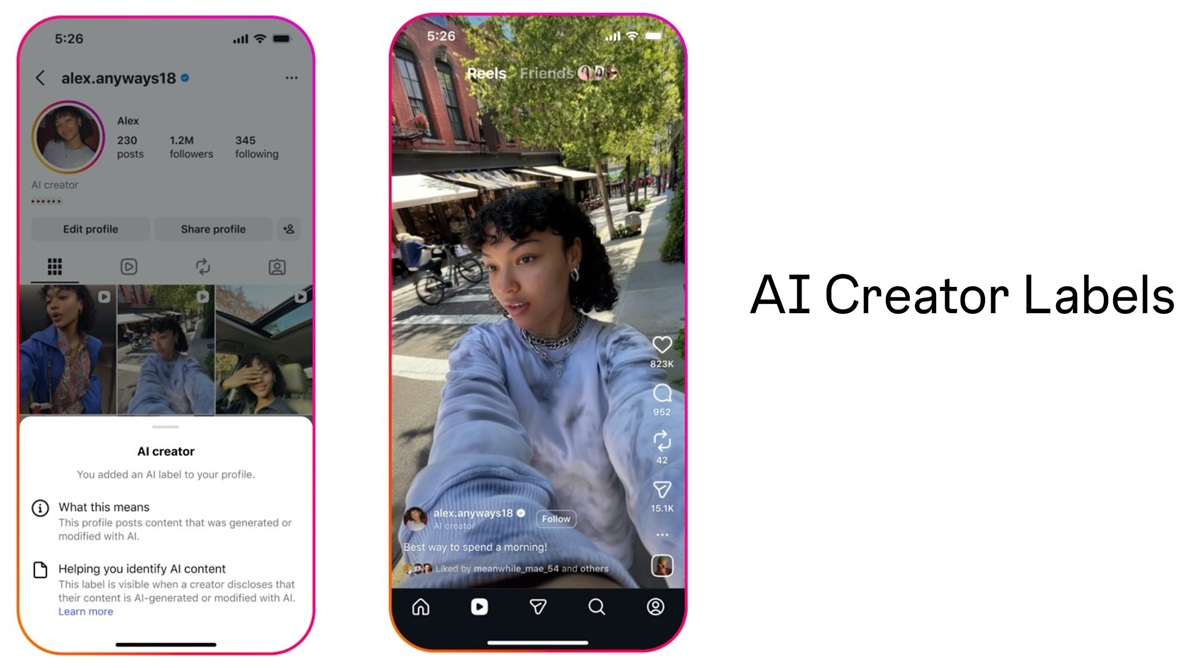
The feature, called the AI Creator label, began testing on May 4, 2026. It is opt-in for now, meaning creators can choose whether to display it on their profile. When enabled, the label appears in the creator’s bio and under their username on posts and Reels. The label says the profile posts content that was generated or modified with AI.
The feature is designed for creators who use AI often, not for one-off posts. It also works across major Instagram surfaces, including Feed, Reels, and Explore. Instagram has clarified that the label does not affect content ranking, recommendations, or reach. Accounts are not boosted or penalized for using it.
That detail is important because many creators worry that identifying AI use could reduce visibility. For now, Instagram is treating the label as an informational tool, not a ranking signal.
A New Layer of AI Disclosure
The AI Creator label builds on Instagram’s existing post-level AI disclosures. The platform already uses “AI info” tags on individual posts when content is manually labeled or automatically detected as AI-generated or AI-edited.
The new label shifts the focus from a single piece of content to the overall identity of an account. Instead of tagging only one AI-made image or Reel, creators who use AI regularly can signal that their profile often includes generated or modified content.
Instagram also avoids repeating labels unnecessarily. If a creator with the AI Creator label posts content that carries an individual “AI info” tag, the post-level tag remains the main disclosure.
This layered approach reflects how complicated AI labeling has become. A creator may use AI to generate a full image, edit a background, clean up a photo, write captions, or enhance a video. Not all AI use is the same, but viewers increasingly want to know when AI played a role.
Why Instagram Is Testing It
Instagram’s wider goal is to improve transparency as AI content becomes more common in feeds. The platform is trying to give users more context without pushing AI creators off the app.
The timing matters. Social platforms are filling with AI-generated images, videos, avatars, product shots, memes, and synthetic lifestyle content. At the same time, audiences are becoming more skeptical about what is real, edited, staged, or fully generated.
The AI Creator label gives honest creators a way to be upfront about their workflow. It may also help brands and followers better understand the type of content an account produces.
At the same time, Instagram is trying to protect original creators. The platform has been moving against unoriginal reposting and overly templated content while placing more value on content that clearly belongs to the person or account posting it. The AI label fits into that broader push: AI is not banned, but originality and transparency are becoming more important.
The Main Criticism
The biggest concern is that the label is optional. Creators who use AI responsibly may enable it, while accounts using AI to mislead audiences may simply leave it off.
That creates a trust problem. If viewers assume unlabeled content is real, optional labels could give a false sense of certainty. The people most likely to disclose AI use may be the honest ones, while deceptive accounts stay hidden.
There is also the issue of detection. AI content is not always easy to identify. An AI image detector can provide another clue when reviewing a questionable visual, although its findings should be considered alongside metadata and the wider context. Some files carry metadata showing they were generated by AI tools, but those markers can be removed. Edits can also be subtle, such as denoising, background cleanup, object removal, or minor retouching.
Instagram has already faced criticism in the past for labeling real photography as AI-assisted when only small AI edits were used. That history explains why the company is now using softer wording and testing a broader profile-level approach.
Regulation Is Coming
The voluntary label also arrives as governments are moving toward stricter AI disclosure rules. In some markets, platforms may soon be required to label realistic AI-generated content more clearly, especially when users could mistake it for real footage, real people, or real events.
That regulatory pressure means Instagram’s current test may not remain optional everywhere. The platform may eventually need stronger systems for labeling AI content, especially in regions with mandatory transparency rules.
For creators and brands, this creates a practical decision. Using the AI Creator label may build trust with AI-aware audiences and sponsors. But some luxury, editorial, journalism, and high-trust brand categories may be more cautious about working with accounts that publicly identify as AI-heavy.
What It Means for Creators
The AI Creator label shows where Instagram is heading. The platform is not trying to remove AI from creative work. It is trying to make AI use more visible while continuing to reward content that feels original and personal.
For creators, the safest strategy is clear: use AI transparently, avoid misleading edits, disclose sponsored AI content properly, and keep human identity at the center of the work.
As AI content becomes easier to produce, originality may become more valuable, not less. The accounts that stand out will be the ones that use AI as a tool while still making content that feels specific, trusted, and clearly connected to a real creator.