

Table of Content
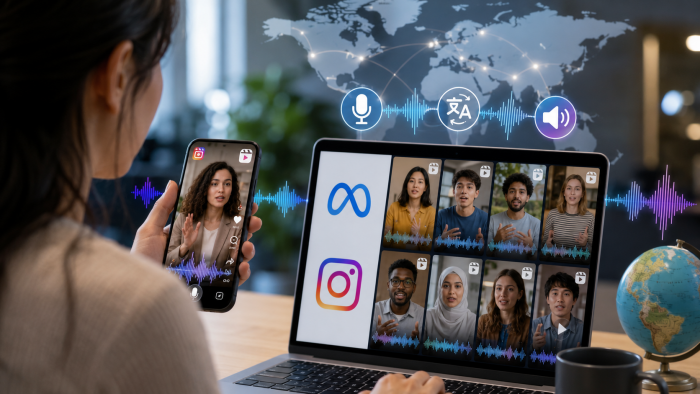
Meta is expanding AI-powered voice translation for Reels, giving creators on Facebook and Instagram a wider way to reach audiences across languages without recording separate versions of the same video. The feature uses Meta AI to translate a Reel’s original speech, generate a dubbed track in another language, and preserve the tone and pitch of the creator’s voice.
The result is a translated version of the Reel that plays for viewers in supported languages while keeping the original post unchanged. Meta also labels translated videos as AI-generated translations, making it clear when viewers are hearing a dubbed version rather than the original audio.
The feature has been rolling out in stages since 2025 and has now expanded to more languages, with Facebook reporting that more than half a billion users are watching AI-translated videos every week. That number shows how quickly automated dubbing is becoming part of short-form video distribution, especially as creators try to reach audiences beyond their home language.
How the Feature Works
Meta’s AI translation system analyzes the speech in a Reel, separates the voice from background audio, translates the spoken words, and creates a synthetic dubbed version that sounds similar to the original speaker. In some cases, it can also adjust mouth movements so the translated speech appears more natural on video.
The translated Reel is not a replacement for the original. It works as a parallel version shown to viewers who may prefer or need another language. This helps creators reach new audiences without uploading multiple copies of the same content.
The feature is free for eligible creators. Before publishing, creators can enable the option to translate their voice with Meta AI. They can also choose to review the translated version before it goes live, which gives them more control over the final result.
That review option is important because AI translation can still miss nuance, especially with slang, regional phrases, jokes, cultural references, or technical terms. For creators who care about accuracy, reviewing before publishing can prevent awkward or misleading translations.
A Gradual Language Expansion
Meta first launched AI voice translation for Reels with English and Spanish support. It later added Hindi and Portuguese, then expanded further with several Indian languages, including Bengali, Tamil, Telugu, Kannada, and Marathi.
The latest expansion adds Arabic, Bahasa Indonesian, French, Thai, and Vietnamese on Facebook. The broader language rollout reflects how important Reels has become in markets where multilingual reach can directly change audience growth.
The feature is especially relevant for creators in countries where audiences speak multiple languages or where content can travel quickly across borders. A creator making videos in one language can now reach viewers who might otherwise skip the content because of the language barrier.
What Creators Need to Know
Meta recommends simple recording habits to improve translation quality. Clear speech, direct camera framing, minimal background noise, and visible mouth movement can all help the AI produce better results. The tool currently works best when one person is speaking, though Facebook supports limited multi-speaker use in some cases.
Creators can also track performance through language-based insights. This lets them see where translated views are coming from and whether certain languages are helping expand reach.
That kind of data changes how creators think about international growth. Instead of guessing whether a translated Reel is working, they can see which language audiences are engaging and adjust future content accordingly.
Availability Still Has Limits
The feature is not available everywhere. On Instagram, it is open to eligible public accounts in countries where Meta AI is supported. On Facebook, creators generally need a Page or professional mode and a follower threshold to use it.
There are also regional gaps. Some major markets still do not have access to the translation feature, even if Meta AI is available in other forms. That means the rollout remains uneven, and creators in unsupported regions may have to wait for broader availability.
Viewers also have control. Anyone who does not want translated Reels can turn off translation for a specific video through the options menu. Meta has also said using or not using the translation feature does not directly affect how a Reel ranks in feeds.
Why This Matters
AI translation could become one of the most practical AI tools for creators because it solves a clear distribution problem. A strong video can be limited by language even if the idea is universal. Automated dubbing reduces that barrier and gives creators a faster path to international reach.
It also changes how creators prepare content. Clear captions, clean speech, simple phrasing, and structured storytelling may become more important because AI systems work best when the source material is easy to understand.
For brands and creators, the opportunity is obvious. A single Reel can now travel into more markets without a full localization team. But the risk is also real. Poor translation can distort meaning, flatten humor, or make a creator sound less natural.
Meta’s expansion shows that short-form video is entering a more multilingual phase. Reels are no longer just being recommended across borders visually. They are being translated, dubbed, and adapted by AI in real time. For creators, that means global reach is becoming easier, but quality control will matter more than ever.