

Table of Content
A bad haircut cannot be returned, and it can take six weeks to grow out. BarberGPT.ai exists to take the gamble out of that decision: upload a photo, paint over the hair, choose a style, and the new cut appears on the actual face in about 30 seconds, before the clippers ever come out.

The reality arrived fast: every uploaded photo triggered a prompt to buy credits before a single style would generate, so the advertised free tier never produced a usable preview firsthand. What follows separates what the tool actually lets a newcomer do from what its marketing and reviewers claim, pricing and catch included.
THE QUICK VERDICT BarberGPT has a strong reputation for previewing classic short and medium men's cuts, and its concept, privacy posture, and one-time pricing are genuinely appealing. The catch is the gate: in practice it prompts for credit purchase on photo upload, so the advertised free generations never produce a preview without paying, and the tool cannot be evaluated before buying. It also leans heavily male, ignores beards and hair colour entirely, and is built for desktop over mobile. Promising in a narrow lane, but it makes a newcomer pay to find out. |
WHAT IT IS + A browser tool that renders realistic AI hairstyle previews onto an uploaded photo + Tuned for men's short and medium cuts: buzz, fade, taper, crop, man bun + Credit-based pricing, with a purchase prompt that appears on photo upload + Privacy-minded posture, with a stated no-store policy and manual photo deletion | WHAT IT ISN'T × A hair-colour simulator (no colour preview of any kind) × A women's-hairstyle library (the catalogue skews heavily male) × A beard or facial-hair editor (absent entirely) × A native mobile app (browser-only) × A one-click tool (manual hair masking comes first) |
How it was assessed: the Chair-Ready Benchmark
Every score below answers a single question: is the preview realistic enough to screenshot and hand to a barber without explanation? That is the bar a haircut-preview tool actually has to clear, and it is the spine of the Chair-Ready Benchmark used for this review.
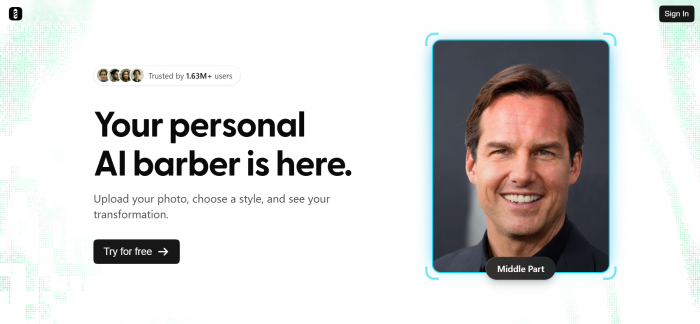
Applying that standard firsthand ran into the tool's economics immediately. On upload, BarberGPT prompts to buy credits before it will generate, so the free tier did not yield an independently generated preview to judge. What this review reports firsthand is the access flow, the upload-to-paywall experience, the pricing, and the privacy posture. For output quality, the realism and behaviour rows below reflect the consensus of documented hands-on reviews and the developer's stated specifications, kept clearly separate from what was confirmed firsthand. Independent site-safety scanners and community discussion in men's-hair forums help triangulate the rest.
| Dimension | What the evidence shows | Score |
|---|---|---|
| Realism, short and medium men's cuts | Reported as photographic on short cuts by hands-on reviewers; not independently confirmed here | 4.5 / 5 |
| Generation speed | Documented at roughly 20 to 60 seconds with no queue (developer and reviewer reports) | 4.5 / 5 |
| Ease of use on desktop | Clean upload-and-mask flow; the brush carries a short learning curve | 4.2 / 5 |
| Privacy and data handling | A stated no-store policy on photos, with manual deletion | 4.5 / 5 |
| Pricing structure and value | Transparent one-time packs; cheap per preview at the larger tiers | 4.0 / 5 |
| Style and feature breadth | Forty-plus styles, but no beard, no colour, and a heavy male skew | 3.3 / 5 |
| Mobile experience | Reported as weak on phones; finger-masking is imprecise | 2.8 / 5 |
| Free tier and access | The purchase prompt fires on upload, so the free tier effectively gates evaluation | 2.0 / 5 |
| Overall | Capable in its documented lane, but it gates evaluation behind an on-upload paywall | 7.2 / 10 |
Rows on access, pricing, and privacy reflect firsthand experience. Rows on output quality reflect documented hands-on reviews and the developer's stated specs, since the free tier's purchase-on-upload prompt prevented independent confirmation. The overall figure is a holistic judgement, not a strict average.
BarberGPT at a Glance
| Item | Detail |
|---|---|
| What it is | Browser-based AI haircut-preview tool that renders new hairstyles onto your uploaded photo |
| Best for | Men choosing a short or medium cut; barbers showing clients a mockup; desktop users |
| Core tool | AI hairstyle try-on — upload a photo, mask the hair, pick a style, generate |
| Styles | 40+ men's cuts (buzz, fade, taper, crop, man bun, dreadlocks, short curls) |
| Generation speed | ~20–60 seconds, no queue |
| Colour preview | No |
| Beard support | No |
| Best platform | Web browser on desktop (mobile finger-masking is imprecise) |
| Sign-up required? | No — no account needed to begin |
| Free tier | 3 previews advertised — but a buy-credits prompt fires on photo upload (the catch) |
| Pricing | One-time credit packs — $0 (3), $1 (7), $5 (50), $15 (300); no subscription |
| Privacy | Stated no-store, no-sell policy; manual photo deletion |
| Review score | 7.2 / 10 |
Key takeaways
- What it is: a browser-based AI haircut-preview tool that renders a new cut onto your uploaded photo in about 30 seconds.
- Best at: men's short and medium cuts — buzz, fade, taper, crop, man bun — on a desktop.
- Pricing: one-time credit packs, no subscription — $0 (3 previews), $1 (7), $5 (50), $15 (300).
- The catch: uploading a photo triggers a buy-credits prompt, so the advertised free previews rarely generate without paying first.
- Weak spots: no beard, no hair colour, curly and long hair distort, and mobile masking is imprecise.
- Bottom line: a sharp single-purpose tool that makes you pay to find out — best treated as a one-time $5 decision aid, not a subscription.
Where its reputation comes from
Realism on the core cuts is what the tool is known for. Hands-on reviewers consistently describe short cuts, fades, buzzes, tapers, and crops, coming back photographic on clear, well-lit, front-facing photos. The mechanism behind that reputation is real: rather than pasting a flat shape over the head, BarberGPT uses generative image models that re-render the hair with attention to lighting, face shape, and angle, which is why a strong result can read as a photograph instead of a sticker. That quality could not be confirmed firsthand here, because the free tier would not generate without payment.
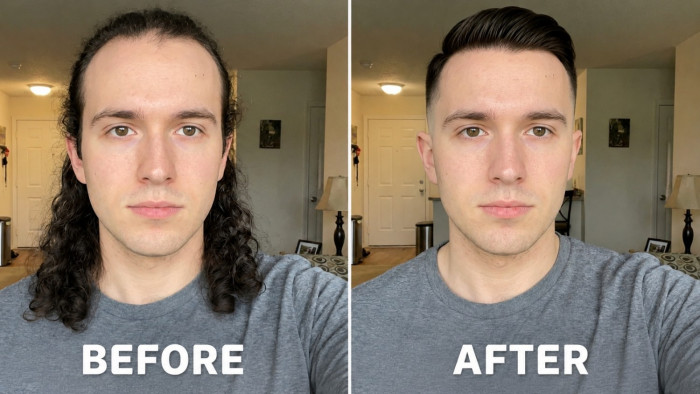
Speed is part of the appeal on paper. Generation is documented at roughly 20 to 60 seconds with no queue, quick enough to line up two or three candidate cuts side by side once credits are in hand.
Manual masking is the smartest idea in the design. Outlining the hair by hand, rather than trusting auto-detection, hands over control of exactly what the model treats as hair, so a tricky hairline becomes a deliberate choice rather than a software guess. The upload-and-mask step is open before any credit is required; only the generation that follows sits behind the paywall.
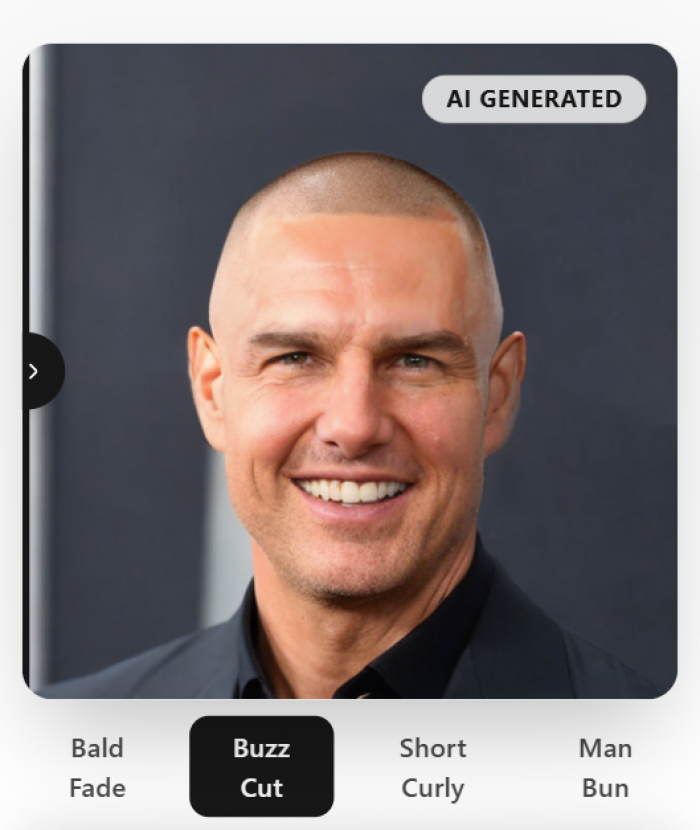
Privacy is a real selling point. The stated position is no-store and no-sell on uploaded photos, with manual deletion, and independent site-safety scanners broadly agree the domain is legitimate, a point covered in detail further down.
Where it stalls
The friendliest way to frame BarberGPT's weak spots is that it is a focused utility wearing the marketing of a full grooming suite. The limits are real, and a few of them are easy to walk into unaware.
THE CATCH WORTH KNOWING FIRST BarberGPT's homepage sells a no-account, three-free-generations welcome. In practice, uploading a photo brings up a buy-credits prompt before any style will generate, so those advertised free generations do not translate into a usable free preview. The result is a tool that asks a newcomer to pay before it will demonstrate what it can do. That is the single most important thing to know going in, and it is the reason the output quality in this review is reported from other sources rather than independently confirmed. |
Mobile is widely reported as rough. Finger-masking on a touchscreen is imprecise, and hairline accuracy drops on phones, which is the device most people reach for first. The experience is built for a desktop and a mouse.
Beards are missing entirely. For a tool marketed at men, the inability to add stubble, a full beard, or a clean-shaven look is a strange and visible gap.
Colour is out of scope. Blonde, copper, a jet-black version of the same cut: none of it is possible. Colour simply is not part of the product.
Curly and long hair get distorted. The model was clearly trained mostly on short, straight styles. Longer and curly textures blur at the edges and start to look artificial, and the most ambitious long looks are the results reviewers flag as least convincing.
Women's styles are an afterthought. The catalogue is heavily male, and the women's options that do exist look weaker than their men's counterparts.
Pricing: what it actually costs
Pricing is one of BarberGPT's better-designed elements: three one-time credit packs, no subscription, and a per-generation cost that drops sharply with volume.
| Plan | Price | Generations | Cost per generation | Notes |
|---|---|---|---|---|
| Free trial | $0 | 3 | Free | No account needed to begin |
| Starter | $1 | 7 | About $0.143 | Highest cost per preview; the weakest value |
| Hobbyist | $5 | 50 | $0.10 | The sweet spot for one confident decision |
| Professional | $15 | 300 | $0.05 | Best value; aimed at barbers, stylists, and creators |
Credit packs are one-time purchases. Per-generation costs are calculated from the listed pack price divided by included generations.
The read on value is simple. The 1-dollar Starter pack looks tempting and is the trap: at roughly 14 cents a render, 7 credits cover only a handful of attempts before a rebuy. The 5-dollar Hobbyist pack is the natural choice for one person making one decision. The 15-dollar Professional pack only earns its price for someone running well over 100 previews, which in practice means a working barber or content creator rather than a casual user.
What the review platforms actually show
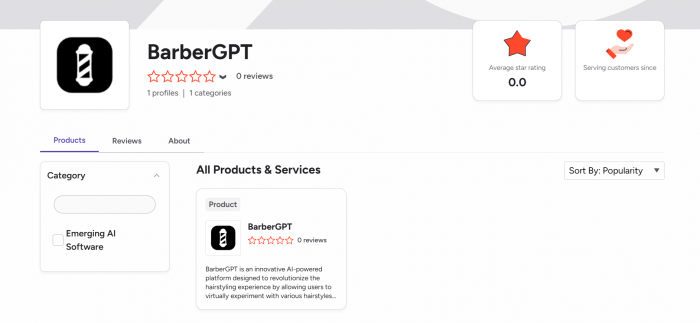
Here is the part most BarberGPT write-ups gloss over. The tool does not yet carry the crowd-sourced review footprint a polished product usually has, and pretending otherwise would be misleading. The verified picture, platform by platform:
| Platform | Status | What it means |
|---|---|---|
| Trustpilot | No business profile listed | No first-party user reviews exist to cite |
| G2 | Listed, zero reviews | A profile exists, but there is not enough feedback for buying insight |
| Capterra | Not listed | No dedicated profile |
| App Store and Google Play | No app | There are no store reviews because there is no app |
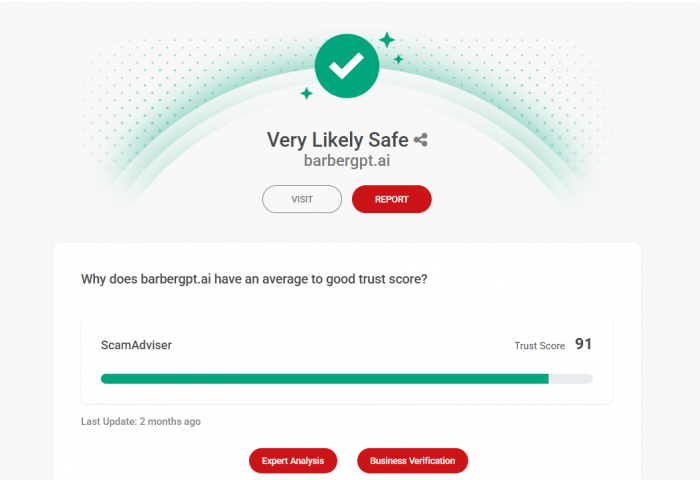
So the meaningful signal comes from two other places: independent site-safety scanners that assess the domain rather than the experience, and aggregated hands-on editorial reviews plus community discussion. The scanners do not fully agree, which is worth seeing plainly rather than cherry-picking.
| Source | Reading | What it means |
|---|---|---|
| ScamAdviser | 91 / 100 | Rated legitimate: valid SSL, an established domain, no malware flags |
| Gridinsoft | 95 / 100 | Well-established domain, low risk |
| Scam Detector | 5.8 / 100 | Flags the domain as young and low-traffic; an automated model known to score new and small sites harshly |
| Aggregated editorial reviews | Around 4 / 5 | Rated positively within its narrow scope |
| Community discussion (Reddit and forums) | Mixed-positive | Praised for short cuts; criticised for mobile and curls |
Safety scanners assess a website's domain and infrastructure, not the quality of the product experience. Scores change over time as a site establishes a longer track record.
The split is the honest takeaway. Two well-known scanners, alongside a roughly three-year domain history, point to a legitimate, low-risk site, while one aggressive automated validator flags it largely for being small and new rather than for any specific malicious behaviour. The net reading leans clearly toward safe, without being unanimous. The larger point stands on its own: BarberGPT is new and niche enough that hands-on testing and community feedback carry more weight than star counts right now. Any article quoting glowing five-star Trustpilot reviews for this tool is describing listings that do not exist.
Is BarberGPT safe and legit?
Is BarberGPT safe and legit? In short, yes — the evidence points to a legitimate, low-risk site, though not unanimously. Two well-known scanners rate it clean (ScamAdviser 91/100, Gridinsoft 95/100) against a roughly three-year domain history, while one aggressive automated validator (Scam Detector, 5.8/100) flags it mainly for being small and new rather than for any specific malicious behaviour. On privacy, the stated policy is no-store and no-sell on uploaded photos, with manual deletion. The net reading leans clearly toward safe.
How it compares to the alternatives
BarberGPT is not the only way to preview a haircut, and the best pick depends on device, hair type, and whether colour or facial hair is part of the decision. Three names come up repeatedly alongside it.
| Feature | BarberGPT | Hairstyle AI | YouCam Makeup | AI Ease |
|---|---|---|---|---|
| Best for | Men's short cuts on desktop | Broad, realistic previews | Mobile plus makeup and beard | Free, gender-inclusive web |
| Free tier | 3 generations | A few free credits | Limited, with ads | Daily free use |
| Cheapest paid | $1 one-time | From $4.90/mo or a $9 one-time pack | About $5.99/mo | Optional credits |
| Style library | 40+ | 89+ | 60+ | 80+ |
| Beard support | No | Limited | Yes | No |
| Colour preview | No | 30+ colours | Yes | Yes |
| Mobile experience | Weak | Decent | Excellent | Web only |
| Privacy | Strong | Standard | Standard | Auto-delete window |
The short version: BarberGPT wins on privacy and one-time pricing, Hairstyle AI offers the widest range plus colour and limited beard support, YouCam Makeup is the strongest on mobile and bundles makeup, beards, and colour, and AI Ease leads on free, inclusive web access. There is no single winner, only a best fit for a given device and hair type.
Who it's for, and who should pass
WORTH USING FOR + A man weighing a short or medium cut + Anyone working mostly on a desktop or laptop + A quick, cheap, private preview before a barber visit + Barbers who want to show a client a believable mockup first | BETTER OFF ELSEWHERE FOR × Phone-first users × Anyone hoping to preview a beard or a new colour × People with curly or very textured hair × Anyone needing a deep women's-style library |
The verdict
BarberGPT is a single-purpose tool with a genuinely good reputation for its one job. For a man with short-to-medium, reasonably straight hair, on a desktop, previewing a classic cut before a barbershop visit, the documented results and the one-time pricing make it an appealing option in its price range. The concept is sound and the privacy posture is solid.
Step outside that lane, whether that means phone-first use, curly hair, beards, colour, or women's styles, and it either underdelivers or does not try. That is a scope decision more than a flaw. The larger problem sits at the front door: the free tier prompts for credit purchase on upload, so the tool asks to be paid before it will prove what it can do, and its real-world output cannot be evaluated without spending first.
For anyone willing to pay a few dollars up front, it is best treated as a one-time decision-support purchase rather than a recurring service, with the 5-dollar Hobbyist pack, not the 1-dollar Starter, as the sensible entry point. Anyone hoping to try before paying should know that option is effectively closed.
FINAL SCORE 7.2 / 10 Strong on paper within a narrow lane of short and medium men's cuts on desktop, held back by a free tier that gates evaluation behind an on-upload purchase prompt, plus no beard or colour support and a weak mobile experience. |