


Table of Content
Your bio is working while you sleep
It sits on profiles, proposals, and search results, quietly making the first impression on your behalf. A few minutes of care goes a long way.
You are being read now Recruiters, clients, and editors look you up before they reach out. Your bio answers them first. | Seconds to a first impression People skim before they commit. A clear opening line earns the next ten. |
Consistency builds trust The same story across your profiles makes you easy to remember and easy to vouch for. | AI removes the blank-page tax The hardest part is starting. A draft you can react to beats a cursor blinking at you. |

Your bio is often the first thing someone reads about you, right on their phone.
The anatomy of a strong bio
Every memorable bio is assembled from the same five parts. Use them as a checklist while you draft.
1 Who you are. Your name plus the role or identity you want to lead with.
2 What you do. The value you create, in plain words, for a specific audience.
3 Your proof. One or two credibility signals: results, names, numbers, or milestones.
4 A touch of personality. A human detail so you read like a person, not a resume.
5 The next step. Where to reach you, or what you would like a reader to do next.
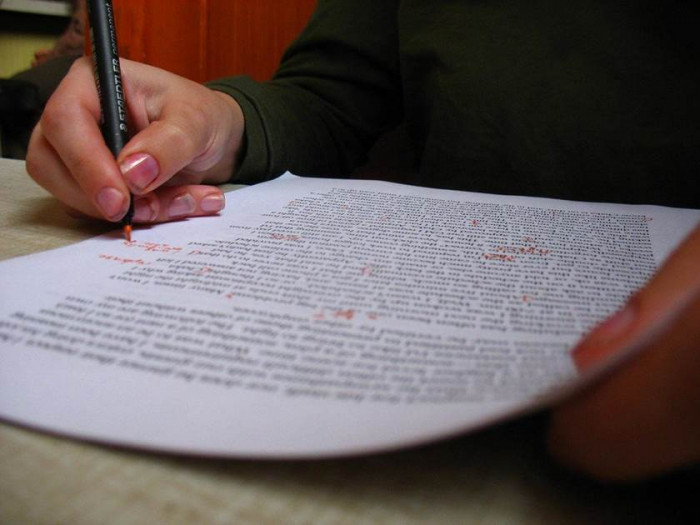
Great bios are built from a few reliable parts. Get these right and the rest is polish.
The five-step AI workflow
Follow these in order. Each step has a prompt you can lift straight into your favourite AI assistant. Replace anything in gold with your own details.
Work in passes. Draft, then sharpen, then tune. Trying to nail it in one go is what stalls people.
Gather your raw material
Before you prompt, jot down your role, your audience, three achievements, and one personal note. AI writes far better when you feed it real facts instead of asking it to guess.
Get a first draft
Hand over your notes and ask for a first version in the length and point of view you want. Do not aim for perfect, aim for a draft you can improve.
PROMPT Write a 90-word professional bio in the first person for a [role] who helps [audience] achieve [outcome]. Use these facts: [your notes]. Keep it warm, clear, and free of buzzwords. |
Tighten the language
Cut the jargon, trim filler words, and strengthen that first sentence. Shorter almost always reads stronger.
PROMPT Rewrite this bio to be tighter and more specific. Remove cliches and vague claims, keep every real fact, and stay under 80 words: [paste your draft] |
Match gthe tone to you
Ask for a few tone options, then keep the one that sounds like how you actually talk. Your bio should feel like you on a good day.
PROMPT Give me three versions of this bio: one confident, one friendly, one understated. Same facts, different voice: [paste your draft] |
Fact-check, then finalise
AI can invent titles, awards, and numbers that sound plausible. Read every line and confirm it is true before it goes anywhere public. This step is not optional.
Prompts you can steal
A small library for the moments that come up most. Copy one, paste into your AI assistant, and swap in your own details.
THE FIRST DRAFT Write a professional bio for me using only these facts: [notes]. Length: [100 words]. Point of view: [first person]. Warm and specific, no buzzwords. |
TIGHTEN IT Cut this bio by a third without losing any real fact. Make the first sentence stronger and remove every cliche: [paste draft] |
SHIFT THE TONE Rewrite this in a [more approachable] tone while keeping it professional. Keep it the same length: [paste draft] |
THIRD-PERSON VERSION Convert this bio to the third person for a speaker page or website. Start with my full name and keep it natural, not stiff: [paste draft] |
Match your bio to the platform
A LinkedIn summary and a conference blurb are not the same job. Keep a long version and a short version ready, then trim to fit. Ask your AI assistant to adapt any draft to the row you need.
The same facts, dressed differently. Each place your bio lives has its own rhythm.
| Where it lives | Length | Point of view | Tone | Lead with |
|---|---|---|---|---|
| LinkedIn “About” | 50 to 150 words | First person | Warm, credible | What you help people do |
| X / Twitter bio | Under 160 characters | First person | Punchy | Role plus one hook |
| Personal website | 100 to 300 words | First or third | On-brand | A short story and proof |
| Speaker or panel bio | 60 to 100 words | Third person | Authoritative | Title and a signature win |
| Company “About” page | 75 to 150 words | Third person | Professional | Role and impact |
Before and after
Same person, same career. The difference is specificity: real outcomes, plain words, and one human detail.
BEFORE “I am a hardworking marketing professional with a passion for results and a proven track record of success across many industries.” | AFTER “I am a marketing lead who helps B2B software teams turn quiet launches into real pipeline. Over eight years I have run campaigns that added tens of thousands of users. Off the clock, I coach a youth debate team.” |
The “after” example is fictional and shown only to illustrate the format. Use your own true details.
Do this, skip that
Do ✓ Lead with who you help, not just your job title. ✓ Anchor your value with one or two concrete numbers. ✓ Read it out loud before you publish. ✓ Keep a short and a long version on hand. | Don't ✕ Let AI invent awards, titles, or results. ✕ Stack buzzwords like “passionate” and “guru”. ✕ Use stiff third person where the platform is casual. ✕ Publish without a real human read-through. |
Fact-check before you publish
Work through each item before you hit publish. When every line is true and reads like you, you are ready.
Pre-publish checklist ☐ Every fact is true and current ☐ The opening line makes sense on its own ☐ No invented awards, numbers, or titles ☐ It sounds like how you actually speak ☐ A contact point or next step is included ☐ The length fits the platform ☐ You have read it out loud at least once |
YOUR TURN Fast partner, human truth AI is a quick writing partner, not a ghostwriter of your story. Feed it real facts, keep the voice yours, check every line, and then publish with confidence. |
START HERE Act as my bio-writing partner. Ask me five short questions about my role, audience, and achievements, then draft a 100-word first-person professional bio from my answers. |