
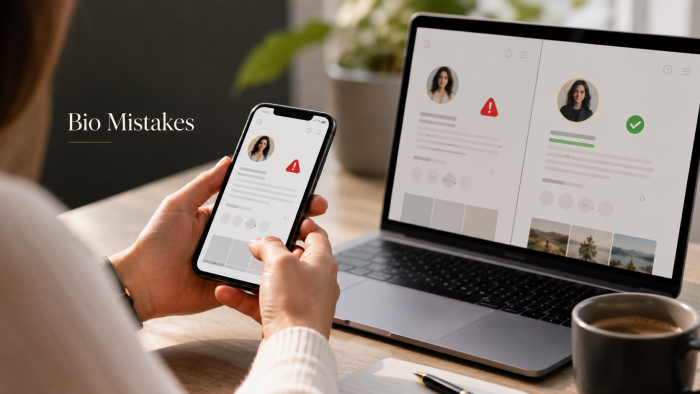

Table of Content
I have spent a long time on the wrong side of other people's profiles: reviewing them for freelancers who could not figure out why nobody replied, tightening them for founders before a fundraise, and quietly fixing my friends' dating bios when they asked and sometimes when they did not. After enough of them, the weak ones stop looking random. They fail in the same handful of ways, over and over, and almost all of it is fixable in an afternoon.
None of this is about clever wording. It is about what a stranger silently concludes in the two seconds before they decide to keep reading or close the tab. Below are the twelve mistakes I flag most, each with the weak version, the rewrite, and why the swap works. Then the real 2026 character limits, a checklist, and a plain verdict at the end.
The short version
● → Your first line is doing 90 percent of the work. Most people never read line two.
● → Adjectives are free, so they convince no one. One specific number outweighs ten confident words.
● → A bio is a filter, not a resume. Naming who you are for is how the right person recognizes themselves.
● → The same text pasted across every platform fits the shortest box badly and the longest box lazily.
● → End with a next step. A convinced reader still needs to be told where to go.
Twelve habits that quietly weaken a profile
Each card shows the line I cross out and the line I put in its place. Read the fixes out loud. The good ones survive being spoken to a stranger without a wince.

You open with a job title instead of a reason to read on
WEAK Marketing Manager at Brightwave.
FIX I help SaaS teams turn quiet product launches into signups. Currently at Brightwave.
Why it works: A title tells people your slot in an org chart. It says nothing about what changes when you show up. The first line is often the only line a visitor finishes, so spend it on the outcome you create, not the label above your desk.
You lean on adjectives with nothing behind them
WEAK Passionate, hardworking professional with a proven track record.
FIX Cut support tickets 30 percent at a 40-person startup by rewriting the onboarding flow.
Why it works: 'Passionate' and 'proven' are claims anyone can type, which is exactly why they persuade no one. A number is a claim only you can back up. Swap the adjective for the evidence and the sentence starts doing real work.
You try to be for everyone, so you land with no one
WEAK Writer, designer, strategist, coach, photographer, and more.
FIX Brand designer for indie skincare labels. Sometimes I shoot film.
Why it works: A bio is a filter, not an inventory. Listing six identities reads as a bit of everything and a master of nothing. Naming one clear specialty (and quietly what you are not) is how the right person knows the profile is meant for them.
There is no proof anywhere
WEAK Helped many companies grow.
FIX Grew a niche newsletter from 0 to 22k readers in 14 months.
Why it works: 'Many companies' is a shape with no weight. Names, numbers, and dates are the difference between a claim and a credential. One concrete result does more convincing than three paragraphs of description.
You stack buzzwords to sound senior
WEAK Growth ninja, marketing guru, and thought leader driving synergy.
FIX I run paid acquisition. Ask me about creative testing.
Why it works: Words like ninja and guru signal borrowed language, not senior experience. Plain job nouns read as more confident, not less, because only someone unsure of their work hides it behind a costume.
The same bio is pasted onto every platform
WEAK A full 2,600-character LinkedIn About dropped straight into a 160-character X box.
FIX A sharp one-liner for X, a keyword-led headline for LinkedIn, a warmer human line for a dating app.
Why it works: Each platform has its own reader, length, and mood. A one-size bio gets truncated on X and reads as low effort on LinkedIn. The rewrite costs ten minutes and it is the ten minutes people notice.
It is all about you and nothing for the reader
WEAK I love hiking, coffee, my dog, and building cool things.
FIX I write about the boring parts of running a studio so you can skip the mistakes I made.
Why it works: People skim a bio asking one silent question, which is what is in this for me. Personality is welcome, but give the reader a reason to stay before you tell them about the dog.
The information is stale or half finished
WEAK Currently looking for my next role (posted two years ago).
FIX Update the 'currently' line every time it changes, and finish the last sentence.
Why it works: An outdated line quietly tells people you are not paying attention, and a cut-off sentence tells them you rushed. Freshness is free credibility, and it is the credibility most people forget to collect.
You force stiff third person where a human voice fits
WEAK Jordan is a seasoned professional who leverages cross-functional expertise.
FIX I build data tools for teams that hate spreadsheets.
Why it works: Third person is right for a speaker intro or a company page. On a personal profile it reads like a press release someone else wrote. Pick 'I' and hold it. Mixing the two voices in one bio is the tell that the text was stitched together.
There is no next step
WEAK A bio that ends cold, with no direction at all.
FIX Newsletter in the link. DMs open for freelance work.
Why it works: A reader you have convinced still needs to be told where to go. One clear line of direction beats a hopeful silence every time, and it costs you a single sentence.
A wall of text buries the good part
WEAK A dense block where the one impressive fact hides in sentence four.
FIX Lead with the strongest line. Add breaks. Let the eye scan.
Why it works: On LinkedIn only the first 300 or so characters of your About show before the See more cut. On an Instagram caption it is around 125. If your best fact sits below the fold, for most readers it does not exist. Front-load it.
Careless punctuation and formatting
WEAK hi im a freelance writer,designer&more!!! dm 4 rates
FIX Freelance writer and designer. DM for rates.
Why it works: Nobody hires the typo. Clean formatting is the cheapest credibility signal you own, and skipping it costs you before a single line of your actual work gets seen.
The habit, the silent verdict, the stronger move
A reader never says any of this out loud. They just click away. This is the translation running under the surface while they skim.

The silent skim. A reader decides in seconds whether the rest of your work gets seen.
| THE HABIT ON THE PAGE | WHAT A STRANGER SILENTLY CONCLUDES | THE STRONGER MOVE |
|---|---|---|
| Passionate about excellence | You could not think of anything concrete to say. | Name one real result with a number. |
| Six job titles in a row | A little of everything, expert in none. | Lead with one specialty, mention the rest lightly. |
| ALL CAPS or three exclamation marks | You are shouting to be noticed. | Sentence case, one idea per line. |
| Ninja / guru / rockstar | Early career, or borrowing someone else's voice. | Use the plain name of the job. |
| Living my best life and nothing else | There is nothing here for me. | Add what you make, teach, or offer. |
| No numbers anywhere | The claims might be inflated. | Anchor one claim to a metric and a timeframe. |
The space you actually get
These are the current 2026 limits, checked against each platform's live fields. The number that matters is not the cap, it is how much shows before the reader has to tap to see more.
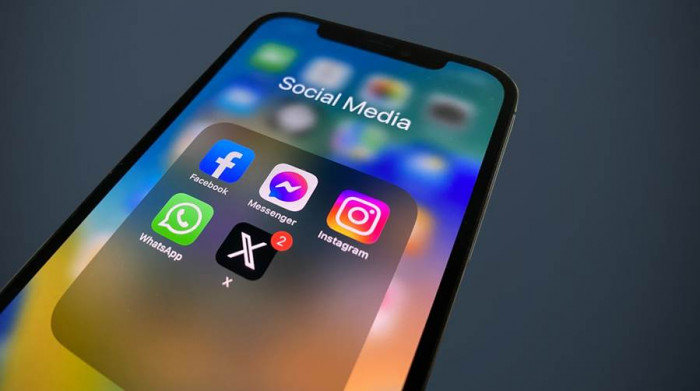
One phone, five different boxes for your bio. Each app reads the same words differently.
| FIELD | SPACE YOU GET | LEAD WITH | THE TRAP |
|---|---|---|---|
| X (Twitter) bio | 160 characters | One sharp line of what you do, plus a scrap of proof. | Cramming in five identities. |
| Instagram bio | 150 characters | Who it helps and a reason to follow. | Spending the whole line on emoji. |
| TikTok bio | 160 characters | Your niche and what a follow gets them. | Vague 'just here for vibes'. |
| LinkedIn headline | 220 (~70 shown) | Role, who you help, and how, in the first 70. | Leaving the default 'Title at Company'. |
| LinkedIn About | 2,600 (~300 first) | A full hook inside the first 300 characters. | Burying the pitch below See more. |
| Dating profile | Varies | One honest, specific detail and a conversation hook. | Recycled cliches like 'work hard, play hard'. |
On X, an analysis of accounts with a thousand or more followers found the same thing I keep telling people: the cap, the emoji, the blue check, none of it tracks with audience size. Short and specific does.
The run-it-before-you-save checklist
Eight yes-or-no questions. A weak bio fails at least three of them.

Run the eight questions below before you hit save.
● □ Does the first line say what changes because of you, not just your title?
● □ Is there at least one number, name, or dated result?
● □ Have you named who this is for, and quietly who it is not?
● □ Did you cut every word you could not defend in an interview?
● □ Is the strongest fact inside the first 300 characters?
● □ Is there one clear next step for the reader?
● □ Did you match the length and tone to this exact platform?
● □ Would you say this line to a stranger without cringing?
Final verdict
The last check costs nothing: read the bio out loud and watch the other person's face.
I wrote this after going through another stack of profiles, the way I have a hundred times, and the pattern held. The weak ones hide behind adjectives. The strong ones risk a specific. That is nearly the whole game.
If you only fix one thing, fix the first line, because it is the only line most people ever finish. Give it an outcome, hang a number on a claim, name the one person you are for, and end with somewhere to go. Do that and the bio stops apologizing for you and starts working for you.
The best test I know still costs nothing. Read your bio out loud to someone who does not know your job. If they get what you do and why it matters before you have to explain, you are done. If they tilt their head, go back through the list above and start crossing things out. That is exactly what I do, and it is the part that actually moves the needle.