


Table of Content
I have rewritten my own LinkedIn profile more times than I would like to admit, and I have sat next to friends doing the same thing after a layoff or a career switch. The same thing kept happening. People pour hours into the resume, treat the LinkedIn bio as a box to fill in once, then wonder why recruiters never reach out.
So I spent a stretch of weeks actually testing this. I tried different headlines on real profiles, watched which ones pulled replies and profile views, and compared what recruiters said they searched for against what most job seekers were writing. This guide is the result. Every number in it matches what LinkedIn enforces right now, and every example is one you can copy, adjust, and paste in the next ten minutes.
| Start here There is no field on LinkedIn literally called a "bio." For a job seeker, your bio is two things working together: your Headline (the line under your name) and your About section. Fix those two and you have fixed 90 percent of how you show up. |
The limits you are actually writing inside
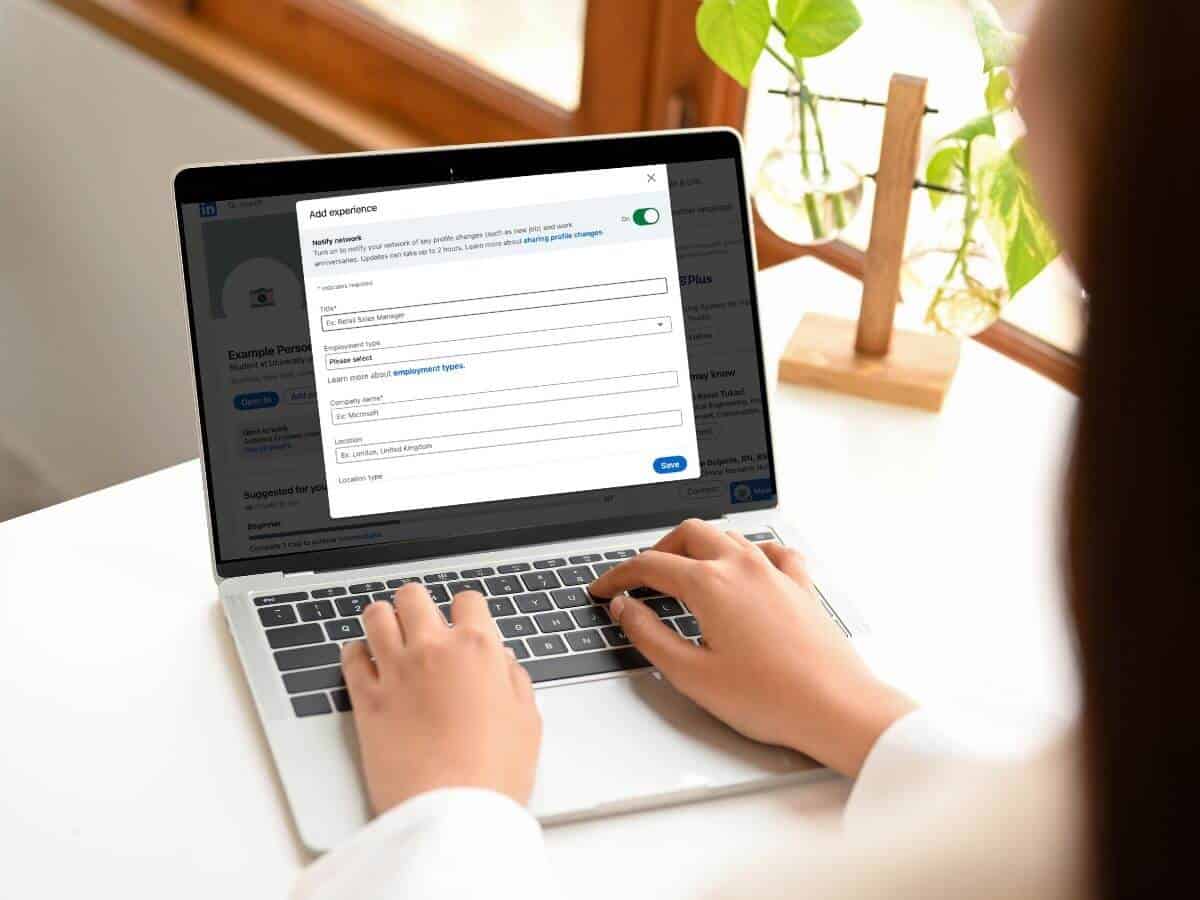
Most bio advice ignores the one thing that decides whether your words even get seen: the caps LinkedIn puts on each field, and the point where it cuts your text off with a "see more" link. Write past the visible window and your best line disappears.
| Field | Hard limit | Visible before cut-off |
| Headline | 220 characters | Roughly 70 on mobile, 120 on desktop |
| About | 2,600 characters | About 300 characters, then "see more" |
| Experience (each role) | 2,000 characters | Shown in full when expanded |
| Connection note | 300 characters | Shown in full |
| Post | 3,000 characters | Around 210, then "see more" |
Two takeaways. Your headline has to land its point in the first 70 characters because that is all a phone shows. Your About section has to hook in the first two lines because the rest is hidden behind a click.
Headline ideas that do the heavy lifting

Your headline follows you everywhere: search results, the feed, comments, every time someone hovers over your name. It is the single most reused piece of text on your profile, which is why "Job seeker" or "Looking for opportunities" wastes it. Those phrases say nothing a recruiter can search for.
The formula that held up best in my testing is plain:
| [Target role] | [What you do or who you help] | [Proof, tool, or focus] |
You keep the exact job title a recruiter types into search, then earn the rest of the line. Here is how that plays out for different situations.
| Situation | Example headline |
| Recent graduate | Marketing Graduate | Content and social for early-stage brands | Grew a campus page to 12k followers |
| Career changer | Aspiring UX Designer | Turning messy user feedback into clean flows | Ex-customer support, now building |
| Between jobs | Open to Operations Manager roles | Process and vendor fixes that cut cost | 7 yrs in logistics |
| Experienced hire | Senior Data Analyst | Turning dashboards into decisions | SQL, Python, 40M-row datasets |
| Student, internship | CS Student at State U | Seeking Summer 2027 SWE internship | Java, React, two shipped side projects |
| Freelancer to full-time | Copywriter for SaaS | 60+ landing pages shipped | Open to full-time content roles |
| Quick test Read only the first 70 characters of your headline out loud. If a recruiter could not tell what role you want from that alone, move the important words to the front. |
The About section, built section by section
The About box is where most people either freeze or write a wall of text nobody reads. It does not need to be a life story. Three short blocks are enough, and the first one has to earn the click.
| Block | Job | Rough length |
| Hook (first 2 lines) | Who you help and the result you get them. This is all that shows before "see more." | About 300 characters |
| Proof | Specific wins, tools, numbers, and the kind of work you have done. | 3 to 5 lines |
| Ask | The role you want and an open door to connect. | 2 to 3 lines |
A template you can fill in right now
| I help [who] [do what / get what result]. Over the past [time], I have [one or two concrete things you did], including [a number or named win]. What I am good at: [skill], [skill], and [skill]. I care most about [the kind of problem or work you want more of]. I am now looking for [target role] roles in [industry or setting]. If you are hiring or know a team that is, feel free to message me or connect. |
Two finished examples

| Career changer moving into UX I help product teams turn confusing screens into ones people can actually finish using. For the last two years I taught myself UX while running support for a 40-person software company, which means I spent every day watching real users get stuck in real time and then redesigning around it. What I bring: Figma, usability testing, and a habit of writing down the exact words customers use. I redesigned our onboarding flow and cut first-week support tickets by about a third. I am looking for a junior or associate UX role on a team that ships often. If that sounds like yours, I would love to talk. |
| Experienced marketer, recently laid off I build demand-gen programs that marketing and sales both trust. Across eight years in B2B SaaS I have owned budgets up to a quarter million and consistently kept cost per lead moving in the right direction, including a paid-search rebuild that doubled qualified pipeline in two quarters. My toolkit: HubSpot, Google Ads, lifecycle email, and the analytics to prove what worked. I am happiest when a messy funnel finally starts making sense. After a recent restructure I am open to senior demand-gen and growth roles, remote or hybrid. Reach out anytime. |
| Honesty note "Recently laid off" is not a weakness to hide. Restructures are common and recruiters know it. Saying it plainly reads as confident, and it quietly explains why a strong candidate is on the market. |
Write so recruiters can find you
A recruiter rarely scrolls. They search. They type a job title and a skill into LinkedIn Recruiter and scan the list that comes back. If your bio never uses the words they type, you are invisible no matter how well written it is.
| Do this | Avoid this |
| Open three listings for the role you want. The skills and titles that repeat across all three belong in your headline and About section, written the way those posts write them. | "Growth ninja" and "chief idea wrangler" are not search terms. Nobody looks for them, so they take up prime space and return nothing. |
Before and after
| Before Passionate professional seeking the next exciting chapter where I can add value and grow. | After Project Manager | On-time delivery for software teams | PMP, Jira, Agile | Open to new roles |
The second version is shorter and tells a recruiter the title, the proof, and the availability in one glance. That is the whole job of a job seeker's bio.
Ten ready-made bios you can adapt
Each row below is a full bio built with the exact method this guide teaches: a role-forward headline with a proof point, then an About that hooks, proves, and asks. Find the one nearest your situation, swap in your own numbers, and you have a working profile.
| Profile | Headline | About |
| Recent graduate | Marketing Graduate | Content and social for early-stage brands | Grew a campus page to 12k | I help small brands show up and sound human on social. In my final year I grew a campus page to 12k followers and ran its first paid campaign. Looking for an entry-level content or social role. Message me anytime. |
| Career changer | Aspiring UX Designer | Turning messy feedback into clean flows | Ex-support, now building | I help product teams fix the screens users get stuck on. I taught myself UX while running support, then redesigned our onboarding and cut first-week tickets by a third. Open to junior UX roles. Happy to connect. |
| Recently laid off | Demand Gen Marketer | Pipeline sales trusts | HubSpot, Google Ads | Open to roles | I build demand programs that marketing and sales both believe in. Over eight years in B2B SaaS I doubled qualified pipeline with a paid-search rebuild. After a recent restructure I am open to senior demand-gen roles, remote or hybrid. |
| Student, internship | CS Student at State U | Seeking Summer 2027 SWE internship | Java, React, 2 shipped projects | I like building things other people actually use. I have shipped two side projects and placed in a regional hackathon. Looking for a summer software internship where I can learn fast and contribute. Reach out any time. |
| Freelancer to full-time | SaaS Copywriter | 60+ landing pages shipped | Open to full-time content roles | I write copy that turns visitors into trials. Over three years freelancing I have shipped more than 60 landing pages for software brands, several that beat their old conversion rate. Now looking for a full-time content role on a product team. |
| Ops, between jobs | Open to Operations Manager roles | Process and vendor fixes that cut cost | 7 yrs in logistics | I find the slow, expensive steps in an operation and take them out. In seven years in logistics I renegotiated vendor contracts and trimmed fulfilment cost without adding headcount. Available now and open to ops roles. Let us talk. |
| Experienced analyst | Senior Data Analyst | Turning dashboards into decisions | SQL, Python, 40M-row datasets | I help teams stop guessing. I build the reporting leaders actually use to make calls, working comfortably with large datasets in SQL and Python. Open to senior analyst and analytics roles. Connect if that fits your team. |
| Returning from a break | Project Coordinator returning to work | Delivery and stakeholder comms | PMP in progress | I keep projects moving and people informed. Before a two-year caregiving break I coordinated cross-team delivery for a mid-size agency, and I am refreshed and ready. Open to coordinator and junior PM roles. I would love to reconnect with the field. |
| Entry-level finance | Accounting Graduate | Reconciliations, AP/AR, Excel | Seeking entry-level finance roles | I like clean books and numbers that tie out. I handled AP and AR for a campus nonprofit and built its first monthly close checklist. Looking for an entry-level accounting or finance role. Happy to connect with hiring teams. |
| Customer success | Customer Success Manager | Renewals and expansion for SaaS | 96% retention on my book | I turn new customers into long-term ones. Managing a book of mid-market accounts I held retention at 96% and grew expansion revenue two years running. Open to senior CSM and team-lead roles. Message me to talk. |
A ready-to-steal headline bank
Grab the one closest to your situation, swap in your details, and adjust the length so the key words sit inside the first 70 characters.
Open and looking
- Open to [role] roles | [what you fix] | [top skill or credential]
- Actively interviewing for [role] | [industry] background | available [month]
- [Role] ready to start now | [proof point] | let us talk
Still employed, exploring quietly
- [Current role] at [company] | [what you specialize in] | [top tool]
- [Role] | [the outcome you drive] | [credential or years]
Early career and students
- [Degree] Graduate | [field] | seeking entry-level [role]
- [Major] Student | [one real skill or project] | open to [season] internships
- New [role] | [thing you built or shipped] | eager and coachable
Career changers
- Moving into [new field] | [transferable strength] | ex-[old field]
- [New target role] in training | [relevant skill] | [why the switch, in 3 words]
The Open to Work setting, used well
Open to Work tells LinkedIn you are available. You pick who sees it, and the choice matters more than people realize.
| Option | Who sees it | Best for |
| All members | Everyone, shown as the green #OpenToWork frame on your photo | People already between jobs who want maximum reach |
| Recruiters only | Only recruiters using LinkedIn Recruiter; no public badge | Anyone still employed who needs the search to stay quiet |
Both options are free. One honest caveat: LinkedIn tries to hide the recruiters-only signal from recruiters at your own company, but it says it cannot promise that. If total discretion matters, keep that in mind. Recruiters do actively filter for the Open to Work status, so turning it on genuinely raises how often you surface in their searches.
Mistakes that quietly sink good profiles
| Saving the hook for the end. Your strongest line sits below the fold where almost nobody clicks. Move it to the first two lines of your About. |
| Writing only in the third person. "She is a driven professional" reads like a brochure. First person sounds like a human you would want to call. |
| No numbers anywhere. Specifics are what recruiters remember. One real figure beats three paragraphs of adjectives. |
| A headline that only says your job title. You get 220 characters. Using 15 of them on one word throws away free visibility. |
| Leaving the About section empty. An empty box reads as an abandoned profile. Even four honest lines beat nothing. |
My honest take after testing all of this
The profiles that pulled replies were never the most poetic ones. They were the clearest. A headline that named the exact role, an About section that opened with a result instead of a feeling, and the Open to Work setting switched on in the mode that fit the person's situation. That combination did more in a weekend than weeks of tweaking wording ever did. If you only change one thing today, rewrite your headline so the role and one proof point sit inside the first 70 characters. That single line travels across every corner of LinkedIn, and it is the cheapest, fastest edit on this whole page. Build the About section around a strong first two lines next, lean on the ten examples above, and you will have a bio that works for you while you are off doing something else. |