

Table of Content
I have rewritten my own bio more times than I want to admit. For a long stretch I treated that little About box like a formality, pasting in a shrunken version of my resume and hoping nobody read it too closely.
Then I started paying attention to the bios that made me stop and think "this person, I want to talk to." None of them were clever for the sake of it. They were clear, specific, and written like a person talking to another person. So I did the unglamorous work of collecting the ones that landed, pulling them apart line by line, and figuring out what they had in common.
What follows is not theory. It is the set of bio patterns I keep coming back to after years of writing them, for myself, for founders, and for teams who all had the same complaint: "I sound boring on paper." Every example below is annotated so you can see the moving parts, and every one is short enough to steal the structure and make it yours.

THE SHORT VERSION A bio that works answers three questions fast: what you do, who it is for, and why anyone should believe you. Lead with the person you help, back it with one specific result, and end with a clear next step. Retire the words results-driven, passionate and dynamic. They are the beige carpet of personal branding. |
Why your bio quietly outworks your resume
Your resume shows up when you apply for something. Your bio shows up before that, often without you in the room. Someone reads it on LinkedIn before accepting your message, on a conference page before booking you, on your site before replying to your pitch. It is doing quiet sales work while you sleep, which is exactly why it deserves more than a rushed paste job.
The numbers back this up.

| Figure | What it means | Source |
|---|---|---|
| 70% | Employers who research candidates through social platforms and search before deciding. | CareerBuilder survey |
| 47% | Employers less likely to interview someone they cannot find online at all. | CareerBuilder survey |
| 90%+ | HR pros and recruiters who find a LinkedIn profile at least somewhat useful when hiring. | Novoresume, via Forbes 2026 |
The takeaway is not "be everywhere." It is that the short text under your name is read more often, and by more decision makers, than the long document you sweat over.
The four beats behind every strong bio
Strip away the personality and almost every bio that works runs on the same four beats. You do not have to hit them in this exact order, but when one is missing, the bio usually feels thin.
| Beat | What it does | Example fragment |
|---|---|---|
| 01 Hook | Open with the transformation you create, not your title. | I turn dry compliance training into something people finish. |
| 02 Who & what | Say who it is for and how you help them, in plain words. | for HR teams at mid-size tech companies |
| 03 Proof | One specific number does more than a paragraph of adjectives. | 12 courses shipped, 94% completion rate |
| 04 Next step | End with a clear invitation, not your last accomplishment. | Booking projects for Q3, message me here. |
Bio examples by platform
The formula stays the same. The length, tone and format change with the box you are writing into. Here is what that looks like in practice.
The X (Twitter) one-liner
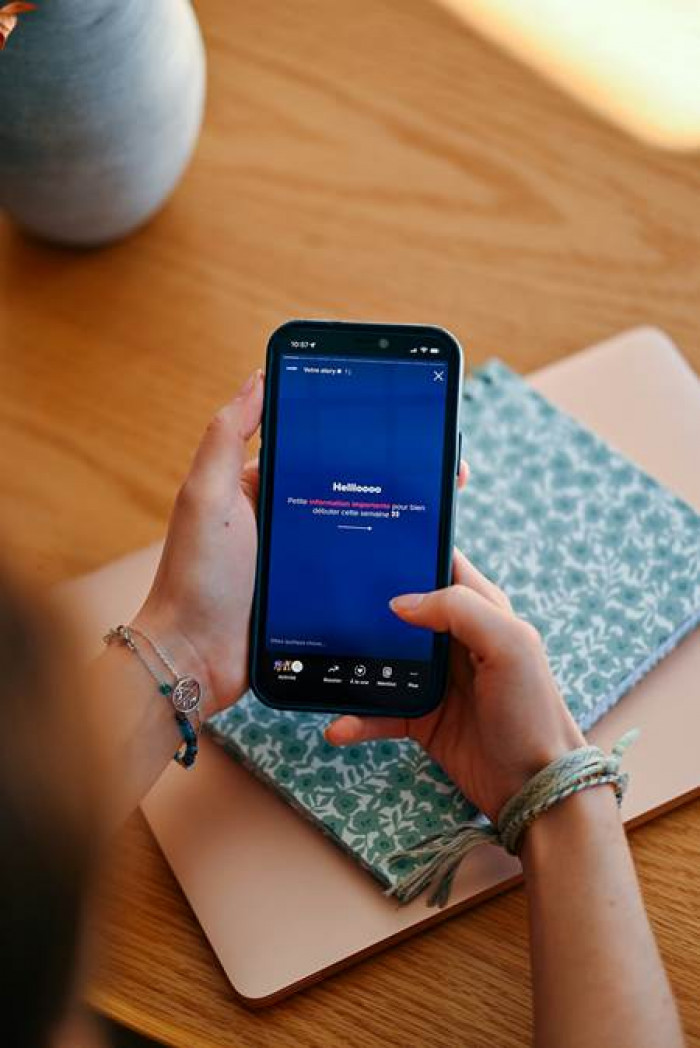
You get 160 characters on X, and every one has to fight for its place. The move is to resist listing traits and lead with a change you create for someone.
X / Twitter I help first-time founders turn rough ideas into decks investors finish reading. Ex-seed VC, 40+ raises closed. New thread every Tuesday. 137 of 160 characters |
● It opens with a verb and a person, not a job title.
● One number ("40+ raises closed") does the bragging so the writer does not have to.
● The last line gives a reason to follow, not just admire.
The Instagram bio
Instagram gives you 150 characters and a link. Readers decide in about a second whether the feed is for them, so the first few words should signal both the topic and the vibe.
Sourdough for people who burn toast. Weeknight recipes that actually work. New loaf every Sunday. Free starter guide below. 125 of 150 characters |
● The first phrase is a filter, and it repels the wrong follower on purpose.
● Personality lives in the voice ("people who burn toast"), not in adjectives.
● The closing line points at the one action the account wants.
The LinkedIn headline and About section
LinkedIn is really two fields that people call a bio. The headline gets 220 characters and follows you everywhere on the platform, including search and comments. The About section gives you 2,600 characters to make the fuller case. Treat the headline as the hook, and treat the first two lines of About as the part that earns the "see more" click, because on a phone that is all most people see.
LinkedIn · Headline Helping B2B SaaS teams turn free trials into paying customers | Fractional Lifecycle Marketer | $12M+ retained revenue | Former HubSpot 135 of 220 characters |
LinkedIn · About I spend my days figuring out why people sign up for software and then quietly disappear. As a fractional lifecycle marketer, I build the emails, in-app nudges and onboarding flows that turn free trials into customers who stay. Over the last six years I have helped B2B SaaS teams recover more than 12 million dollars in revenue that was leaking out through churn and dead trials. Before going independent I led lifecycle at HubSpot, where I learned that retention is a writing problem as much as a data one. If your activation numbers look healthy but revenue does not follow, that gap is usually fixable. I am booking a few projects for next quarter. The best way to reach me is a short message here. About 700 of 2,600 characters |
● The first sentence reads like a person, not a job description, so people keep going.
● It moves from problem, to what the writer does, to proof, to a plain call to action.
● The "12 million dollars recovered" line is concrete, which beats "proven track record" every time.
The personal website About page
On your own site you have room to tell a short story, and stories stick better than credentials. The founder narrative works because it starts with a problem the reader recognizes, then shows how you became the person who solves it.

Website · About Five years ago I was the person crying in a stairwell before every big presentation. I knew my material cold, but the second I stood up, my voice would shake and my slides would betray me. So I did the unglamorous thing: I gave the same talk two hundred times, recorded every one, and studied what actually landed. Today I coach engineers and founders who dread public speaking to give talks people remember. I have trained speakers for three major tech conferences and a handful of teams who used to lose sleep over demo day. If the thought of a stage makes your stomach drop, we are going to get along. |
● It opens on a vivid, human moment instead of a summary of achievements.
● The turning point shows effort, which builds trust faster than a list of titles.
● The last line speaks straight to the reader who needs the help.
The speaker or panel bio (third person)
Event pages, panels and author blurbs usually run in third person. The common mistake is a dry list of titles. A strong speaker bio still has a point of view, it just refers to you by name.
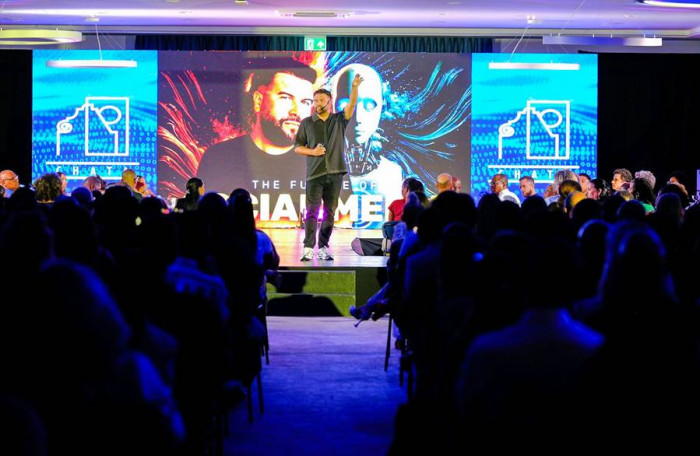
Speaker · Third person Maya Okafor helps technical people say what they mean without the jargon. A former staff engineer turned communication coach, she has trained more than 800 developers to present their work to executives, customers and skeptical review boards. Her workshops have run at three major engineering conferences, and her guide to demo-day storytelling is used inside several Series B startups. She believes the best talk in the room is usually the clearest one, not the loudest. Maya writes a weekly note on technical communication and lives in Lisbon with two cats who ignore her slides. |
● It keeps a clear angle ("without the jargon") even in formal third person.
● Proof is specific and countable: 800 developers, three conferences.
● The last line adds a human detail, which makes the person memorable at an event.
Character limits, so you write to the box
Half the battle is knowing how much room you have before you start. Writing to the limit, instead of trimming after, keeps the message sharp. These are the current bio limits across the major platforms.
| Platform | Field | Limit | Write it for |
|---|---|---|---|
| X (Twitter) | Bio | 160 | One sharp line with a hook and a number |
| Bio | 150 | Topic, vibe, and a cue toward your link | |
| Headline | 220 | The hook that follows you across the platform | |
| About | 2,600 | First two lines before the "see more" fold | |
| Bio | 101 | One plain, human sentence | |
| TikTok | Bio | 80 | The shortest box of all, pick four words that matter |
Limits verified against platform references in mid-2026. Platforms adjust these from time to time, so it is worth checking the box itself before you publish.
The mistakes that make a bio forgettable
Most weak bios are not badly written. They are just interchangeable. Here are the three patterns I see most, with the fix beside each one.
| Buzzword salad | Made specific |
|---|---|
BEFORE "Results-driven, passionate professional leveraging synergies to deliver value across cross-functional teams." | AFTER "I help finance teams close the books four days faster. Trained 15 controllers this year." |
BEFORE "Senior Manager. Former Manager. MBA. Certified in three frameworks. Ten years of experience." | AFTER "I help retail brands rebuild supply chains that stopped keeping up. 10 years in, still obsessed with it." |
BEFORE "Most recently led a team of eight at a Series B startup." (the bio just stops) | AFTER "Open to advising early teams on their first marketing hire. Reach me on LinkedIn." |
What people who study this keep saying
You do not have to take my word for any of this. The people who research branding and hiring have been circling the same ideas for years.

“ Your brand is what people say about you when you are not in the room. Jeff Bezos, Founder of Amazon |
“ Roughly seven in ten employers vet candidates online, and nearly half hesitate to interview someone with no digital footprint at all. CareerBuilder hiring survey |
“ More than nine in ten recruiters say a LinkedIn profile factors into how they view a candidate. Novoresume, reported by Forbes (2026) |
“ Reviewers of hundreds of profiles report that most bios sound identical, and the ones written like a real person stand out. Recurring finding across 2026 practitioner guides |
First person or third person?
Both are correct. The right choice depends on where the bio lives and who is expected to be speaking.
| Reach for first person | Reach for third person |
|---|---|
| LinkedIn About, your own website, social bios | Conference pages, author blurbs, team pages, press |
| You want it to read like a conversation | You want a more external, formal register |
| You are the one publishing it | Someone else is introducing you |
When in doubt, write the first person version first. It is easier to swap "I" for your name later than to warm up a stiff third-person draft.
The verdict, after years of writing these
Here is what I trust now. A bio is not a monument, it is a working tool, and the best ones stay a little unfinished because the person keeps sharpening them. When I sit down to write one, mine or someone else’s, I no longer start with adjectives. I start with the reader on the other side and one true sentence about what changes for them. Everything in this guide is downstream of that single move. If you take one thing away, make it this: read your bio out loud. If it sounds like a brochure, it is not finished. If it sounds like you on a good day, explaining what you do to someone you respect, you are close. Write the messy first draft today, cut it in half tomorrow, and check how it looks on your phone before you call it done. That habit, more than any template, is what turns a bio people skim into one that gets a reply. |