


Table of Content
48% higher engagement on Instagram posts using emojis vs. text-only | 15% engagement lift from emoji captions, averaging an 11.5% rate | <20 emojis per caption is the sweet spot before returns drop off |
Open any high-performing Instagram account and the captions follow a pattern. They aren’t just words; they’re punctuated with small bursts of color that pull your eye exactly where the creator wants it. That’s not an accident.
Emojis are one of the most reliable, lowest-effort levers for engagement on Instagram. Posts that use them see roughly a 48% jump in engagement over plain text, and captions with emojis average about 15% higher engagement overall. But the part most guides skip is simple: emojis don’t create good content. They amplify it.
“Emojis magnify what’s already true. A strong post performs slightly better with the right emoji. A weak one fails harder.”
So this isn’t a list of cute symbols to sprinkle on top. It’s a guide to using emojis the way the best creators do in 2026: as visual punctuation that guides the eye, signals tone, and nudges people toward one action, whether that’s a save, a comment, or a share.
The emojis people actually use (and why)
Buffer’s data team analyzed millions of posts to find the emojis that brands and creators reached for most. The surprise? The winners aren’t the laughing faces and hearts that dominate casual texting. They’re functional, symbols that work like visual road signs.
| 1 | ✨ | Sparkles The runaway #1, used by 207,000+ accounts. Adds excitement and emphasis without feeling over-the-top. |
| 2 | 👉 | Pointing finger Literally directs attention. Perfect right before a link or call-to-action. |
| 3 | 🔥 | Fire Signals “this is trending / hot right now.” Universal hype marker. |
| 4 | ✅ | Check mark Implies completion or approval. The biggest mover of the year. |
| 5 | 💡 | Light bulb Introduces an idea or tip, great for educational captions. |
| 6 | 🚀 | Rocket Growth, launches, momentum. Use sparingly so it stays special. |
| 7 | 👇 | Pointing down Sends readers toward your next line or your link in bio. |
Notice the pattern? Pointing emojis direct attention, checkmarks indicate completion, fire flags what’s trending, and light bulbs introduce ideas. As one analyst put it, these function less like emotions and more like visual punctuation, a way to guide the eye and structure information in a crowded feed.
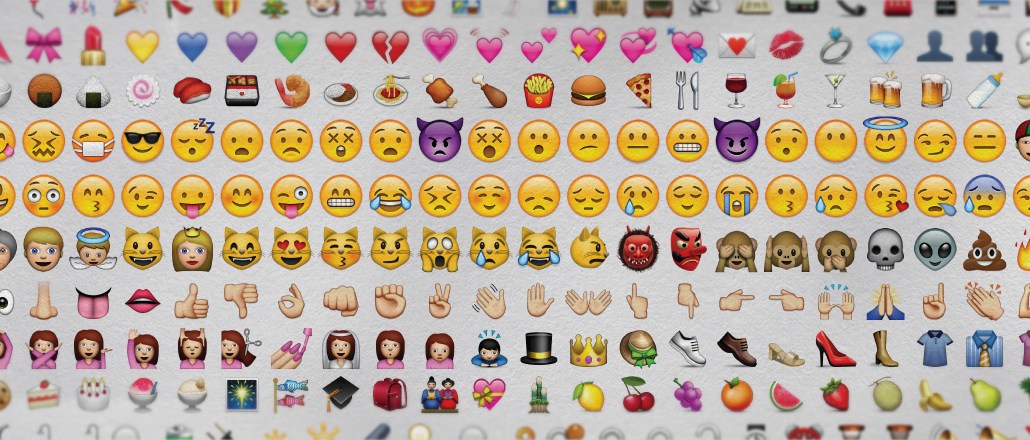
That said, the right emoji depends entirely on context. A wellness coach and a streetwear brand are not reaching for the same symbols, and they shouldn’t. The list above is a map of what works broadly, not a script to copy. The smarter move is to treat these top performers as a starting palette, then narrow it down to a small set that genuinely fits your voice. A handful of signature emojis used consistently will do more for your brand recognition than chasing whatever is trending this week.
Each placement does a different job
Where you drop an emoji matters as much as which one you choose. Think of a caption as having three zones, each with its own rule.
🪝 The hook (top line) Keep it clean. Emojis here can make your opening harder to read and dilute the impact. Lead with words that stop the scroll. | 📖 The body This is where emojis earn their keep, breaking up text, marking list items, and making long captions scannable. | 🎯 Before the CTA Drop a 👇 or 👉 right before your call-to-action to draw the eye exactly where you want action to happen. |
The reasoning behind keeping your hook clean is worth stressing, because it is the rule people break most often. Your first line is doing the heaviest lifting in the entire post: it decides whether someone taps “more” or keeps scrolling. Stacking emojis there competes with your words for attention and can actually make the line harder to parse on a small screen. Save the visual flourishes for the body and the moment just before you ask for action, where they reinforce your message instead of fighting it.
The numbers worth knowing
If you only remember a few benchmarks, make them these. They come straight from large-scale analyses of real Instagram posts.
| WHAT WORKS | THE DATA | |
| 📈 | Adding emojis at all | ~48% higher engagement vs. text-only posts |
| 🔢 | Emoji count per caption | Stay under 20; image posts peak ~20, carousels ~24 |
| ✂️ | Caption length for likes | Captions under 50 characters earn ~8% more likes |
| 💬 | Caption length for comments | Captions over 100 words earn ~23% more comments |
| ❓ | Ending with a question | ~19% more saves than posts without a closing prompt |
| 🤝 | “Tag a friend” CTAs | ~28% more comments than regular promo posts |
The tension between short captions (more likes) and long captions (more comments) is real, which is why the goal of each post should decide its length. Chasing reach? Lean short and punchy. Building community? Go long and end with a genuine question.
One number deserves a closer look: the emoji count. It is tempting to read “more emojis equals more engagement” and go overboard, but the data points to a ceiling, not a ladder. Once you push past roughly twenty emojis in a single caption, the post starts to feel cluttered and spammy, and the gains flatten out. The most effective captions tend to be intentional rather than maximal: a few well-chosen symbols placed where they actually help, rather than a confetti cannon fired at every line.
Caption formulas you can steal
Here are templates that pair emoji placement with the proven structures top creators use. Swap in your own content, and the framework does the heavy lifting. Think of these as scaffolding, not scripts: the pattern stays the same while the specifics change to fit your message.
The tip-list caption
✨ 3 things I wish I knew sooner 👇 💡 Tip one goes here 💡 Tip two goes here 💡 Tip three goes here Save this for later 📌 which one are you trying first? |
The hot-take caption
🔥 Unpopular opinion: most advice on this is wrong. Here’s what actually works in my experience… 👀 Agree or disagree? Tell me below. |
The community caption
This took me three years to figure out. 🌱 (long, honest story in the body…) 👉 Tag someone who needs to hear this today. |
Each one ends with a specific prompt, not a vague “let me know!” Specific CTAs like “comment the number of the tip you’ll try first” can outperform generic ones by up to 3x, because they tell people exactly what to do, which removes the friction of figuring out how to respond.
Templates get you started, but your own audience is the real authority. The brands that win on Instagram treat captions as something to test, not guess. Try an emoji-heavy version against a sparse one, a short caption against a long one, a question close against a statement, and watch which earns more saves and shares. Different audiences genuinely respond differently, and the only way to know yours is to let a few weeks of your own data settle the argument.
The do’s and don’ts
Do ✅ ✅ Use emojis as bullets to break up long captions ✅ Place a directional emoji right before your CTA ✅ Match the emoji to your brand’s tone and voice ✅ Test emoji-heavy vs. emoji-light and let data decide ✅ End with a real question to drive saves and comments | Don’t 🚫 🚫 Bury your hook line under a row of emojis 🚫 Cram in 30+ emojis hoping more equals better 🚫 Use symbols whose meaning your audience won’t get 🚫 Treat emojis as a fix for weak content 🚫 Copy the same emoji string onto every single post |
One last thing the data quietly says
Here’s the takeaway nobody puts on a graphic: Instagram’s algorithm in 2026 rewards depth, not decoration. The platform now weighs sends, saves, and multi-word comments above passive likes, and a comment that’s a single emoji barely counts toward the conversation depth the feed is looking for.

That shift changes how you should think about emojis entirely. They are no longer a shortcut to gaming reach; they are a tool for making genuinely good content easier to read and easier to act on. An emoji that nudges someone to save a post, tag a friend, or leave a real comment is pulling its weight. An emoji that is just there for decoration is, at best, neutral.
So use emojis to make your captions warmer, faster to read, and easier to act on. But let the words carry the meaning. The best emoji caption isn’t the one with the most sparkles. It’s the one where every symbol is doing a job, and the post underneath is worth reacting to in the first place. ✨