

Table of Content
- The uncomfortable truth most creators are ignoring
- Why posting more content is no longer a competitive advantage
- What changed in the platform environment:
- The data behind the shift
- The algorithm reality most creators underestimate
- Audience psychology has also changed
- Modern audience behavior trends:
- Real-world examples of what is working now
- Example 1: High-retention YouTube creators
- Example 2: Micro-creators with strong engagement
- Example 3: Newsletter and owned audience strategies
- What actually wins today
- 1. Value density
- 2. Distribution engineering
- 3. Brand gravity
- Brand signals that matter today:
- A practical framework creators can use
- Step 1: Increase value per post
- Step 2: Improve distribution leverage
- Step 3: Build brand depth over time
- Tactical moves to make right now
- Do more of this:
- Do less of this:
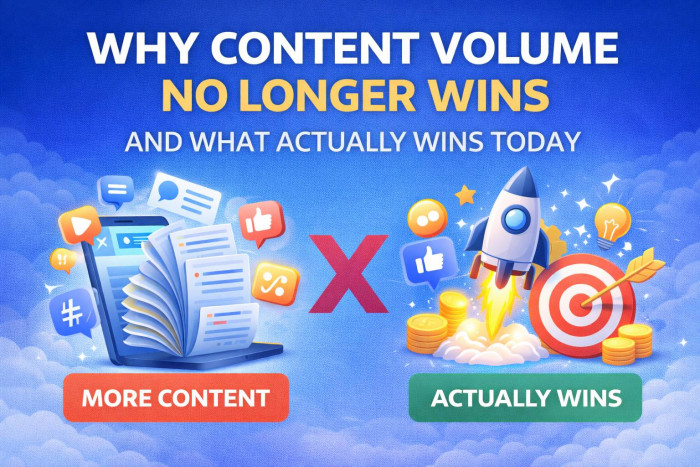
The uncomfortable truth most creators are ignoring
For years, the growth advice was simple: post more content and you will grow faster. That strategy worked when social media feeds were less crowded and mostly chronological.
Today, the environment is very different.
Content creation is easier than ever. AI tools, templates, and schedulers allow anyone to publish daily. But at the same time, reach has become more competitive and attention has become more limited. The result is clear:
Content volume alone is no longer a reliable growth strategy.
In many cases, posting more low-impact content actually hurts performance.
Why posting more content is no longer a competitive advantage
The biggest shift is that platforms no longer reward activity. They reward performance per post.
Modern algorithms evaluate each piece of content independently. If a post does not generate strong engagement signals, it simply stops spreading, no matter how frequently you publish.
What changed in the platform environment:
1. Feeds are now AI-ranked, not chronological
2. Engagement quality matters more than posting frequency
3. Weak posts get filtered quickly
4. Strong posts get amplified disproportionately
5. User attention is more fragmented than ever
This means volume without quality creates diminishing returns.
The data behind the shift
The numbers clearly show why volume strategies are weakening.
Key evidence points:
1. Average Instagram reach is roughly 3 to 4 percent of followers
2. Facebook organic reach is often below 2 percent
3. The creator economy is projected to reach $480 billion by 2027
4. Media consumption time is relatively fixed per user
5. AI-generated content supply is rapidly increasing
When supply grows faster than attention, distribution becomes harder. This is basic attention economics at work.
In simple terms, there is now far more content competing for the same amount of human focus.
The algorithm reality most creators underestimate
Modern platforms like Instagram, YouTube, and TikTok optimize for user satisfaction signals, not creator effort.
The most important signals today include:
1. Watch time
2. Completion rate
3. Saves and shares
4. Meaningful comments
5. Click-through rate
6. Viewer retention in the first few seconds
Notice what is missing: posting frequency.
This is why many creators experience a frustrating pattern. They post more but grow slower.
Audience psychology has also changed
It is not just the algorithms that evolved. Audiences have changed too.
Users today scroll through highly optimized feeds filled with strong hooks and polished content. This has raised the baseline expectation for what earns attention.
Modern audience behavior trends:
1. Shorter attention spans
2. Faster scrolling habits
3. Higher sensitivity to weak hooks
4. Greater fatigue toward generic content
5. Strong preference for clear value or strong emotion
Because of this, mediocre high-volume posting blends into the background noise.
Real-world examples of what is working now
Example 1: High-retention YouTube creators
Top YouTube creators do not win by uploading every day. Instead, they focus heavily on retention engineering and storytelling quality.
Their process typically prioritizes:
1. Strong opening hooks
2. Tight editing
3. Emotional pacing
4. Thumbnail optimization
5. Title testing
One highly optimized video often drives more growth than dozens of average uploads.
Example 2: Micro-creators with strong engagement
Many micro and nano creators outperform larger accounts in engagement rate. This happens because they focus on depth of connection rather than pure output volume.
What successful smaller creators often do:
1. Reply actively to comments
2. Build niche authority
3. Maintain consistent positioning
4. Produce highly relevant content
5. Prioritize saves and shares
This is brand depth beating raw volume.
Example 3: Newsletter and owned audience strategies
A growing number of creators are shifting focus toward owned distribution channels such as email lists and communities.
Why? Because algorithmic reach is unpredictable.
Owned audience advantages:
● Direct access to followers
● No algorithm gatekeeper
● Higher conversion potential
● Stronger long-term leverage
This trend reflects a broader shift from pure content production to distribution control.
What actually wins today
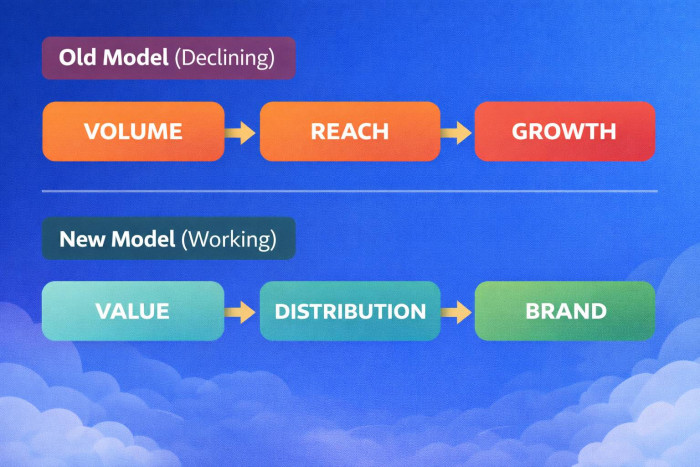
If volume is losing power, what is replacing it? The modern growth stack is built on three pillars.
1. Value density
Winning content today delivers clear value quickly. This can be:
1. Practical insight
2. Strong emotion
3. Unique perspective
4. High entertainment value
5. Clear educational payoff
The goal is not more posts. The goal is more impact per post.
2. Distribution engineering
Creation is becoming commoditized. Distribution is becoming the real moat.
High-performing creators spend disproportionate time on:
1. Hooks
2. Thumbnails
3. Titles
4. Packaging
5. Cross-platform repurposing
6. Format optimization
The first three seconds of content now carry enormous weight.
3. Brand gravity
In saturated feeds, familiarity compounds.
Audiences increasingly follow creators they recognize and trust. This creates what can be called brand gravity the ability to pull attention because of accumulated credibility.
Brand signals that matter today:
1. Consistent voice
2. Clear positioning
3. Recognizable style
4. Community interaction
5. Repeat viewer behavior
This is why personality-led creators often outperform faceless high-volume accounts.
A practical framework creators can use
Step 1: Increase value per post
Before publishing, ask:
1. Is the hook strong in the first three seconds?
2. Would someone save this?
3. Does it solve a clear problem?
4. Is it easy to skim?
5. Does it create curiosity or emotion?
Metrics to watch:
1. Saves per impression
2. Average watch time
3. Completion rate
4. Shares per post
Step 2: Improve distribution leverage
Treat packaging as a growth lever, not an afterthought.
Focus on improving:
1. Hook clarity
2. Thumbnail readability
3. Title specificity
4. Platform-native formatting
5. Repurposing across channels
Metrics to watch:
1. Scroll stop rate
2. Click-through rate
3. First-3-second retention
4. Reach per post
Step 3: Build brand depth over time
This is the long-term advantage most creators underestimate.
Invest in:
1. Clear niche positioning
2. Consistent tone
3. Audience interaction
4. Community building
5. Email list growth
Metrics to watch:
1. Returning viewers
2. Comments per follower
3. Direct traffic
4. Subscriber growth quality
Tactical moves to make right now
Do more of this:
1. Publish fewer but stronger posts
2. Study retention data weekly
3. Improve your first three seconds
4. Build owned audience channels
5. Focus on shareability and saves
Do less of this:
1. Blind daily posting
2. Generic AI content spam
3. Vanity metric chasing
4. Platform-only dependency
5. Volume for its own sake