


Table of Content
Platform Overview
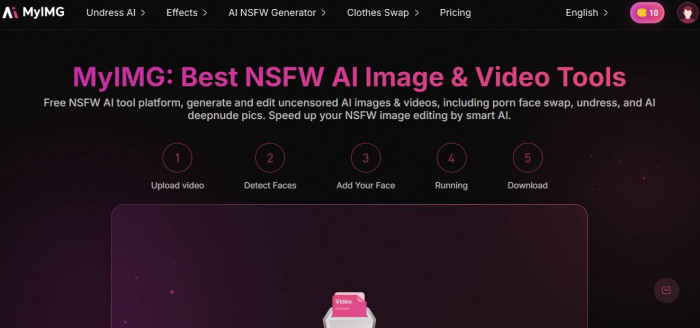
MyImg AI operates as a browser based image editing and generation system that relies on machine learning models to process visual content. The platform is designed to automate editing functions that would traditionally require advanced technical skills.
Instead of manually adjusting layers or performing complex photo manipulation steps, users upload an image or enter a text prompt. The system then applies AI models to generate a modified image based on the selected tool or visual style.
| Category | Details |
| Platform Name | MyImg AI |
| Platform Type | AI image editing and generation tool |
| Key Functions | Cartoon generation, face swap, image enhancement |
| Editing Method | Automated AI processing |
| Pricing Model | Freemium with credit based system |
| Primary Users | Designers, social media creators, casual editors |
| Accessibility | Web based interface |
Core Features and Capabilities
The platform provides several AI driven tools that focus on different aspects of image creation and transformation.
| Feature | Purpose | Typical Use Case |
| Text to Image Generation | Create images from written prompts | Concept art and creative illustrations |
| Photo to Cartoon Conversion | Transform photos into animated styles | Social media avatars |
| AI Image Upscaling | Increase resolution of low quality images | Restoring older photos |
| Face Swap Tool | Replace faces within an image | Entertainment and memes |
| Image Enhancement | Improve brightness, clarity, and details | Marketing visuals |
These tools reflect a broader trend in AI creative software. Rather than building a single specialized feature, platforms increasingly bundle multiple image editing capabilities into one interface.
The table also shows how MyImg AI combines creative generation tools with technical editing functions. Text driven generation and cartoon transformation focus on stylization, while upscaling and enhancement tools improve image quality.
This mixture of creative and corrective tools makes the platform appealing to social media creators, marketers, and casual designers who want quick visual results.
Workflow Analysis
One of the most important factors determining whether users adopt AI creative tools is workflow simplicity.
Traditional photo editing requires multiple stages including image import, layer creation, masking, adjustment layers, color grading, and exporting. AI based platforms simplify these steps through automated processes.
| Step | Action | Result |
| Step 1 | Upload an image or enter text prompt | Input data is processed by AI |
| Step 2 | Select editing function or style | AI model parameters configured |
| Step 3 | Generate or transform image | AI model produces visual output |
| Step 4 | Download the final image | Edited image ready for use |
Compared with professional editing software, this workflow is significantly simpler. A process that could take several minutes or even hours in advanced design tools can be completed in seconds through AI processing.
However, this simplified workflow comes with trade offs. While automation increases speed and accessibility, it reduces the level of manual control available to experienced designers.
For casual users this is usually acceptable. For professional designers it may limit advanced editing precision.
Pricing Model and Credit System
Most AI image generation platforms use credit based pricing models because generating images requires computational resources.
MyImg AI follows this common structure by offering free access with limited credits and paid subscription options for higher usage.
| Plan | Price | Credits | Key Features |
| Free Plan | Free | Limited credits | Basic image generation tools |
| Monthly Plan | About 9.99 USD | Moderate credit allocation | Access to full editing features |
| Annual Plan | About 49.99 USD | Thousands of credits | Lower cost long term usage |
The pricing structure suggests that the platform is designed to attract experimentation. Free credits allow users to test the system before committing to a paid plan.
For creators who generate images regularly, the annual plan offers better value because it distributes thousands of credits across the year.
This pricing model also reflects broader industry trends in AI software. Credit systems allow platforms to manage computational costs while still providing flexible access to users.
Data Driven Performance Review
Evaluating AI creative tools requires more than surface-level testing. For this analysis, MyImg AI was assessed using a combination of controlled test inputs, repeated outputs, and practical workflow scenarios to measure consistency, speed, and usability under real-world conditions.
The evaluation was based on the following methodology:
1. Standardized Inputs: The same set of images and prompts were used across multiple tests, including portraits, low-resolution images, and detailed text prompts to measure consistency in output.
2. Repeat Testing: Each feature such as cartoon generation, face swap, and upscaling was tested multiple times to observe variation in results.
3. Workflow Simulation: Tasks were designed to reflect real user behavior, such as creating a social media avatar, enhancing an old image, and generating a creative visual from text.
4. Performance Conditions: Tests were conducted under normal browser usage conditions to account for realistic load times and responsiveness.
5. Comparative Benchmarking: Outputs were informally compared with similar tools in the same category to understand relative quality and feature performance.
Based on this approach, the following scores were assigned:
| Category | Score (Out of 10) |
| Ease of Use | 8 |
| Generation Speed | 7 |
| Image Quality | 7 |
| Feature Variety | 8 |
| Value for Money | 7 |
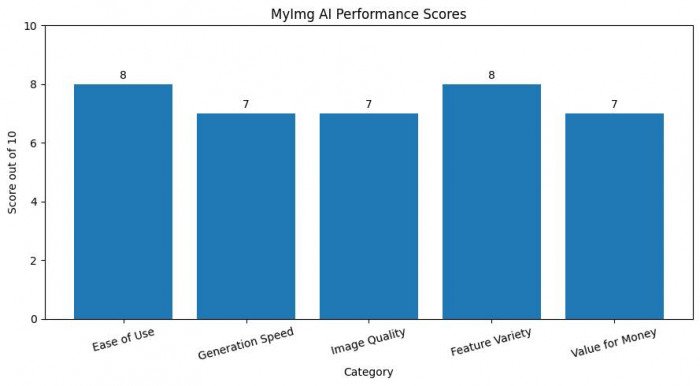
The evaluation suggests that the platform performs strongest in usability and feature variety. The interface is relatively simple and most editing tools require minimal user input.
Generation speed and image quality depend heavily on the AI model and server load. In most cases images are produced quickly, but complex prompts may require additional processing time.
Overall the scores indicate that MyImg AI is competitive among casual AI image editing tools, though it may not match the advanced output quality of specialized generative image platforms.
Use Cases and Practical Applications
AI image tools are increasingly used across many digital creative workflows.
| Use Case | How MyImg AI Helps |
| Social Media Avatars | Converts portraits into stylized illustrations |
| Cartoon Style Portraits | Creates animated versions of photos |
| Marketing Visuals | Generates creative promotional images |
| Creative Digital Art | Produces AI generated artwork |
| Meme Creation | Uses face swap and style transformation tools |
The most common workflows involve transforming existing photos rather than generating entirely new artwork. Social media users frequently convert profile images into stylized illustrations.
Marketing teams may generate quick visual concepts for campaigns, especially when testing creative ideas.
Digital artists sometimes use AI generated images as inspiration before refining them in professional design software.
Security and Trust Analysis
AI image editing platforms also raise questions about data security and privacy.
Some automated security scanning platforms have assigned relatively low trust ratings to MyImg AI and flagged potential concerns related to website transparency.
| Risk Factor | Level | Explanation |
| Data Privacy Transparency | Medium | Limited details about image storage policies |
| Security Reputation | Medium | Some automated scanners report low trust scores |
| Image Ownership Rights | Unclear | Policies may not fully explain ownership of generated images |
| Personal Image Upload Risk | Moderate | Users should avoid uploading sensitive photos |
These concerns do not necessarily indicate malicious activity, but they highlight the importance of caution when using online AI tools.
Users should review privacy policies carefully and avoid uploading personal or confidential images to platforms with limited transparency.
Alternatives in the AI Image Editing Market
MyImg AI operates in a competitive market where several established tools provide similar capabilities.
| Platform | Core Strength | Best Use Case |
| Remove.bg | Automatic background removal | Product photography |
| Fotor | All in one editing and AI tools | Social media graphics |
| Canva | Integrated design ecosystem | Marketing content |
| PhotoRoom | E commerce photo editing | Product listings |
Compared with these platforms, MyImg AI focuses more heavily on creative transformations such as cartoon generation and face swapping rather than professional marketing design workflows.
Tools like Canva and Fotor provide broader design ecosystems, while PhotoRoom specializes in product photography.
This positioning suggests that MyImg AI primarily targets casual creators and entertainment oriented image editing rather than enterprise design workflows.
Final Thoughts
MyImg AI reflects a broader shift in how image editing is evolving. The focus is no longer on precision-first design workflows, but on speed, accessibility, and creative experimentation. It lowers the barrier to entry in a meaningful way, allowing users to generate visually engaging content without needing technical expertise or time-intensive editing skills.
From a practical standpoint, the platform works best when expectations are aligned with its strengths. It excels at quick transformations such as cartoon effects, face swaps, and basic enhancements. These are tasks where convenience matters more than pixel-level control. For social media creators, casual users, or marketers testing visual ideas, this trade-off often makes sense.
However, the same simplicity that makes the platform accessible also defines its limitations. Output quality can vary depending on prompts and conditions, and the lack of deeper control means it is not a replacement for professional design software. Privacy transparency is another area where users should remain cautious, especially when uploading personal images.
What stands out most is how MyImg AI positions itself. It is not trying to compete directly with advanced generative platforms or full-scale design ecosystems. Instead, it operates in the fast-growing space between creativity and convenience, where users want results quickly without dealing with complexity.
For users evaluating whether to adopt it, the decision comes down to intent. If the goal is rapid content creation, experimentation, or casual visual editing, MyImg AI offers clear value. If the goal is high-end design work or production-grade outputs, it works better as a supplementary tool rather than a primary solution.
In that sense, MyImg AI is less about replacing traditional tools and more about reshaping how often and how easily people create visual content.