

Table of Content
Instagram is expanding its AI-powered translation tools for Reels, giving more creators the ability to reach viewers who speak different languages without recording separate versions of the same video.
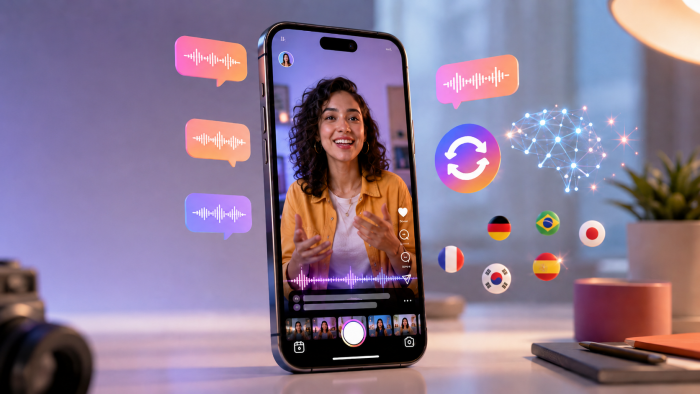
The feature is more advanced than ordinary subtitles. Instead of only translating captions, Meta’s AI can generate dubbed audio that sounds like the creator’s own voice and tone. Where available, it can also adjust mouth movements so the translated version appears more natural to viewers.
The latest update adds support for Japanese, Korean, French, German and Italian, expanding the reach of the tool beyond its earlier language lineup. The feature is designed to help creators, brands and public accounts make Reels easier to understand across regions while keeping the original performance intact.
More Than Subtitles
AI translation for Reels is built to make translated videos feel less like a separate version and more like the original creator speaking another language.
The system can translate spoken audio, generate a voice-style dub and sync the creator’s mouth movements with the translated words. That makes the experience more immersive than a caption overlay, especially for viewers who prefer watching videos with sound.
For creators, this reduces the need to shoot the same Reel multiple times in different languages. A tutorial, product demo, travel clip, educational Reel or creator update can potentially reach a much wider audience from a single recording.
The appeal is obvious: one shoot, one performance and more than one language market.
New Languages Added
The newest language expansion includes Japanese, Korean, French, German and Italian. These join the already supported languages, which include English, Hindi, Portuguese, Spanish, Bengali, Tamil, Telugu, Marathi and Kannada.
Several of the supported languages are widely spoken in India, which remains Instagram’s largest market. That makes the translation feature especially useful for creators trying to move across regional audiences without changing their main content format.
There is some confusion around the exact total number of supported languages, with different Meta-linked statements referring to different figures. But the practical takeaway is clear: Instagram is steadily expanding AI Reels translation beyond its original language set.
Who Can Use It
Eligibility differs slightly across Meta’s platforms.
On Instagram, the feature is available to public accounts through the Reels composer. On Facebook, AI translations are available to creators with at least 1,000 followers.
Creators can manage the translation before publishing. They can select translation languages, review the generated output, disable lip-syncing if needed or discard the translation entirely. The original Reel remains unaffected whether the translation is accepted or rejected.
That review step is important because AI dubbing is not perfect. A creator can check whether the voice, tone and meaning still feel right before the translated version reaches viewers.
/socialsamosa/media/media_files/2026/01/21/23-3-2026-01-21-11-38-06.jpg)
What Viewers See
Viewers see translated Reels in their preferred language where the feature is available. Meta also keeps a disclosure attached, indicating that the translation was created by Meta AI.
That label matters because AI voice translation can be convincing. Viewers need to know when a creator is not actually speaking the language in the original recording.
The disclosure also helps reduce confusion around authenticity, especially as AI-generated media becomes more common across social platforms.
Why It Matters for Creators
The biggest benefit is localization without the usual production cost.
A creator who speaks French can become easier to watch in Korea. A Japanese tutorial can become more accessible to an Italian viewer. A Hindi-speaking creator can reach an English-speaking audience without hiring a dubbing team or recording a second version manually.
For brands, the value is also strong. Product explainers, launch videos, testimonials and educational Reels can travel across markets faster. Instead of rebuilding a campaign for each language, a brand can test translated versions and see where the message performs.
This could be especially useful for small businesses and creators who do not have the budget for professional localization.
The Limits of AI Translation
The feature is useful, but creators should not treat it as flawless.
Translation is not only about words. Tone, humor, slang, cultural references, dialect and visual context all affect whether a video lands with a new audience. A joke that works in one language may feel awkward in another. A persuasive sales line may sound too flat after translation.
AI voice dubbing can also smooth out personality. The translated version may sound clear but less expressive than the original.
That is why creators should use the review option, especially before applying translation to important launch content, sponsored posts or high-performing Reels. A safer approach is to test the tool first on evergreen content where the risk is lower.
A Bigger Push Toward Global Reels
Instagram’s language expansion shows how Meta is trying to make Reels more globally portable. Short-form video already travels easily across borders, but language remains one of the biggest barriers to deeper engagement.
AI translation gives Meta a way to increase watch time, improve creator reach and make the Reels feed feel more international. It also gives creators a new growth lever without asking them to change platforms, hire translators or rebuild content from scratch.
The practical advice is simple: use AI translation to expand reach, but do not skip human review. The best results will come from creators who treat the tool as a localization assistant, not a magic replacement for cultural understanding.