

Table of Content
- What HRMS Globex Actually Is (Under the Hood)
- Core Features (With Real‑World Impact, Not Just Labels)
- 1. Core HR + Employee Master Data
- 2. Attendance, Leave, and Time Discipline
- 3. Payroll and Benefits Engine
- 4. Performance Management (Beyond “Fill This Form by Friday”)
- 5. Recruitment and Onboarding
- 6. Employee Self‑Service (The Silent Hero)
- 7. Analytics, Dashboards, and AI‑Edge
- 8. Compliance, Security, and Auditability
- Business Benefits: What Changes on the Balance Sheet and in the Hallways
- Tangible Financial and Operational Wins
- Intangible but Very Real Gains
- How HRMS Globex Works Day‑to‑Day
- Who HRMS Globex Is For—and Who Should Think Twice
- Strong Fit
- Likely Misfit
- Pricing, Access, and What It Means Strategically
- Two strategic call‑outs:
- Strengths: Where HRMS Globex Punches Above Its Weight
- Limitations: Where to Go in With Eyes Open
- HRMS Globex vs “Everything Else HR”
- Against Bare‑Bones Payroll Tools
- Against Lightweight HR Apps
- Against Enterprise HCM Behemoths
- A Quiet, Honest Wrap‑Up
Picture a 200‑person company.
Payroll still lives in brittle Excel sheets. Attendance is in a biometric machine that nobody reconciles. Appraisals happen on random Word docs that vanish the moment a manager resigns. HR is firefighting, not strategizing.
HRMS Globex steps into exactly this kind of chaos and says: “Give me every fragment of your HR data, and I’ll behave like your single, living HR brain.” It’s a full‑stack human resource management system: one platform that centralizes people data, automates transactions, and layers analytics and compliance over everything so HR can stop being a forms department and start being an intelligence unit.
What HRMS Globex Actually Is (Under the Hood)
Strip away the marketing and you get three concentric circles:
1. System of record: A structured, permissioned database of every employee, every contract, every salary breakup, every leave balance, every performance cycle. This becomes the canonical “source of truth” HR and leadership query for anything people‑related.
2. System of work: Workflows for
● Hiring → onboarding → confirmation
● Attendance → leave → payroll
● Goal setting → reviews → increments
● Document approvals → policy acknowledgements
Instead of emailing forms, you push everything through rules‑driven flows.
3. System of insight: Dashboards for:
● Headcount, joins, exits, internal movements
● Overtime, absence patterns, under‑utilization
● Payroll cost curves, pay‑to‑revenue ratios
● Performance distributions, high‑risk attrition signals
This is what converts HRMS Globex from “HR software” into a decision engine.
Core Features (With Real‑World Impact, Not Just Labels)
Instead of listing modules like a brochure, let’s anchor each in what actually changes in day‑to‑day operations.
1. Core HR + Employee Master Data
You build a living profile for every employee: personal info, role, grade, cost center, work location, manager, contracts, history of role and pay changes, and attached documents (offer letters, NDAs, appraisals, warnings, resignations). This centralized data can also support regular feedback cycles, including insights gathered through an employee pulse survey to better understand employee sentiment over time.
- HR stops asking “Who owns this report?” and starts asking “What does the data say?”
- Managers get consistent org views instead of stitching together org charts manually.
2. Attendance, Leave, and Time Discipline
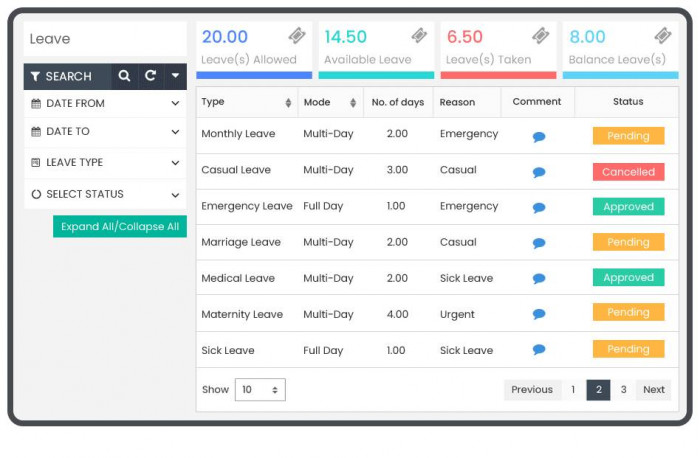
HRMS Globex connects attendance from login timestamps, biometric devices, or uploaded timesheets (depending on your infra) and reconciles it with shifts, holidays, and leave.
You can:
- Configure multiple leave types (earn leave, sick, maternity, casual, compensatory off, etc.).
- Define company‑wide rules (carry‑forward caps, accrual rates, encashment, sandwich rules).
- Set multilevel approvals (team lead → HRBP → BU head) if you really want to.
Result: no more “I thought 31st was a holiday” fights at payroll time—and you can finally see absence patterns at a team or plant level.
3. Payroll and Benefits Engine
This is where things get existential for HR. One miscalculated payslip and all the goodwill you built evaporates.
HRMS Globex:
- Models complex salary structures (fixed pay, variable pay, shift allowances, bonuses, LTA, HRA, etc.).
- Applies country‑specific tax rules, slabs, deductions, and statutory contributions.
- Generates payslips, registers, bank transfer files, and statutory reports.
- Keeps a full audit trail: who changed what, when, and why.
Layer in benefits: insurance enrollments, reimbursements, flexible benefit plans. You can see total reward cost per team, not just base salary.
4. Performance Management (Beyond “Fill This Form by Friday”)
Performance in most companies is a chaotic mix of memory, bias, and last‑quarter heroics. HRMS Globex nudges you into structure:
- Goal and KPI setting with alignment to team and company objectives.
- Periodic check‑ins instead of one dreaded annual form.
- Review forms with rating scales, comments, and weightages.
- 360° or multi‑rater feedback in advanced setups.
- Integration with increments, promotions, and development plans.
Over time, you get a pattern: who consistently over‑delivers, which teams hoard talent, which roles are chronically under‑supported.
5. Recruitment and Onboarding
Where enabled, HRMS Globex can be the bridge between candidate and employee:
- Manage requisitions: headcount, budget, JD, approval.
- Track applicants across stages: screened, shortlisted, interviewed, offered, joined.
- Auto‑convert joined candidates into employee records with minimal re‑typing.
- Trigger onboarding tasks: IT access, asset allocation, compliance trainings.
6. Employee Self‑Service (The Silent Hero)
HRMS Globex gives every employee a portal (and often mobile access) where they can:
- Update personal and bank details.
- View and download payslips and tax statements.
- Apply for leave and check leave balances.
- View attendance summaries.
- Access policies and announcements.
7. Analytics, Dashboards, and AI‑Edge
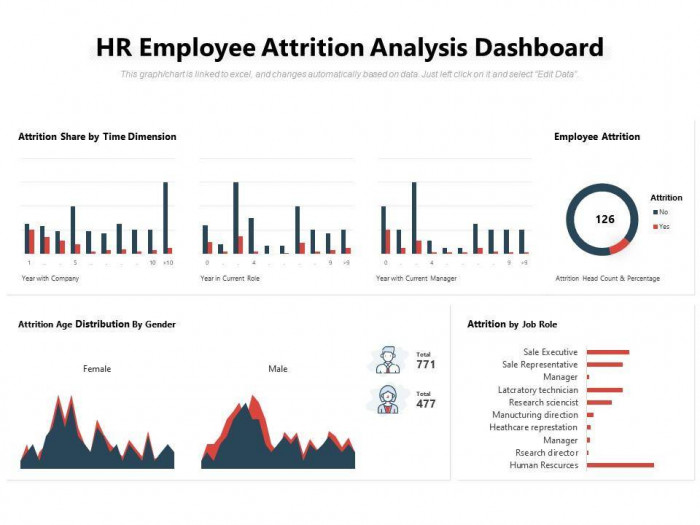
This is where it starts to feel less like HR admin and more like workforce intelligence:
- Attrition dashboards by location, manager, role, and tenure band.
- Heatmaps of overtime vs performance vs attrition.
- Forecasts of payroll cost under different hiring or increment scenarios.
- Identification of “at‑risk” employees using patterns like declining performance, high leave, and manager changes (in advanced packages).
You’re no longer guessing why people are leaving or which teams are burning out, you can point to data and act early.
8. Compliance, Security, and Auditability
Modern HRMS lives at the intersection of personal data, money, and law. HRMS Globex leans into:
- Role‑based, least‑privilege access.
- Region‑aware data storage and retention.
- Logs of who viewed or edited sensitive fields.
- Pre‑formatted statutory reports and audit trails.
Business Benefits: What Changes on the Balance Sheet and in the Hallways
Let’s talk outcomes, not features.
Tangible Financial and Operational Wins
- Fewer payroll and leave errors → lower risk of back‑payments, penalties, and employee distrust.
- HR headcount leverage: the same team can comfortably handle more employees.
- Less time firefighting over data, more time building programs (engagement, learning, internal mobility).
One realistic storyline: a 300‑employee company cuts its monthly “HR crunch week” from 7 days of chaos to 2 focused days because data is already reconciled and approvals are automated.
Intangible but Very Real Gains
- Employees trust the system because they can see their own data, not just HR’s version of it.
- Managers have fewer excuses: approvals, attendance, and reviews are one click away.
- Leadership can finally ask “What is our regretted attrition in R&D vs Sales?” and get an answer in minutes, not weeks.
How HRMS Globex Works Day‑to‑Day
Let’s follow one employee—Ananya—from offer to exit.
1. Offer and onboarding: Recruiter marks her as “Joined,” HRMS Globex creates her employee profile, tags her to “Product” under “Gurgaon Office,” assigns her manager, and schedules onboarding tasks.
2. First month: She logs in, updates her address and bank details, completes policy acknowledgements, and sets initial goals with her manager right inside the system.
3. Routine work: She clocks in and out (or just works with SSO logins), requests leave to attend a family wedding, sees approval, checks how it affects her balance, and views her first payslip—again, all in one place.
4. Performance cycle: At year‑end, she and her manager review goals, add comments, request feedback from a cross‑functional colleague, and lock ratings. HR sees calibration trends across teams.
5. Attrition signal or growth moment: If Ananya shows sustained high performance, HR flags her as a succession candidate for a Team Lead role. Conversely, if data shows she’s disengaging (frequent unscheduled leave, performance dips, manager conflicts), HR can intervene early.
6. Exit (if it comes to that): When she resigns, a full exit workflow triggers: asset return, notice calculation, final payroll, access revocation, documentation. The organization doesn’t scramble; it executes.
That’s how “software” becomes an operating rhythm.
Who HRMS Globex Is For—and Who Should Think Twice
Strong Fit
- Growing small and mid‑sized companies tired of running HR on spreadsheets and multiple disconnected tools.
- Multi‑location or distributed organizations that need one consistent system for employees across branches, plants, or countries.
- HR leaders who explicitly want to shift from transactional HR to data‑driven HR, and are ready to invest in process discipline.
Likely Misfit
- Tiny startups (sub‑10 people) where salary is flat and leave is handled in a WhatsApp group. The overhead of implementation will feel heavier than the benefit.
- Highly specialized, regulation‑heavy environments with extremely unique workflows that demand heavily customized, niche HR platforms.
- Organizations doctrinally opposed to cloud or SaaS outside a couple of geographies and unwilling to consider hybrid or controlled deployments.
If your biggest HR pain today is “we don’t even have a stable internet line in half our locations,” this may not be your first investment.
Pricing, Access, and What It Means Strategically
HRMS Globex follows the now‑standard per‑employee, per‑month logic with module‑based scaling.
- The more employees you add, the more your subscription grows—but the marginal cost per employee tends to drop at scale.
- The more modules you enable (recruitment, advanced analytics, specialized compliance packs), the closer you move to “full suite” pricing.
- Implementation adds a one‑time layer: data migration, configuration, and training.
Two strategic call‑outs:
1. Treat HRMS Globex as infra, not as a discretionary app. If payroll, attendance, and employee data live here, this is as foundational as your ERP or core banking or POS.
2. Negotiate not just price, but roadmap alignment—where the product is headed relative to your next three years of HR ambition.
Access is browser‑based with secure logins and role‑specific dashboards. For most organizations, that means no client installs, just change management and policy work.
Strengths: Where HRMS Globex Punches Above Its Weight
- Coverage breadth: It spans the full employee lifecycle instead of solving one thin slice.
- Self‑service first: Designed to move power from HR’s inbox into employees’ hands.
- Analytics mindset: Not an afterthought; metrics and dashboards are core.
- Compliance‑aware: Built with data protection and labor rules in mind, not bolted on later.
- Cloud‑ready: Ideal for hybrid and geographically scattered teams.
Limitations: Where to Go in With Eyes Open
- Adoption is a project, not a toggle. You’ll need training, evangelism, process clean‑up, and a few cycles of iteration.
- Data migration is where fantasy dies. Old spreadsheets, inconsistently formatted payroll histories, and missing documents will force you to confront your data sins.
- Cost can feel front‑loaded. The subscription plus onboarding can sting smaller firms before the efficiency savings and error reduction show up as a clear narrative.
- Connectivity matters. A cloud‑first system assumes reasonably stable internet; without it, the user experience degrades quickly.
HRMS Globex vs “Everything Else HR”
Rather than naming specific competitors, think in categories.
Against Bare‑Bones Payroll Tools
- Those tools: calculate salaries, maybe handle basic statutory compliance, spit out payslips. ( e.g, QuickBooks Payroll, Wave Payroll)
- HRMS Globex: wraps that in attendance logic, performance data, benefits, documents, and analytics.
If your only HR dream is “accurate payslips,” a simple payroll tool might be enough.
If your dream is “a coherent view of people and performance,” HRMS Globex plays in a different league.
Against Lightweight HR Apps
- Lightweight apps: quick to roll out, good for attendance and leave, but shallow on analytics, performance, and compliance depth.( e.g, TalentHR, Zoho People)
- HRMS Globex: more setup overhead, but deeper lifecycle coverage and a stronger data model.
They win on simplicity; Globex wins on long‑term scalability and strategic insight.
Against Enterprise HCM Behemoths
- Big HCM suites: extreme breadth, global configuration options, integrations with finance, supply chain, learning, etc.—and commensurate price and complexity.
- HRMS Globex: “most of what mid‑market and regional enterprises need” without multi‑year transformations and million‑dollar budgets.
If you’re a 30‑country, 20‑thousand‑employee giant, you probably need that behemoth. If you’re not, HRMS Globex offers a saner, more humane path to structure.
A Quiet, Honest Wrap‑Up
If you strip off the buzzwords, HRMS Globex is simply this: a disciplined, opinionated way of running HR in one place.
It will not magically fix a toxic culture, bad managers, or broken compensation philosophy. But it will give you clean data, predictable workflows, and visibility, three things that make every other HR conversation more grounded and less emotional. If your organization is ready to treat HR as an operating system instead of an afterthought, a platform like HRMS Globex is less a “nice‑to‑have tool” and more a non‑negotiable infrastructure choice.