

Table of Content
- The Competitive Landscape at a Glance
- Capability Comparison
- Runway ML: When You Want Control Beyond Generation
- Luma AI Dream Machine: Realism Over Everything
- Genmo AI: The Playground for Experimental Visuals
- WaveSpeedAI: Speed as the Core Advantage
- Kling AI: The Push Toward Film-Level AI Video
- How These Tools Actually Differ in Real Use
- Where This Space Is Heading
Pika AI did not become popular by accident. It solved a very specific creator problem at the right time. If you wanted to turn a simple prompt into a short cinematic clip, or animate an image into motion without touching complex software, Pika felt almost magical. It reduced the barrier between idea and output.
But once that initial excitement settles, limitations start to show up in real workflows.
Creators who use Pika consistently begin to notice patterns. Clip duration is still restrictive. Motion can feel unpredictable across frames. Scene continuity becomes difficult when you try to build anything longer than a few seconds. There is also a ceiling in terms of control. You can guide style and motion, but not shape a scene with precision.
This is exactly where serious alternatives enter the picture.
The tools below are not generic editors or AI gimmicks. They are direct competitors built for the same purpose. Generating video from prompts, animating images, and producing short cinematic sequences with minimal input.
The Competitive Landscape at a Glance
| Tool | Video Quality | Motion Consistency | Control Depth | Speed | Best Fit |
| Runway ML | High | Strong | Deep | Medium | Filmmakers, professionals |
| Luma AI Dream Machine | Very High | Very strong | Moderate | Fast | Realistic cinematic clips |
| Genmo AI | Moderate | Experimental | Moderate | Medium | Creative exploration |
| WaveSpeedAI | Good | Smooth | Low to Moderate | Very fast | Social media content |
| Kling AI | Extremely High | Advanced physics | High | Medium | High-end realism |
This table highlights something important. Not every tool is trying to beat Pika in the same way. Some push realism. Others focus on speed. A few aim for deeper control.
Capability Comparison
| Platform | Text to Video | Image to Video | Scene Control | Output Style |
| Runway ML | Yes | Yes | Advanced | Cinematic + editable |
| Luma Dream Machine | Yes | Limited | Moderate | Hyper-realistic |
| Genmo AI | Yes | Yes | Moderate | Stylized, experimental |
| WaveSpeedAI | Yes | Yes | Basic | Fast social clips |
| Kling AI | Yes | Yes | Advanced | Film-level realism |
This second table shows how closely these tools align with Pika’s core promise. All of them support prompt-based generation, but they diverge in how much control you get after generation.
Runway ML: When You Want Control Beyond Generation
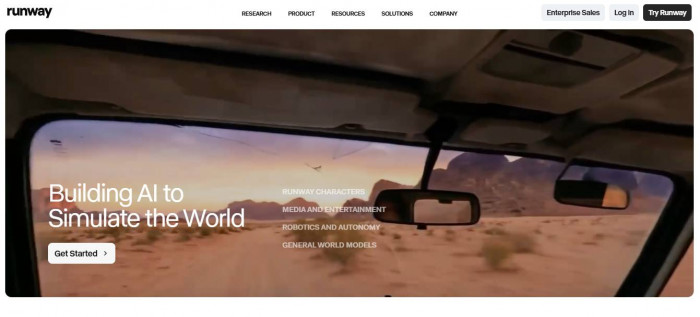
Runway ML feels less like a toy and more like a system. While Pika focuses on quick outputs, Runway builds an environment where generation is only the first step.(https://runwayml.com/)
You generate a clip, then refine it, extend it, edit it, and integrate it into a larger sequence. That difference matters when you move from experimentation to production.
Compared to Pika, Runway does not always feel faster, but it feels more deliberate.
Where it performs better
- Stronger scene consistency across frames
- Built-in editing tools after generation
- Better for multi-shot storytelling
Where it still struggles
- Learning curve is higher than Pika
- Rendering time can be slower
Who should use it
- Creators building narratives, not just clips
- Teams working on ads, films, or structured content
Luma AI Dream Machine: Realism Over Everything
Luma’s Dream Machine is one of the first tools where the output starts to feel less like AI and more like captured footage. The motion has weight. Lighting behaves naturally. Objects interact with space in a believable way. (Luma’s Dream Machine)
Compared to Pika, the difference is immediate. Pika feels stylized. Luma feels grounded.
Where it performs better
- Extremely realistic motion and lighting
- Strong temporal consistency
- Better depth and camera movement
Where it still struggles
- Less granular control compared to Runway
- The editing workflow is limited
Who should use it
- Creators aiming for realism
- Short cinematic clips that need visual credibility
Genmo AI: The Playground for Experimental Visuals
Genmo sits in a different creative space. It does not always try to be realistic. Instead, it leans into abstraction, unusual transitions, and stylistic interpretation. (https://www.genmo.ai/)
Compared to Pika, Genmo feels less predictable, but also more creatively open.

Where it performs better
- Unique visual styles and transitions
- More expressive outputs for artistic work
Where it still struggles
- Inconsistent realism
- Less reliable motion continuity
Who should use it
- Artists and experimental creators
- Music visuals, concept clips, abstract storytelling
WaveSpeedAI: Speed as the Core Advantage
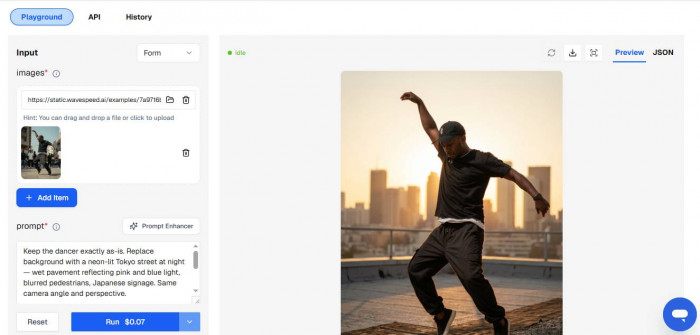
WaveSpeedAI is built around one idea. Speed matters more than perfection. (WaveSpeedAI)
While Pika already feels fast, WaveSpeed pushes it further. The outputs are not always as refined, but the turnaround time makes it practical for daily content pipelines.
Where it performs better
- Extremely fast generation
- Suitable for high-volume content
Where it still struggles
- Lower cinematic quality
- Limited control over fine details
Who should use it
- Social media creators
- Teams producing daily short-form content
Kling AI: The Push Toward Film-Level AI Video
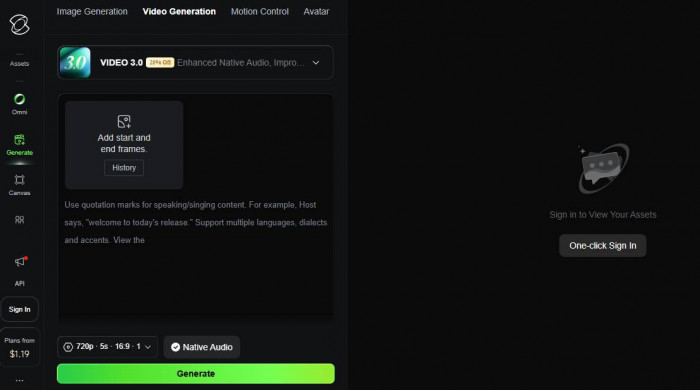
Kling AI represents where this entire space is heading. Its focus is not just generating clips, but simulating real-world physics and human-like motion. (Kling AI)
Compared to Pika, this is a different level of ambition. Movements feel intentional. Scenes behave logically.
Where it performs better
- Advanced physics and motion realism
- More natural human movement
- High-end cinematic potential
Where it still struggles
- Accessibility and availability
- Requires more precise prompting
Who should use it
- High-end creators
- Anyone pushing toward professional-grade AI video
How These Tools Actually Differ in Real Use
When you step away from specs and try these tools in real scenarios, the differences become clearer.
For cinematic storytelling, Runway ML and Kling AI stand out. They allow you to think in sequences, not just isolated clips. You can shape a narrative instead of hoping the model guesses correctly.
For social media content, WaveSpeedAI makes more sense. Speed becomes the priority. You trade some quality for consistency in output volume.
For realism-focused clips, Luma AI leads. If your goal is to create something that looks believable at first glance, it often delivers better than Pika.
For experimental visuals, Genmo opens doors that more structured tools do not. It is less reliable, but more creatively flexible.
This is where Pika sits in the middle. It is balanced, easy, and accessible, but not dominant in any one category.
Where This Space Is Heading
AI video generation is moving through a phase that looks very similar to early image generation models.
At first, the focus was on novelty. Now the focus is shifting toward control, consistency, and realism.
Competition between tools like Pika, Runway, Luma, and Kling is accelerating improvements in three key areas:
- Motion consistency across longer sequences
- Better understanding of physics and object interaction
- More precise control over scenes and camera movement
What used to be a 3-second experiment is slowly becoming a usable production workflow.
The interesting shift is not just technical. It is creative.
These tools are starting to define new types of content. Short cinematic loops, AI-generated narratives, and hybrid workflows where creators guide AI instead of replacing it.
Pika AI opened the door for many users. These alternatives are now pushing that door wider, turning quick generation into something closer to real filmmaking.
And that shift is only getting started.