

Washington/New Delhi, 11 February 2026 —
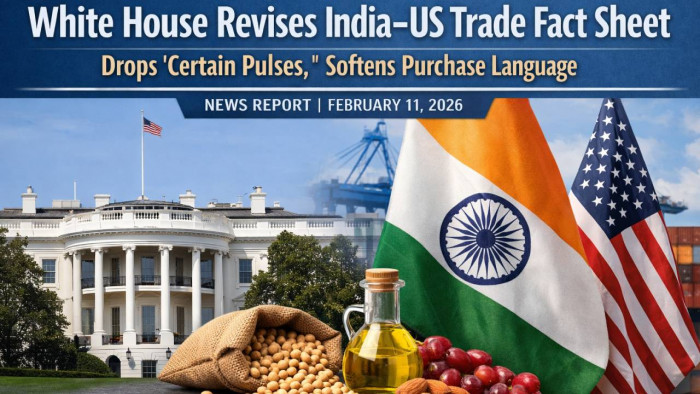
The White House has quietly updated its fact sheet on the recently announced India–US trade agreement, removing a reference to “certain pulses” from the list of American agricultural products on which India would reduce or eliminate tariffs.
The document in question, titled The United States and India Announce Historic Trade Deal (Interim Agreement), was first released on February 9 following a joint announcement by New Delhi and Washington on the framework of a new trade pact. An updated version issued on February 10 omits the pulses wording and adjusts some of the language from the original release.
In the earlier version, the fact sheet stated that India would eliminate or reduce tariffs on a wide range of U.S. industrial and agricultural products that included dried distillers’ grains, red sorghum, tree nuts, fresh and processed fruit, certain pulses, soybean oil, wine and spirits. The revised version retains most other product categories but no longer mentions pulses.
The updated fact sheet also changes the terms used to describe India’s future purchases of U.S. goods. Where the first version used the phrase “India committed to buy” more than USD 500 billion worth of U.S. products, the revised text says “India intends to buy” those goods, bringing the language closer to the wording of the official joint statement issued by both countries.
Both the earlier reference to pulses and the stronger purchase language attracted attention because they did not appear in the joint statement from New Delhi and Washington released on 6 February, sparking questions about alignment between the trade framework and its public summary.
Pulses — which include crops such as lentils, chickpeas and dry beans — are a sensitive category in India owing to their importance in domestic agriculture and food security. India is among the world’s largest producers and consumers of pulses.
There has been no immediate comment from the White House on the revisions. Senior officials have said the interim deal aims to deepen economic cooperation and reduce trade barriers on both sides, although final details remain under negotiation ahead of a planned signing expected later this year.