


Table of Content
The social media platforms have become giant behavioral experimenters, and billions of interactions are captured daily through these platforms. The sum of likes, comments, shares, and follows is a rich dataset that can be used to understand how people interact with online content. Recently, product teams and researchers started to be more attentive to one of the less publicized indicators unfollows. In conjunction with developments in AI social media analysis, the behavior of the unfollower can now provide useful information on the churn rates, engagement exhaustion, and relevance of the contents. The more advanced machine learning gets, the more it can be interpreted to understand the social media engagement pattern and online community dynamics better in organizations.
Social Media Platforms as Behavioral Data Sources
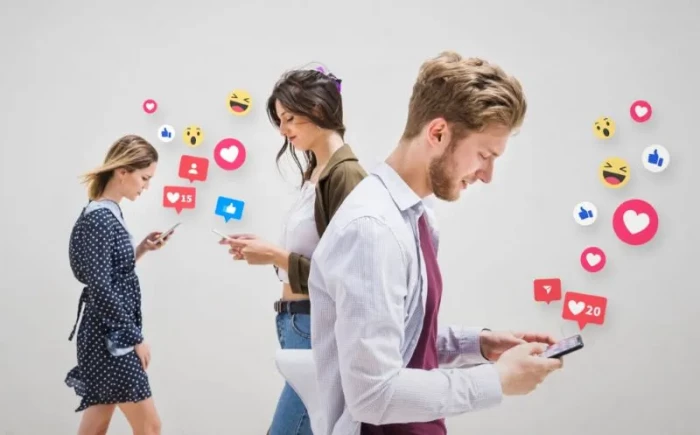
All activities on social media are adding up to an ongoing flow of behavioral information. Engagement metrics, including scroll time, saves, reactions, and followers, can indicate the reaction of users to the content in the long run. Among them, unfollows are the most significant since they are a conscious choice of disengagement.
In contrast to passive metrics, the unfollow can indicate dissatisfaction, content overload, or user interest in different things. These moments are useful in the longitudinal analysis to determine trends that cannot be easily seen using likes or impressions. In the case of behavioral data analysts, unfollows are a tangible indicator of a loss of an audience, which allows them to comprehend retention and the overall well-being of the platform in the long run.
How AI Models Analyze Unfollower Trends
Modern AI systems rely on multiple analytical techniques to uncover meaning within unfollower datasets. Three approaches are especially common in machine learning user behavior research:
Time-Series Analysis
Unfollows are tracked across days, weeks, or months to detect cyclical patterns or sudden spikes. This allows models to correlate churn with posting frequency, content changes, or external events.
Anomaly Detection
AI algorithms flag unusual deviations from baseline behavior, such as sudden waves of unfollows after a campaign launch. These anomalies often point to misaligned messaging or UX issues.
Feature Extraction
Machine learning models break down user interactions into features like post type, timing, caption length, or topic category. By analyzing these variables together, AI can estimate which elements most strongly influence disengagement.
In academic and product-focused studies, datasets related to Unfollowers Instagram are often used to study engagement decay and audience churn, with platforms providing structured examples of how unfollow behavior can be quantified and explored.
Together, these methods help transform raw engagement logs into actionable insights for creators, researchers, and designers.
Applications in Research and Product Design
The interpretation of unfollower patterns has practical implications across multiple fields:
UX Optimization
Product teams use AI-driven analytics to identify friction points in user journeys. If unfollows consistently follow certain interface changes or content formats, designers can iterate quickly to improve experience.
Recommendation Systems
By factoring in unfollow behavior, recommendation engines become more nuanced. Instead of only promoting popular content, systems learn what drives users away, leading to more balanced and personalized feeds.
Community Health Metrics
Unfollower trends also serve as indicators of community well-being. Sudden churn may signal toxicity, content saturation, or declining trust—key insights for moderators and platform operators.
These applications highlight how ai-driven analytics moves beyond vanity metrics toward a more holistic view of digital ecosystems.
Ethical Considerations and Data Privacy
Though AI opens the door to the opportunities of potent analysis, it also poses significant ethical concerns. Anonymization of data (elimination of personally identifiable information) is the first step towards responsible data usage. Aggregated datasets also minimize the risk of privacy, but it still allows recognizing significant patterns.
The consent of users is also important. Honest approaches regarding the methods of gathering and interpreting engagement data can be used to ensure trust. Scholars dealing with social media engagement patterns should also be attentive not to overinterpret their findings in the knowledge that algorithms do not indicate motivations, but correlations.
Ethical AI models focus on the principles of fairness, accountability, and explainability, so that the information obtained based on the behavior of followers is applied in a constructive and not manipulative way.
Broader Implications for AI-Driven Social Analysis
In addition to personal platforms, the unfollower analytics is part of more significant improvements of forecasting. Cross-platform research can give AI the opportunity to discover common patterns of behavior in the various networks providing a broader perspective of digital culture.
However, limitations remain. Human behavior is not simple, and there is no model that may take into consideration emotional or contextual factors, which result in disengagement. Unexpectedly, cultural differences, offline events, and personal circumstances are considered to have an impact on unfollowers that cannot be explained by data only.
Even so, it remains sustained by the maturity of behavioral data AI to change how organizations perceive attention, loyalty, and community dynamics in scale.
Conclusion
Artificial intelligence analysis of unfollower activity gives the audience churn and engagement health a more in-depth understanding. Machine learning can expose patterns that could not be seen before through time-series modeling, anomaly detection and feature extraction. However, these insights should be always accompanied by ethical data practices, as well as a contextual understanding. Applied in the right way, AI-based social analysis can be a useful instrument in the creation of more responsive, user-focused digital platforms.