


Table of Content
The Problem With Metricool
Metricool combines post scheduling, analytics dashboards, and ad tracking (Google Ads + Meta Ads) into a single interface, starting from free and scaling to ~$22/month for small creators. It tracks metrics like engagement rate, best posting times, and competitor benchmarks, which makes it useful for creators who want both publishing and performance data in one place.
The issue shows up in execution. The interface combines too many layers, so basic actions like scheduling or switching accounts take extra steps. It also lacks deep automation workflows like content recycling or advanced approval flows. For creators managing multiple brands or posting high-volume short-form content, Metricool starts to feel like a reporting tool with scheduling attached, rather than a flexible publishing system.
Quick Snapshot
| Tool | Starting Price | Best For | One Limitation |
| Buffer | Free → ~$6/channel | Simple scheduling at scale | Weak analytics depth |
| SocialPilot | ~$25/month | Multi-account management | UI not built for visual planning |
| Zoho Social | ~$15/month | Automation + CRM workflows | Limited creator-focused features |
| Sendible | ~$29/month | Client reporting | Pricing increases per user |
| Agorapulse | ~$49/month | Inbox + analytics | Higher cost for small creators |
| Publer | Free → ~$12/month | Bulk scheduling | Limited analytics depth |
| SocialBee | ~$29/month | Content recycling | Weak visual planning |
| Later | ~$25/month | Instagram visual planning | Post limits |
Alternatives Explained
Buffer and Publer both move away from Metricool’s analytics-heavy structure and focus on execution speed and scheduling volume, but they solve different parts of the workflow. Buffer, priced at ~$6 per channel/month, uses a queue-based scheduling system where posts are assigned time slots and automatically published in sequence. This works well when you batch content weekly, for example, scheduling 30–50 posts across Instagram, Twitter, and LinkedIn in one sitting. It also includes basic analytics like engagement per post and reach trends, but lacks competitor tracking, hashtag performance, or audience segmentation, which limits optimization decisions. Publer, starting at ~$12/month, extends this workflow with bulk upload via CSV, post recycling options, and AI caption generation, which reduces manual writing time when adapting content across platforms. It also supports post variations, meaning you can publish the same video with slightly different captions across platforms automatically. The limitation is similar to Buffer but more noticeable at scale: analytics remain shallow, so performance insights still require external tools or manual tracking.

SocialPilot and Zoho Social shift toward structured multi-account management, which becomes relevant when you handle multiple brands or clients. SocialPilot, starting at ~$25/month, allows bulk scheduling, client dashboards, and white-label reporting, meaning agencies can generate branded performance reports for clients without exporting data manually. It also supports content queues and team collaboration, making it easier to assign posts across accounts. However, its interface is built around lists and calendars rather than visual layouts, so Instagram feed planning feels disconnected. Zoho Social, priced at ~$15/month, integrates deeply with the Zoho ecosystem and includes smart scheduling (based on active audience times), repeat posting rules, and CRM-linked tracking, which helps connect social activity to leads or conversions. The limitation is that Zoho Social is more business-focused than creator-focused. It lacks visual grid planning and short-form content optimization tools, which reduces its appeal for Instagram and TikTok creators.

Sendible and Agorapulse compete more directly with Metricool’s analytics and reporting layer but improve workflow clarity. Sendible, starting at ~$29/month, is built around content calendars, approval workflows, and automated client reporting, allowing teams to create, review, and publish content without switching tools. It also integrates with platforms like Google Drive and Canva, which simplifies asset management. However, pricing increases with users and services, so managing 5–10 clients can quickly push costs beyond $100/month. Agorapulse, starting at ~$49/month, adds a stronger operational layer with a unified social inbox, where comments, messages, and mentions across platforms are managed in one place. It also provides advanced analytics like response time tracking, engagement labeling, and audience segmentation, which Metricool does not fully match. The trade-off is cost and complexity. For solo creators or small teams, the feature depth may not justify the higher entry price.

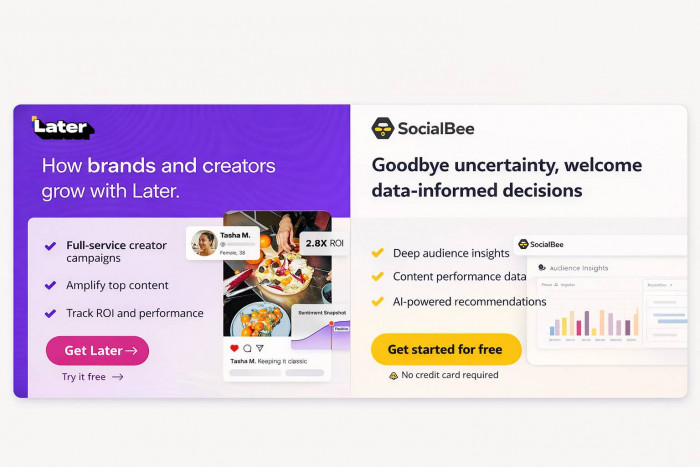
Later and SocialBee represent two completely different ways to handle content planning, depending on whether you prioritize visual control or automation efficiency. Later, starting at ~$25/month, focuses on Instagram grid preview and drag-and-drop scheduling, allowing creators to visually arrange posts before publishing. This is useful for maintaining a consistent feed aesthetic, especially for brands relying on design-heavy content. It also includes link-in-bio tools, which add value for traffic conversion. However, the platform enforces 30–180 posts per profile depending on the plan, which becomes restrictive for creators posting daily Reels or managing multiple accounts. SocialBee, priced at ~$29/month, removes that constraint by introducing category-based scheduling and content recycling, where posts are grouped (e.g., “Reels,” “Tips,” “Promos”) and automatically reused over time. It also supports time-slot automation, meaning each category publishes at predefined intervals without manual scheduling. The limitation is that SocialBee does not offer a strong visual planner, so creators lose control over how their Instagram grid looks, which matters for branding.
Feature Snapshot
| Tool | Scheduling | Analytics | Automation | Best Use |
| Buffer | Unlimited queue | Basic | Limited | Batch scheduling |
| SocialPilot | Bulk scheduling | Moderate | Strong | Multi-account management |
| Zoho Social | Smart scheduling | Moderate | Rule-based automation | CRM-linked workflows |
| Sendible | Calendar-based | Advanced | Moderate | Client reporting |
| Agorapulse | Queue + inbox | Advanced | Moderate | Engagement management |
| Publer | Unlimited bulk | Basic | Moderate (AI captions) | High-volume posting |
| SocialBee | Category-based | Moderate | Strong (recycling) | Evergreen content loops |
| Later | Visual planner | Basic | Limited | Instagram grid planning |
Real-Life Choice
- If your priority is low cost with high posting volume, Publer at ~$12/month or Buffer at ~$6/channel removes scheduling limits and keeps costs predictable.
- If your priority is analytics and engagement tracking, Agorapulse or Sendible provide deeper insights than Metricool, but pricing starts higher at ~$49/month and ~$29/month, respectively.
- If you manage multiple accounts or clients, SocialPilot at ~$25/month offers better scaling and structured workflows compared to Metricool’s interface.
- If your workflow depends on visual Instagram planning, Later remains stronger despite its post limits, while SocialBee works better for automated content recycling.
Final Take
- Most balanced replacement: SocialPilot
Covers scheduling, client management, and reporting at ~$25/month without adding unnecessary complexity. - Lowest-cost option for consistent posting: Publer
At ~$12/month with bulk scheduling and unlimited posts, it removes Metricool’s biggest friction around publishing volume. - Best if analytics and engagement tracking matter most: Agorapulse
Starts higher at ~$49/month but delivers deeper inbox management and performance tracking than Metricool.