

Table of Content
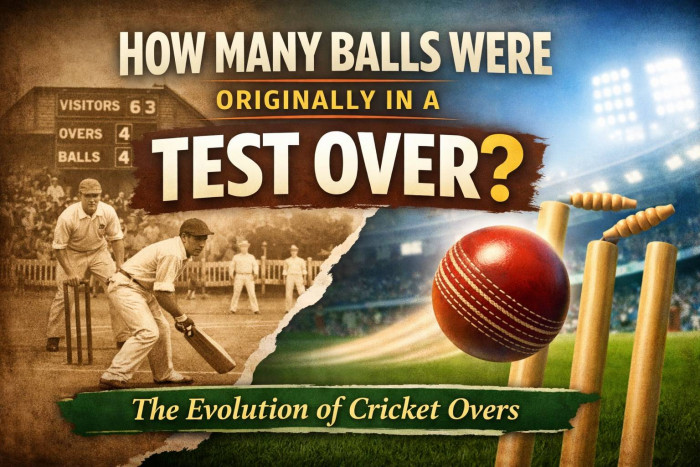
Cricket is a game steeped in tradition, but even its simplest elements like the number of balls in an over have a surprisingly rich history. Today, cricket fans are used to six-ball overs, whether in Test matches, ODIs, or T20s. Yet, when Test cricket began in 1877, an over consisted of only four deliveries. This may seem like a small detail, but the journey from four balls to six and in some cases eight reflects cricket’s evolution, experimentation, and the quest for balance between player endurance, match duration, and excitement.
Understanding the Over
At its core, an over is a sequence of consecutive deliveries bowled by a single bowler from one end of the pitch. This simple unit structures the game, determines fielding rotations, and gives bowlers moments of respite while maintaining the rhythm of the match.
Overs also serve a strategic function. For example, captains often plan bowler rotations to exploit a batter’s weakness or adapt to pitch conditions. Without overs, cricket would lack one of its essential frameworks organizing play in a way that balances fairness and competitiveness.
Fun thought: Imagine watching a match today where overs had only four balls. Would the game feel faster or choppier?
The First Test Over: Four Balls in 1877
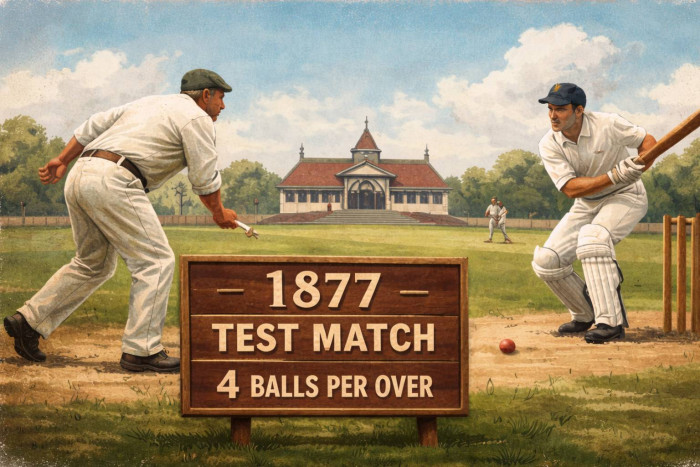
The first officially recognized Test match, held in Melbourne, Australia, between Australia and England in 1877, set the stage for international cricket. In that historic encounter, a bowler completed an over with just four balls.
While modern fans may find this surprising, it made sense at the time. Cricket rules were still flexible, and organizers were experimenting with the ideal balance of game pace, bowler workload, and batter engagement. A four-ball over allowed bowlers to maintain intensity without becoming overly fatigued, and games unfolded at a pace that suited the cricketing culture of the era.
Interestingly, this means that the original balls in a Test over were fewer than what cricket fans experience today, showing how even small adjustments can shape the game significantly.
The Evolution of Overs Through Time
As cricket spread across continents, different countries experimented with the number of balls per over. England briefly increased the over to five balls in 1889, before standardizing on six balls in 1900. Meanwhile, Australia tried eight-ball overs in the 1920s and 1930s, especially in domestic matches.
Other cricketing nations gradually adopted the six-ball standard, recognizing the need for consistency across international play. By the mid-20th century, the six-ball over had become the global norm, aligning the game for tournaments, international tours, and emerging competitions.
This evolution was influenced by more than mere preference; it reflected practical considerations. Overs that were too short made matches unnecessarily long, while overly long overs exhausted bowlers and disrupted the flow of the game. Cricket administrators sought a format that balanced these factors, ultimately settling on six balls per over.
Overs Around the World: A Patchwork of Experimentation
Historically, overs were not uniform. While England experimented with five-ball overs for a decade, Australia explored eight-ball overs to give bowlers longer spells without frequent changes. In India, South Africa, and New Zealand, six-ball overs became the standard relatively early in the 20th century, reflecting a growing trend toward international standardization.
These regional differences demonstrate cricket’s adaptive nature. Each country adjusted its rules to suit local conditions, pitch quality, climate, player stamina and cultural preferences. The variety also provides a window into the evolving strategies and styles of cricket over the decades.
A small fun anecdote: During the era of eight-ball overs in Australia, legendary bowlers could build momentum and dominate a spell more effectively. However, it also meant fielders and batters had to sustain concentration longer testing stamina as much as skill.
Why Six Balls Became the Global Standard
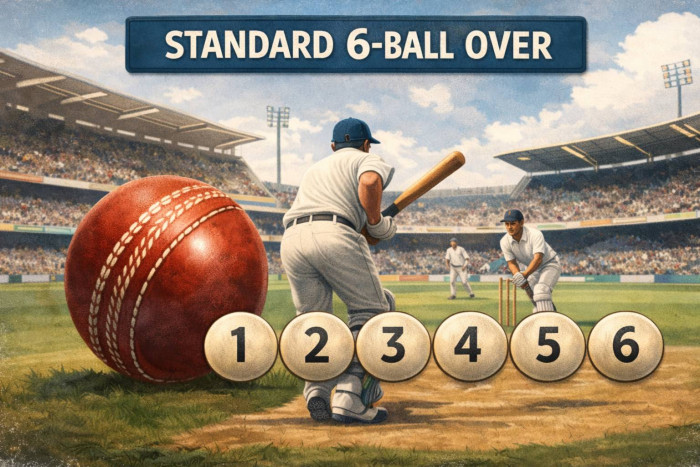
By the mid-20th century, six balls per over were universally accepted for several compelling reasons:
- Balance of workload and pace: Six deliveries allowed bowlers to maintain intensity without excessive fatigue while keeping the game moving efficiently.
- Consistency for international cricket: With the rise of Test tours and global competitions, a standard over length was essential to avoid confusion and maintain fairness.
- Audience engagement: Overs of this length provided a rhythmic structure to the game that suited both spectators and broadcasters.
Even in modern limited-overs formats like ODIs and T20s, six-ball overs have remained, underscoring their enduring practicality.
Overs and Cricket Strategy
Understanding overs is crucial to appreciating cricket strategy. Captains plan rotations around overs, ensuring their best bowlers face the strongest batters at the right moments. Field placements are often adjusted within each over, and batters pace themselves based on the number of deliveries they can expect from a particular bowler.
Overs are not just a measurement they are tactical units that define the ebb and flow of cricket. The move from four to six balls per over may appear minor, but it fundamentally altered how captains think about bowling plans, stamina, and match pacing.
A Glimpse into Cricket History
Cricket has always evolved, from pitch conditions to player equipment to the very rules themselves. The story of overs from four balls in 1877 to six balls today illustrates the sport’s adaptability and the subtle decisions that shape the game. These changes may seem small, but they are part of the larger tapestry of cricket history, influencing strategy, pace, and the spectator experience.
Next time you watch a Test match, pause for a moment to appreciate the six-ball over. It’s not just a simple unit of play, it's a product of more than a century of innovation, experimentation, and tradition.